

- ECNEC Approves 8 Projects Worth Tk 2,266 Crore |
- No Plan to Drop Bangla, History from Honours: Milon |
- Global turmoil shadows Bonn climate talks |
- Dhaka's air quality recorded ‘moderate’ Tuesday morning |
- Court seeks Interpol red notices for 2 fugitives in Tonu killing |
Iran is Not Our War: Europe Tells Trump
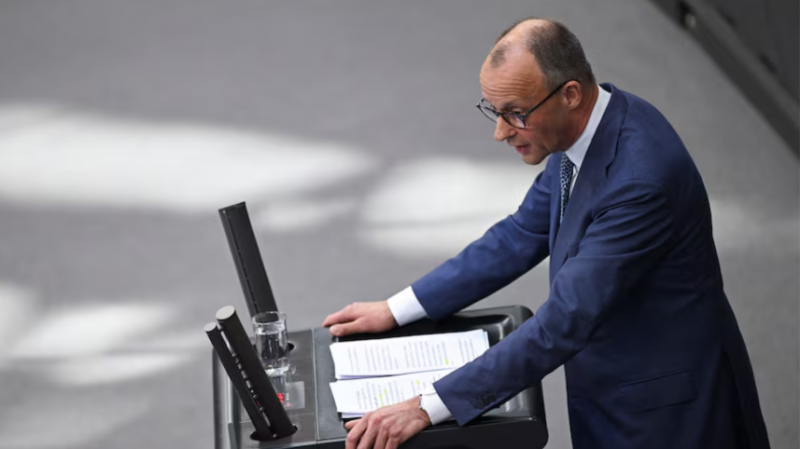
European leaders have firmly refused to join US-led military efforts against Iran, exposing growing strains in transatlantic relations as tensions escalate in the Middle East.
The divide became clear after US President Donald Trump urged allies to support operations aimed at securing the Strait of Hormuz, a critical global oil route. Several key European nations declined, citing concerns over the conflict’s unclear objectives and risks of further escalation.
German Chancellor Friedrich Merz took an unusually direct stance, telling lawmakers that while Iran should not threaten regional stability, the US-Israeli military approach lacked a clear strategy. He also criticised Washington for failing to consult European partners before launching operations.
Merz made it clear that Germany would not take part in military efforts to secure the Strait of Hormuz while the conflict continues. His defence minister, Boris Pistorius, echoed the position, stating bluntly that the war was not Germany’s to fight.
France struck a similar tone, with President Emmanuel Macron stressing that his country was not a party to the conflict. European governments have instead signalled a preference for diplomatic engagement and de-escalation over direct military involvement.
Despite their refusal, European leaders are weighing the broader consequences for relations with Washington. Concerns remain that opposing the US could affect cooperation on key issues such as Ukraine or future NATO commitments. However, public opinion across Europe has largely backed staying out of the conflict, strengthening governments’ positions.
In the UK, Prime Minister Keir Starmer has faced criticism from Washington but has maintained a cautious approach. Polls indicate that a significant portion of the British public opposes the military action, a sentiment echoed in Germany and Spain, where majorities have also rejected involvement.
Spanish Prime Minister Pedro Sánchez condemned the strikes as reckless, with his government vowing not to bow to external pressure. Officials emphasised that Spain would defend its sovereignty and avoid being drawn into a conflict it did not help shape.
At the heart of Europe’s hesitation is uncertainty over the war’s endgame. Officials say US objectives remain unclear and may differ from those of Israel, particularly regarding long-term goals such as regime change in Iran. This lack of clarity has made European capitals reluctant to commit military resources.
Instead, European countries are exploring alternative approaches. Britain has discussed working with allies to ensure the safe passage of commercial shipping through the Strait of Hormuz, while France is considering a broader international effort to protect maritime routes once tensions ease. These initiatives are expected to involve coordination with global partners and the shipping industry, rather than direct military alignment with US operations.
The dispute highlights deeper challenges within the transatlantic alliance. Differences over the war in Ukraine, trade disputes, and shifting US foreign policy priorities have already strained relations. The Iran conflict has added another layer of tension, forcing European leaders to balance alliance commitments with domestic pressures and strategic caution.
For now, Europe appears determined to stay on the sidelines of a conflict it neither initiated nor fully supports. While maintaining dialogue with Washington, leaders are prioritising stability, public sentiment, and a measured response over immediate military involvement.