

- Around 7,500 Bangladeshis imprisoned in Saudi Arabia: Shama Obaed |
- Bangladesh Outperforms India in Global Hunger Index 2026 |
- Covered van hits Gazipur police patrol team, killing SI, BNP leader |
- Korean City scrambles to rescue dusky shark after it returns to canal |
- PM inspects Mongla Port, Sundarbans, proposed economic zone |
Boeing's first crewed space launch delayed, again
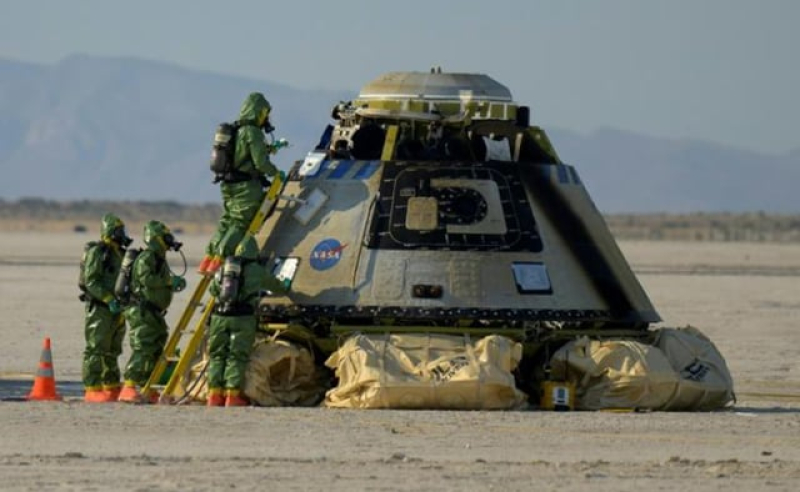
Boeing has once again delayed the first crewed flight of its Starliner space capsule after discovering new technical issues, officials said Thursday.
The troubled CST-100 Starliner program has experienced numerous postponements but was finally meant to send humans on a test flight to the International Space Station on July 21.
During testing, Boeing engineers identified new issues relating to a faulty parachute system and wire harness tape used extensively through the capsule that was found to be flammable under some conditions.
After internal deliberations, they decided to abandon the test flight and report the new issues to the US space agency, which has contracted Boeing to provide a taxi service to the ISS.
"We've decided to stand down the preparation for the CFT (Crewed Flight Mission) mission in order to correct these problems," Mark Nappi, vice president and program manager of Boeing told reporters on a press call. No new date has been proposed.
Boeing had hoped to make its first manned flight of the CST-100 Starliner in 2022.
The company finally succeeded in May 2022 in reaching the ISS for the first time -- without a crew on board.
NASA awarded fixed-price contracts of $4.2 billion to Boeing and $2.6 billion to SpaceX in 2014, shortly after the end of the Space Shuttle program, during a time when the United States was left reliant on Russian Soyuz rockets for rides to the ISS.
NASA is looking to certify Starliner as a second "taxi" service for its astronauts to the space station -- a role that Elon Musk's SpaceX has provided since succeeding in a test mission of its Dragon capsule in 2020, reports BSS.