

- Bangladesh Targets 8.5-Fold Rise in Cotton Output by 2050 |
- India Jails Two 'Cockroach' Movement Leaders for Five Days |
- Iran Says Cargo Ship Sank After Hitting Mine in Hormuz |
- No Plan for Operation Clean Heart-Style Drive Now: Home Minister |
- Bangladesh Eyes $10b in UK Exports Through Diversification |
Bangladesh Targets 8.5-Fold Rise in Cotton Output by 2050
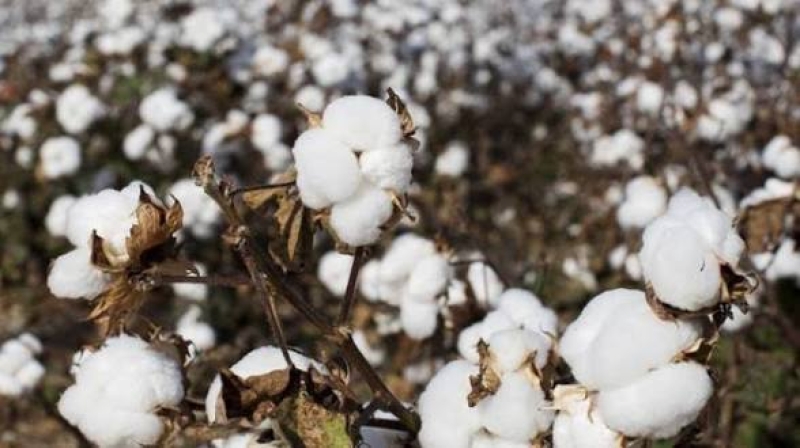
The government has drawn up short-, medium- and long-term plans to increase Bangladesh’s annual cotton production to 1.9 million bales by 2050 from the current 224,000 bales by expanding cultivation to 53 of the country’s 64 districts, officials said.
“We have taken short-, medium- and long-term plans to boost cotton production, aiming to increase output 8.5-fold and expand cultivation from 39 to 53 districts,” Cotton Development Board (CDB) Executive Director Md Rezaul Amin said.
Under the plans, the CDB aims to produce 500,000 bales of lint cotton within the next four years, 1 million bales by 2040 and 1.9 million bales by 2050. Lint cotton is the clean fibre separated from cotton seeds after harvesting.
The board also plans to expand the cotton cultivation area to 200,000 hectares.
The new districts being considered for cotton cultivation include Moulvibazar, Habiganj, Cumilla, Chandpur, Noakhali, Lakshmipur, Barishal, Bhola, Barguna, Chattogram, Feni, Cox’s Bazar and Nilphamari.
Bangladesh remains heavily dependent on imported cotton and is one of the world’s largest cotton importers, partly because of its position as a major ready-made garment (RMG) exporter.
According to CDB officials, domestic cotton production currently meets around 3–4% of the country’s annual requirement, estimated at nearly 8 million bales. Officials also cited a figure of 18–20% for domestic production’s contribution to the country’s own consumption, although the basis for that estimate requires clarification.
Bangladesh produces two types of cotton—upland and hill cotton—depending on soil and growing conditions.
The CDB plans to expand cultivation in high charlands and shoals, the northwestern Barind region, suitable hilly areas, comparatively less fertile and low-productivity land, and saline- and drought-prone areas. Cotton can also be grown in orchards alongside vegetables, pulses and spices, officials said.
At a meeting with agriculture ministry officials on September 13, Prime Minister Tarique Rahman asked the CDB to prepare a detailed plan after assessing the country’s potential for expanding cotton production.
Three days later, the parliamentary standing committee on the agriculture ministry also recommended prompt and effective measures to increase domestic output and reduce the cost of imports.
Bangladesh began producing cotton in the Rangpur region in 1976. The CDB was established after independence to help meet the demand for raw cotton from the country’s textile industries.
The country expanded cotton research during the government of Shaheed President Ziaur Rahman in 1978, after importing cotton seeds from the United States for the first time. In 1980, a Cotton Research Centre and Seed Production Farm was established at Jagadishpur in Chowgachha upazila of Jashore under the Cotton Development Programme.
In 1994, former Prime Minister Khaleda Zia renamed three key CDB farms as Cotton Research, Training and Seed Multiplication Farms and established a separate cotton farm in Sreepur, Gazipur.
CDB soil nutrition and water management specialist Dr Md Gazi Golam Mortuza said cotton had emerged as a profitable cash crop as jute cultivation had declined.
He said increased cotton yields could improve farmers’ earnings while reducing the country’s dependence on imported raw cotton.
According to Mortuza, cotton cultivation costs approximately Tk 15,000 per unit of land, while a farmer can earn around Tk 60,000 by producing 15 maunds of raw cotton on one bigha of land. The figures and measurement basis require confirmation.
CDB officials said additional expert personnel would be needed to implement the expansion plan. The organisation currently has 483 employees against 864 approved positions.
CDB Senior Ginning Officer Mohammad Mofazzal Hossain said cotton cultivation could also benefit soil health, while repeatedly growing the same crops, such as maize, on the same land could degrade soil quality.
Official statistics cited by the CDB show that Bangladesh spent Tk 80,000 crore (about US$6.51 billion) to import raw cotton and yarn equivalent to 7.3 million bales in the 2025–26 fiscal year.