

- Dhaka Ranks 6th Among World's Most Polluted Cities on Wednesday |
- RMG Workers' Minimum Wage Raised 36% to Tk 17,000 |
- Decades of gains against AIDS could unravel as HIV funding dries up |
- Five women killed every hour by partners or family members |
- Five Auto-Rickshaw Passengers Killed in Cox’s Bazar Crash |
Dhaka Ranks 6th Among World's Most Polluted Cities on Wednesday
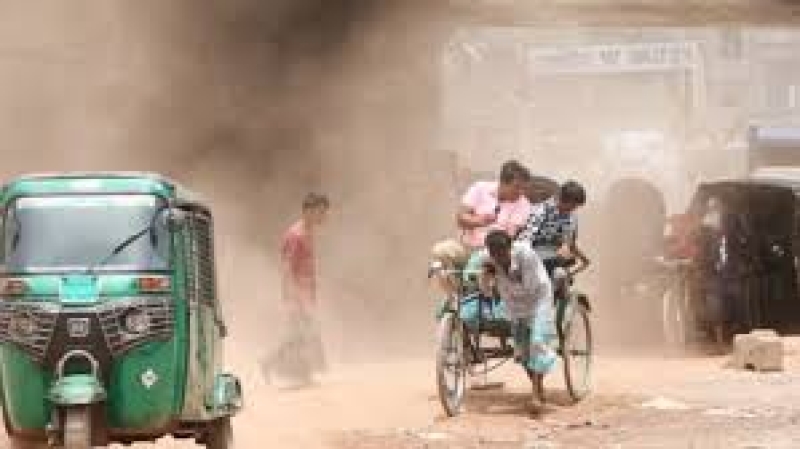
Dhaka ranked sixth among the world's most polluted cities on Wednesday morning, recording an Air Quality Index (AQI) score of 199 at 9:32am.
The city's air quality was classified as 'unhealthy', indicating that pollution levels could pose health risks to the general population.
According to the global AQI ranking, Pakistan's Lahore topped the list with a score of 289, followed by Karachi at 236 and Afghanistan's Kabul at 220.
Under the AQI classification, readings between 101 and 150 are considered 'unhealthy for sensitive groups', while scores from 151 to 200 fall in the 'unhealthy' category.
Readings between 201 and 300 are classified as 'very unhealthy', while scores above 300 are considered 'hazardous' and indicate serious health risks.
The AQI provides daily information on air pollution levels and indicates the potential health effects of exposure to polluted air.
In Bangladesh, the AQI is calculated based on five major pollutants: particulate matter (PM10 and PM2.5), nitrogen dioxide (NO2), carbon monoxide (CO), sulphur dioxide (SO2) and ozone.
Dhaka has long struggled with air pollution, with air quality typically deteriorating during winter and improving during the monsoon season.
The World Health Organization estimates that air pollution causes around seven million deaths worldwide each year, mainly from stroke, heart disease, chronic obstructive pulmonary disease, lung cancer and acute respiratory infections.