

- Prioritise Multilateralism to Resolve Iran War Humanitarian Crisis |
- From drought to deluge: ‘Super’ El Niño’s expanding reach |
- Messi Bids Farewell to Argentina After 21-Year Career |
- Toyota Tsusho briefs PM on plan to manufacture vehicles in Bangladesh |
Eliminate politically tuned loan sanctioning to stabilise banking
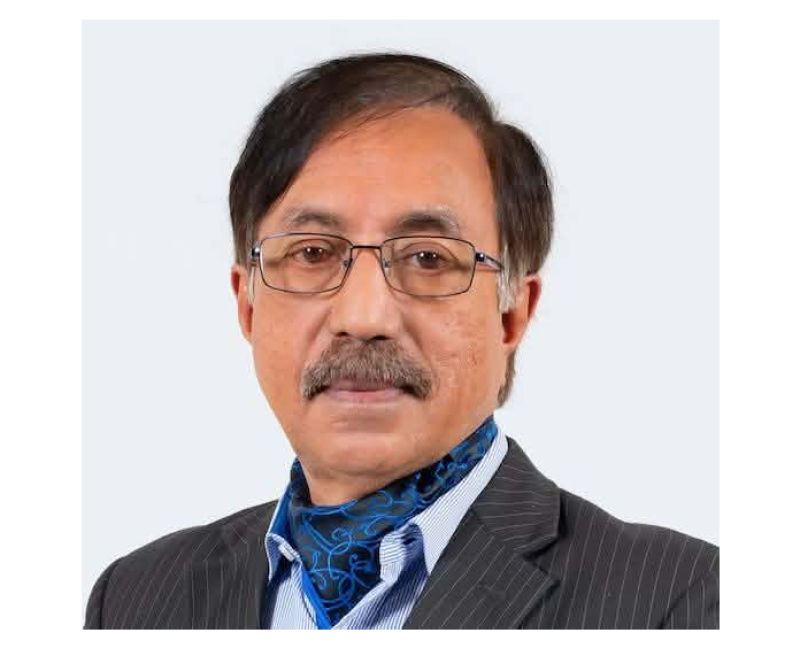
Experienced Banker Faruk Mayeenuddin
Imtiaz Ahmed
Faruq Mayeenuddin Ahmed, Independent Director & Vice Chairman and Chairman, Executive Committee of the Board, BRAC Bank PLC, in an interview with Imtiaz Ahmed of the Bangladesh Mail said that Bangladesh can stabilize its banking sector by ensuring full independence of the central bank, drastically reducing non-performing loans and eliminating politically motivated boardroom loan sanctioning.
A brilliant economics graduate of Dhaka University, he has served in senior management roles in Trust Bank (MD and CEO), City Bank (AMD, Chief Risk Officer and Chief Anti-Money Laundering Compliance Officer (CAMLCO)), AB Bank (DMD) and Mercantile Bank (DMD) and is now also Adjunct Faculty at East West University
Bangladesh can stabilise its banking sector by ensuring full independence of the central bank, drastically reducing non-performing loans and eliminating politically motivated boardroom loan sanctioning.
The rest of the interview is given below:
Q: The Bangladesh economy has been battered by the corona pandemic, Russia-Ukraine war, war and tension in the Middle East, plundering of the bank money and slowdown in global growth. How do you see the prospect of the Bangladesh economy in 2026–27 fiscal years?
A: Albeit Bangladesh government projected an ambitious target of 6.5% GDP growth, all the international agencies like ADB, HSBC, IMF have forecasted much lower growth of 4%, 4.4% and 3.5% respectively. We need to consider that the economy has been going under severe stress in the banking sector with high non-performing loans and weak balance sheets of most of the banks. We are experiencing the lowest private sector credit growth that will hold back the investment further. The unstable energy sector will act as the highest barrier to investment. The latest hike of fuel price is the strongest blow to the new investment in addition to fueling inflation further.
All these factors will spoil any prospect of the economy with no sign of recovery in near future.
Q: How do you see the success of the Bangladesh economy during the last 54 years?
A: Bangladesh had been a poverty-stricken, agrarian country in the year of its liberation. In the last 54 years it has been transformed into a vibrant lower-middle-income industrial economy. Major successes achieved in many sectors that had posed the country as a paradox to the international community.
Our extreme poverty was nearly 80% in the early 1970s and roughly 50% in 1991 which has been dropped down to about 18.7% by 2024, aided by expanding social safety nets.
The ready-made garments sector expanded dramatically, generating over 80% of total export earnings and employing millions of local workers, particularly women. As a result a large number of women folk found the light of empowerment which has largely been substantiated by the income generating activities of the NGOs for reducing gender disparity.
Bangladeshi farmers and researchers achieved self-sufficiency in staple food grain production, pushing output to roughly 35 million tons annually. We have already secured a position among the world’s leading producers of fish and vegetable, while achieving notable self-sufficiency in meat, poultry, and cattle sectors. We have become the 2nd largest producer of freshwater fish in the world.
We rank in the 3rd position in overall vegetable production, producing millions of tons annually and securing top-10 positions for specific crops like potatoes and tropical produce.
Bangladesh has achieved self-sufficiency in meat production, generating outputs that outpace domestic demand. Our commercial poultry and egg sector has expanded sharply by over 200% in the past decades, making the country self-sufficient in egg and poultry meat supply while providing extensive rural employment.
Remittance sent by Bangladeshi wage earners has become a strong pillar for foreign exchange reserves and macroeconomic stability. Bangladesh started its journey with just around US$24 million remittance in the early 70s which has increased to a record US$32.8 billion in the year 2025.
Q: According to the latest data of the Bangladesh Bank, total NPLs in the banking sector stood at Tk6,06,555 crore at the end of June, equivalent to 32.78% of total defaulted loans. In other words, nearly Tk33 out of every Tk100 lent by banks was classified as non-performing. How can the Central Bank be constructive in improving the health of the banking sector?
A: The central bank can improve the health of the banking sector by enforcing rigorous oversight, risk-based supervision, eliminating interference of the Board in lending, tightening credit assessment matrices of the banks with high NPL. Other required measures are
Shift from rigid rule-based oversight to dynamic, real-time risk tracking across commercial bank clusters.
Weak and high NPL-ridden, non-viable banks must be restructured by merger and other strategic changes.
Aggressively reduce non-performing loans through transparent write-off guidelines and recovery drives.
Anonymous and fraudulent lending should be separated from NPL and booked under protested bill head of balance sheet which is done in case any fraud in the bank.
Q: The distribution of loans in the rural sector is a major challenge in Bangladesh. How Commercial banks work with the central bank in reaching loans in the rural economy?
A: The central bank through their policy directives, refinancing facilities, and target quotas can induce the commercial banks to expand affordable credit into the rural economy. The central bank sets mandatory quotas for commercial banks to allocate a specific percentage of total loans to agriculture and rural sectors. Regulators also made it mandatory for the commercial banks to maintain a ratio of rural branches compared to urban branches. The central bank can provide low-cost refinancing funds to commercial banks specifically for disbursing agricultural or CMSME loans. In the latest move by the government, the central bank has introduced a number of incentive and refinance packages for CMSME loans in the rural and semi-urban areas.
Q: The central bank had poorly supervised the banking sector, as the political intervention was too high during the tenure of the last political government. How do you see the supervision of the central bank nowadays?
A: In January 2026, Bangladesh Bank officially rolled out the Risk-Based Supervision (RBS) framework. Under the changed arrangements the central bank reorganised its internal structure by dissolving 13 traditional onsite/offsite supervision departments into 17 specialised units. BB now continuously monitors the custom risk profiles, liquidity exposures, and data accuracy of banks in real time, shifting from compliance checks to early intervention.
After the political shift of 2024 the central bank initiated aggressive actions, utilizing the Bank Resolution Ordinance 2025 to acquire or forcefully restructure distressed bank boards, freeze troubled assets, and attempt recovery of laundered funds. Financial authorities implemented stricter loan classification guidelines, which brought hidden default loans to light.
Q: Foreign direct investment (FDI) flow to Bangladesh suffered the last two years against the backdrop of political instability, poor governance, poor law and order situation. The present government is working hard to improve the business environment. How do you evaluate the investment climate in Bangladesh?
A: It’s true that Bangladesh lags behind competing countries in attracting foreign direct investment (FDI). World Bank data shows, in 2024 Bangladesh received USD 1.53 billion FDI, India attracted USD 27 billion, Indonesia USD 21 billion, and Vietnam USD 20 billion. Vietnam’s FDI has demonstrated an increasing trend for three consecutive years.
The interim government bragged a lot by bringing a young banker from abroad to be appointed to the top position at the Bangladesh Investment Development Authority (BIDA). But the investment climate has not improved to a satisfactory level. Instead, new foreign investment has declined. An example can be cited of the interim government cancelling renewable energy deals with 31 companies signed during the Awami League government. Even Transparency International Bangladesh had expressed deep concern over this decision to cancel the renewable energy projects involving an estimated investment of around $6 billion. It warned that the move could undermine investor confidence at a critical time for Bangladesh’s clean energy transition.
Although the present government has been trying to bring back the confidence of the investors, the success appears to be a far cry amid present law and order and energy situation of the country. In a situation where even the local investors are shying away from investing, we cannot expect the foreigners to come forward to invest here.
Q: The unethical political intervention in the banking sector during the tenure of the last political government was a black chapter in the history of the banking sector of the country. How Bangladesh can overcome the major challenges in stabilising the banking sector?
A: Bangladesh can stabilise its banking sector by ensuring full independence of the central bank, drastically reducing non-performing loans and eliminating politically motivated boardroom loan sanctioning. The central bank should be given regulatory and operational independence free from all political interference. Transition is needed gradually to a strict asset classification, transparency, and risk-based supervision shunning rescheduling culture of overdue loans on political decisions. Legal support should be ensured to the banks to fight against willful defaulters so that they can be brought under strict legal recourse.
Q: Local and export-oriented industries have become victims of the energy crisis nowadays. The USA-Israel imposed war on Iran has created instability in the global energy markets. According to newspaper reports, a number of industrialists have cut the production partially. How do you see this scenario as a banker?
A: From banking perspective, the energy crisis hitting all types of industries will have a chain reaction on credit risk, liquidity, and economic stability. When factories cut production due to power outages or high fuel costs, their financial distress immediately transfers to the balance sheets of commercial banks. There will be surge in Non-Performing Loans, reduction in cash flow due to lower output and missed export deadlines. With revenues plummeting, industries will have to struggle to generate the cash flow required to service their debts, which eventually will lead to rising tide of classified loans. When production in export-oriented industries will drops, foreign exchange inflows will dry up, worsening national dollar/foreign currency liquidity shortages. Due to the FX shortage, banks will struggle to open Letters of Credit for raw materials and machinery. This will create a vicious cycle: industries cannot import raw materials to produce goods, further damaging their ability to repay banks.
Q: Every year, a commercial bank has a plan to launch new projects. Can you brief us about your new projects?
A: In fact, it is more important to ensure sustainable growth than to merely launch a new project. We see all the improvement initiatives as a project that is visible in the bank’s coveted performance. We have introduced the “Missing Majority” strategic vision during its 25th-anniversary silver jubilee celebration to expand financial inclusion to the 72% unbanked population of Bangladesh. If you ask for a project, then our present project is moving beyond the long-standing “Missing Middle” focus on SMEs to a retail banking mission targeting the broader unbanked population and leveraging digital tools, data, agent banking to deliver personalised services regardless of geography or income level.
(Faruq Mayeenuddin Ahmed, Independent Director & Vice Chairman and Chairman, Executive Committee of the Board, BRAC Bank PLC)