

- Measles Death Toll in Children Surpasses 350 |
- Global Eid on Same Day ‘Not Practical’: Mufti Malek |
- PM Rides Teen Inventor’s Smart Car in Dhaka |
- Man beaten to death in Chuadanga over financial dispute |
- Dhaka's air 5th worst in the world Saturday morning |
BB Moves to Shield Economy From Iran War Impact
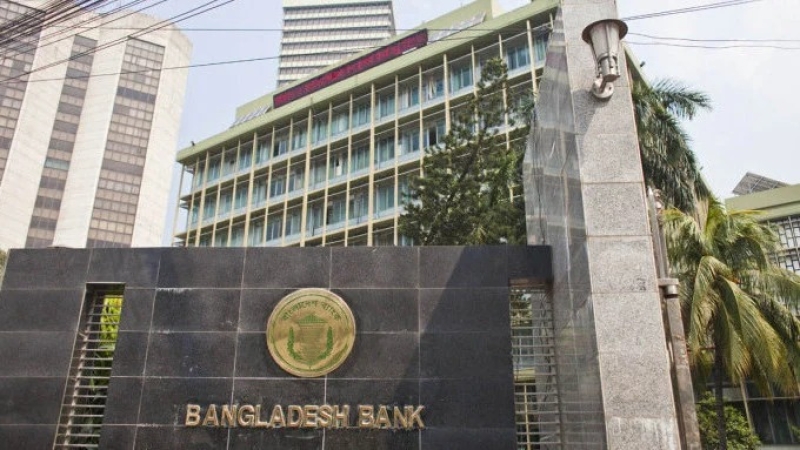
File photo of Bangladesh Bank.
Bangladesh Bank has outlined a series of policy measures and contingency plans to protect the economy from potential fallout arising from the ongoing conflict in the Middle East, particularly the Iran war.
At a meeting with senior journalists and leaders of the Economic Reporters’ Forum in Dhaka on Saturday, BB Governor Mostakur Rahman and deputy governors highlighted both the country’s current macroeconomic strengths and the risks of a prolonged war.
The central bank said the country’s foreign exchange reserves remain strong enough to cover import payments even if the conflict continues for another three to four months. It also noted that the exchange rate has remained stable without intervention and is expected to avoid major volatility.
To ease possible pressure on the balance of payments, Bangladesh Bank is working to secure a $2 billion loan. It is also expecting remittance inflows to rise by $2 billion to $2.5 billion during the current fiscal year, supported in part by seasonal inflows around Eid-ul-Azha.
In addition, the country is hoping to receive a $1.5 billion tranche from the International Monetary Fund in June, which would provide further support to external finances.
The government is also considering government-to-government arrangements with Middle Eastern countries to import fuel at lower prices or receive support in the form of grants.
Officials said steps are being taken to contain import-driven inflation and stimulate domestic demand, while regional initiatives are also under consideration.
As part of its domestic support measures, Bangladesh Bank plans to expand agricultural credit targets and introduce new refinancing schemes for the sector. To improve revenue collection and promote formal transactions, the use of Bangla QR codes will be made mandatory from July 1.
A Tk600 crore startup fund is also set to begin disbursing loans from June to support employment generation. At the same time, efforts are underway to reopen factories that remained shut before and after August 5, 2024.
The central bank also stressed the importance of keeping the financial sector free from political influence, recovering stolen assets and strengthening the operations of consolidated Islamic banks.
Despite the current preparations, Bangladesh Bank warned that a prolonged conflict could create serious economic pressure.
One major concern is the possible impact on Bangladeshi migrant workers in the Middle East. Any large-scale job losses or return of workers could reduce remittance inflows while increasing pressure on the domestic labour market and social safety systems.
Officials also expressed concern that the IMF could push for a reduction in fuel subsidies, which may add to inflationary pressure. Any increase in fuel prices would likely raise the cost of living further, a challenge that monetary policy alone may not be able to contain effectively.
The central bank also pointed to weak revenue collection as a growing concern, warning that the government could face a deficit even in its operational budget.
It further noted that sustaining GDP growth above 5 per cent would be essential to attract meaningful foreign investment and maintain economic stability. To