

- Commercial flights resume at Tehran airport after two months |
- 11 more children die of measles, similar symptoms in 24 hrs: DGHS |
- 1,000 runners join ‘Beautiful BD Run Season-2’ at Hathirjheel |
- Revenue Collection Faces Tk98,000 Crore Shortfall |
- Nuclear Risks Test Global Pact at UN Talks Next Week |
MCCI urges NBR to make upcoming budget supportive, not punitive
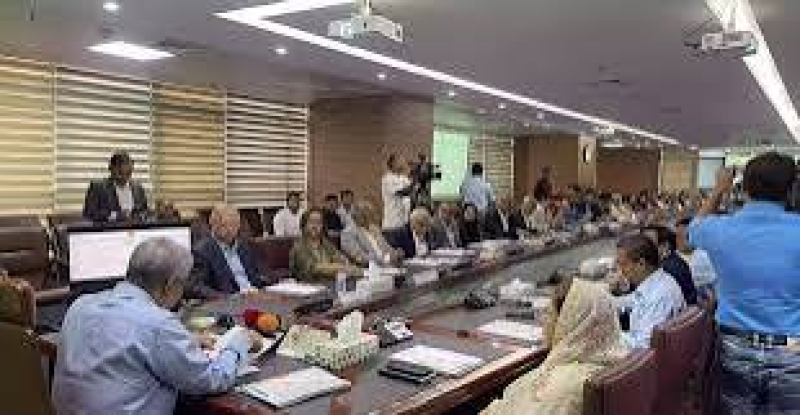
Metropolitan Chamber of Commerce and Industry (MCCI) on Saturday called on the National Board of Revenue (NBR) to frame the forthcoming national budget as a support mechanism for businesses rather than a burden as domestic industries continue to weather high interest rates and a persistent dollar crunch.
MCCI President Kamran T Rahman handed over the chamber's pre-budget proposals to NBR Chairman Abdur Rahman Khan at a meeting at NBR office in the capital.
Noting that member institutions of MCCI contribute nearly 50% of national revenue, Kamran said the chamber remained committed to working as a close partner of the NBR in building an investment-friendly and transparent tax regime.
“At a time when high interest rates of 12% to 14% and dollar shortages are driving up raw material import costs, small and medium entrepreneurs are bearing the heaviest burden,” he said, urging that the next budget prioritise relief over restriction.
Key proposals
On broadening the tax net, the MCCI president noted that despite more than one crore e-TIN holders, fewer than half file returns regularly, a structural weakness the chamber has repeatedly flagged.
With around 90% of Bangladesh's economy dependent on the informal sector, he proposed introducing a symbolic minimum tax of Tk 100 to Tk 1,000 and a one-page digital return filing system via mobile app to draw the informal workforce into the tax fold and curb tax evasion.
On the effective tax rate, the MCCI observed that advance income tax (AIT), tax deducted at source (TDS) and various restrictions push the actual tax burden on many businesses to between 40% and 50% far above the nominal rate.
The chamber called for the unconditional reduction of the corporate tax rate and a shift from turnover-based to actual income-based taxation.
On digital transformation of the tax system, MCCI proposed replacing the separate platforms for income tax, VAT and customs with a unified taxpayer profile, rationalising VAT rates, automating input tax credits and introducing online hearings at the assessment, appeal and tribunal stages to reduce cost and improve administrative efficiency.
On the rationalisation of the Primary Source Rule (PSR), the chamber said mandatory PSR compliance across 39 categories is hampering ease of doing business. It urged that the system be simplified, made logically consistent and rendered digitally verifiable to ease the compliance burden on taxpayers.
On the super-rich tax, MCCI cautioned that raising tax rates on high-income earners risks discouraging honest taxpayers and increasing the likelihood of capital flight. It argued that expanding the tax net is a more effective and sustainable route to revenue growth than hiking rates.
On SME support, the chamber called for a separate and enabling tax framework for small and medium enterprises, including reduced turnover taxes, input tax credit facilities and rational cuts in VAT and duties on raw materials, measures it said would lower production costs, sharpen competitiveness and ultimately boost revenue collection over the long term.
Kamran also welcomed the NBR's reform initiatives under the newly elected government and expressed hope that the chairman would provide clear direction on the overall reform roadmap, including the future of the Revenue Policy and Revenue Management Ordinance 2025, which lapsed without being enacted into law. “A clear institutional separation between policy formulation and revenue administration would significantly improve transparency, accountability and predictability in the tax system.”
MCCI President concluded by expressing confidence that, under the farsighted leadership of the Prime Minister and the guidance of the Finance Minister, a pro-growth tax policy would be enacted that simultaneously raises government revenue and expands the space for business and employment, reports UNB.