

- Declaration on Sea Level Rise Draws Mixed Global Response |
- PM inaugurates Tk 1,542 cr Muhuri-Kohua flood control project in Feni |
- Who gets to shape AI? UN debate centres on power, trust and inclusion |
- PM Tarique Rahman likely to visit Japan later this month |
- PM Tarique Heads to Feni for Daylong Programmes |
Mahdi Amin for effective implementation of education plans
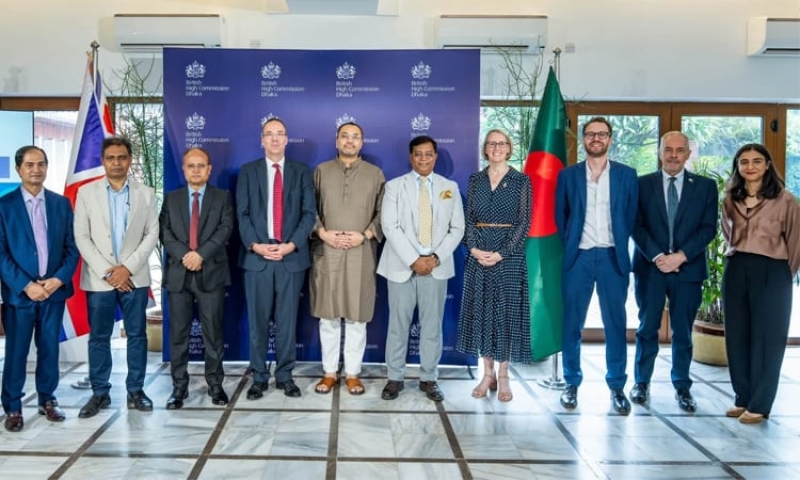
Prime Minister’s Adviser for Education and PMO Spokesperson Mahdi Amin today laid stress on effective implementation of the government’s priority plans to improve the quality of education and develop a modern and skilled workforce.
He made the remarks while addressing a meeting held at the British High Commission at Baridhara in the capital.
The meeting discussed the impact and future activities of the Higher Education Acceleration and Transformation (HEAT) project, funded by the World Bank and supported by the British Council.
Responding to interest expressed at the meeting in establishing an internationally recognised British university in Bangladesh, Mahdi Amin said the government would provide all necessary support to any institution or investor interested in establishing such a world-class university in the country.
He said the government is working relentlessly to expand access to higher education while creating an internationally competitive environment for education and research.
The meeting also discussed various initiatives to improve the quality of higher education, develop skills and innovation, and align the education system with international standards.
Besides, interest was expressed during the meeting in implementing the ‘Bangladesh National Qualifications Framework’ to maintain the overall quality of education and ensure international recognition.
Noting that education is one of the government’s key priorities, Mahdi Amin said, “The government is sincere to improve the quality of education, prepare students for future employment and expand opportunities for research and innovation in higher education.”
Highlighting various development initiatives of the government, he said in the education sector the initiatives included introducing third-language education, creating opportunities for technical education for all, establishing technical education institutions at the upazila level, introducing compulsory technical laboratories, modernising laboratory facilities, setting up multimedia classrooms and ensuring free Wi-Fi facilities for students.
At the university level, the adviser said, initiatives have been taken to establish ecosystem offices, create startup funds, strengthen innovation activities, launch career counselling offices and organise job fairs to strengthen links between students and employers.
He reiterated the government’s initiative to introduce a “Student Loan Programme” for students interested in pursuing higher education abroad.
The meeting also exchanged views on the experiences of teachers and trainers trained under the HEAT project.
Participants stressed greater coordination among relevant stakeholders to accelerate higher education quality improvement and innovation activities.
British High Commissioner to Bangladesh Sarah Cooke, British Council Chief Executive Scott McDonald, British Council Bangladesh Country Director Stephen Forbes, University Grants Commission (UGC) Chairman Professor Dr Mamun Ahmed, UGC Member Professor Dr Masuma Habib, HEAT Project Director Professor Dr Asaduzzaman, World Bank Senior Education Specialist TM Asaduzzaman and vice-chancellors of Dhaka University, BRAC University and North South University, among others, attended the meeting.
After the meeting, a separate bilateral meeting was held between Mahdi Amin and British Council Chief Executive Scott McDonald.
During the meeting, they discussed strengthening the existing partnership between the Bangladesh government and the British Council in the education sector, identifying new areas of cooperation, and various reform initiatives undertaken by the government in the education sector, reports BSS.