

- Japan Remains Bangladesh’s Trusted Development Partner: Envoy |
- Dhaka ranks world’s second most polluted city this morning |
Means of implementation of global stoctake outcomes urged
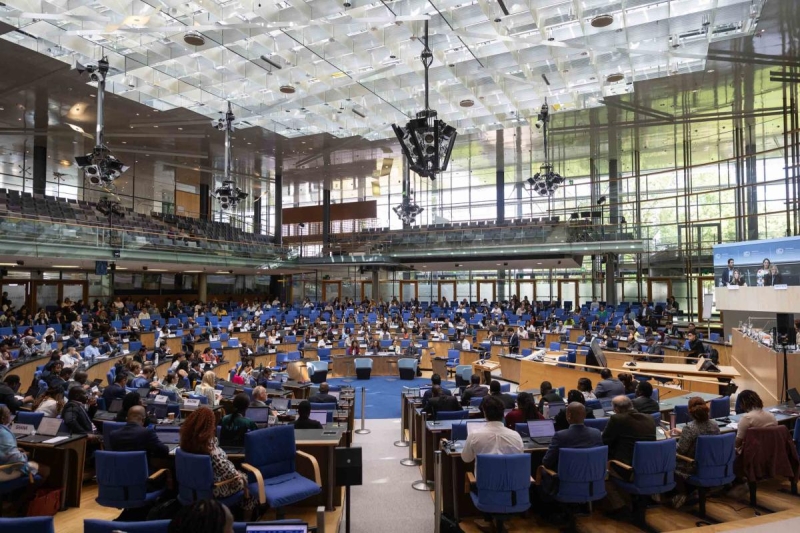
Bonn Climate Talks 2026.
Bonn, June 15 (Radhika Chatterjee): Developing countries emphasized the need for delivery of means of implementation [MOI] by developed countries during the ‘UAE dialogue on implementing the global stocktake [GST] outcomes’ held on June 10-11,2026 in Bonn, Germany.
The most important barriers to the implementation of the first GST (GST1) outcomes was laid out by developing countries which included: a declining trend of delivery of climate finance from developed countries, lack of developed countries taking the lead in reducing their emission reductions and achieving net neutrality well ahead of 2050, and the need for addressing dis-enablers like unilateral measures, intellectual property rights that constrain technology transfer and others, in order to strengthen international cooperation. While some developing countries laid emphasis on the need for implementing efforts related to the energy transition reflected in para 28 of the GST1 outcome, they too acknowledged the critical role that delivery of MOI by developed countries had to play towards achieving them.
Developed countries on the other hand emphasised the importance of strengthening international cooperation through various initiatives both inside and outside the UNFCCC.
Discussions were focused on three thematic areas: “Implementation of mitigation and response measures-related GST outcomes; Implementation of adaptation and loss and damage-related GST outcomes; Strengthened international cooperation and identification of key enablers in implementing the GST outcomes. On both days, the sessions were presided over by co-facilitators of UAE dialogue, Rita Mishaan (Gautemala) and Johanna Lissinger Peitz (Sweden).
[By decision 3/CMA.7 from Belem [in para 2] it was agreed that the modalities of the dialogue will “facilitate the sharing of experience and of information on opportunities, challenges, barriers and needs, including with a focus on the provision of finance, capacity-building, and technology development and transfer, as well as strengthened international cooperation as key enablers, in implementing the global stocktake outcomes”. By para 1, Parties also agreed that the dialogue will take place “in the spirit of international cooperation, be facilitative and non-prescriptive, and respect the nationally determined manner and different national circumstances, pathways and approaches.]
HIGHLIGHTS OF INTERVENTIONS
The G77 and China said the GST1 showed that while progress has been made towards the achievement of the purpose and goals of the Paris Agreement (PA), its level is not yet sufficient. “For developing countries, this is reflected in intensifying climate impacts, rising adaptation costs, growing loss and damage, fiscal pressures, and continuing challenges in eradicating poverty and achieving sustainable development, while international cooperation is under strain. At the same time, considerable ambition is shown in our various Nationally Determined Contributions (NDCs), National Adaptation Plans (NAPs), mitigation technologies, resilience-building efforts, and nationally determined pathways towards sustainable development. A key challenge, however, is the persistent gap between the scale of action required to implement GST1 outcomes through these nationally determined efforts, the level of international cooperation, and the scale, quality, accessibility and predictability of support provided.”
It said the UAE dialogue must be implementation focused and provide a space to discuss actions and global opportunities, overcome barriers, and enhance nationally determined implementation progress and transformation. It pointed out that “finance is consistently identified as the key enabling condition. It must be adequate, predictable, accessible, new and additional, concessional and grant-based, particularly for adaptation and loss and damage. Fragmentation needs to be reduced, access simplified, project preparation supported, and debt burdens not deepened.”
It said, “technology development and transfer must be strengthened in a practical and needs-based manner, and should focus on affordable and appropriate technologies, capacity to operate and maintain them, support for national institutions, regional cooperation, and the development of endogenous and locally appropriate technologies.” Adding further, it said, “capacity-building must be sustained and long term, institutional rather than project-based, and be country-driven, especially to support national planning and implementation.”
It said international cooperation under the Convention and the PA “should be multilaterally strengthened and supportive partnerships with non-Party stakeholders encouraged. These efforts should be needs-based and country-driven, undertaken through enhanced North-South cooperation, complemented by voluntary South-South and regional cooperation, and better coordination across funds and institutions, and should not weaken, impede or discourage implementation by Parties of their climate actions.”
Saudi Arabia for the Like-minded Developing Countries [LMDC] said the key challenge facing developing countries is not a lack of plans, commitments or ambition but rather the MOI gap… The scale of support currently being provided falls significantly short of what is required, adding that the provision and mobilisation of financial support must be commensurate to the level of ambition expected from developing countries.
It further said that “technology development and transfer continues to be constrained by limited access and intellectual property barriers. Technology transfer should take place on the most favorable terms possible for developing countries and support long-term deployment and local capacity development across all technology needs.” It called capacity building essential for implementation and stressed that sustainable climate action “requires strong institutions, skilled workforces and national systems capable of planning, implementing and scaling climate action over time.”
It said “the international environment itself is becoming a barrier to implementation. Unilateral measures, trade restrictions, carbon border adjustment mechanisms [CBAMs], taxes and levies can reduce competitiveness, constrain fiscal space and divert resources away from climate action and sustainable development.”
The LMDC referred to analysis by UN Conference on Trade and Development [UNCTAD] “which found that a CBAM based on a carbon price of USD 44 per ton could increase income in developed countries by approximately USD 2.5 billion while reducing income in developing countries by approximately USD 5.9 billion. The International Monetary Fund similarly found in a report, dated September 2025 , that CBAM implementation in one region, starting 2026, forecast an annual welfare gain of US$141 billion in developed countries, and a loss of US$106 billion in developing countries while only addressing less than 0.2% of global emissions.”
It said operationalising enablers “requires a renewed focus on delivery rather than additional expectations on developing countries”. This it said would mean that developed countries deliver their existing commitments on finance, technology transfer and capacity building before creating new frameworks and initiatives, scaled up support through the operating entities of the Financial Mechanism, including through the Green Climate Fund [GCF], Global Environment Facility [GEF], Adaptation Fund, and Fund for Responding to Loss and Damage [FRLD], to triple their outflows and adaptation finance respectively. It also said there is a need for “addressing barriers to technology transfer, including intellectual property-related barriers where they impede implementation.” It also called for “ensuring climate finance remains aligned with nationally determined priorities rather than externally imposed classifications, taxonomies, regulatory frameworks or pathways, consistent with the Belem Safeguards on the implementation of Article 2.1c of the PA.” [Article 2.1c refers to “making finance flows consistent with a pathway towards low greenhouse gas emissions and climate-resilient development.]
It also stressed the need for “addressing unilateral measures and other policies that reduce developing countries’ ability to implement climate action. Enhanced international cooperation is fundamental to implementation. Cooperation should be guided by equity and CBDR-RC, and support nationally determined pathways. They should never impose a single pathway, initiative or approach at the international level or extraterritorially inflict national standards and regulations on other countries. We are seeing attempts at both; causing severe strain on multilateralism and barriers to developing countries implementation of their nationally determined climate action.”
It reiterated that the UAE dialogue “must remain fully consistent with its mandate as a facilitative, non-prescriptive space with a focus on finance,” and reiterated the need for the co-facilitators to “ensure that the summary report remains a factual summary as per the mandate, without introducing recommendations, interpretations or progress assessments of implementation. The report must confirm that the GST outcomes implementation occurs through different nationally determined pathways, approaches and technologies and does not establish global targets to be tracked. While some Parties may choose to pursue specific roadmaps, initiatives or approaches, others may contribute through alternative approaches, including diverse technologies such as renewable energy, carbon management and removals and other cooperative initiatives. Respecting this diversity makes this dialogue consistent with the PA.”
The Arab Group said predictable and accessible finance is one of the key enablers where action is needed and asked for scaling up of provision of financial support through the operating entities of Financial Mechanism and stressed the need for country ownership. This it said would enable the implementation of NDCs and NAPs. Stressing the need for ensuring financial support is provided to developing countries, it highlighted the way in which developed countries influence the decision of who gets finance, and said a country of the Arab Group [ an apparent reference to Oman] had applied for GCF funding for an early warning system project, which the Board rejected based on the criteria of the country being a “high income” one, despite the country being fully eligible for accessing finance.
The African Group said there will be different pathways towards achieving the goals of the PA, depending on a country’s circumstances and priorities. International support must be tailored to national circumstances and these pathways to reflect equity. Referring to the various initiatives related to climate happening outside of the UNFCCC, it said, “not all of these initiatives apply principles of the PA and UNFCCC”. It stressed that a successful implementation of the GST1 outcome requires international cooperation and pointed to the need for significantly scaling up access to predictable finance. It highlighted the need for addressing high cost of capital and reforming international financial institutions. It said although UNFCCC does not have a legal remit on other international bodies, it can send signals which has a bearing on other institutions.
The Alliance of Small Island Developing States (AOSIS) said the GST1 outcomes cannot be implemented without the delivery of MOI, adding that ambition and implementation are dependent on the scale, pace and delivery of the required MOI. It stressed the need for accessible, grant based, predictable finance for implementation of NAPs, NDCs, and responding to loss and damage. It also expressed concerns about the decline in funding received by the GEF in its latest round of replenishment. It pointed to similar concerns related to capitalisation of funds in other funds like the FRLD and the Adaptation Fund.
It said the Conference on ‘Transitioning away from fossil fuels’ held in Santa Marta, Colombia, was a leading example of an effort of international cooperation to deliver on the GST1 outcomes related to phasing out fossil fuels, including subsidies. It said the Conference has offered to compile an inventory on fossil fuel subsidies and invited Parties to join the effort on a voluntary basis. It asked for a further maximisation of the Action Agenda and the need for recognizing these international cooperation efforts at COP31.
Colombia for Alliance of Latin American and Caribbean Nations (AILAC) and Uruguay, Mexico, Bolivia said despite progress, the world is not on track to achieve the goals of the PA. It called the GST1 outcome a significant one and mentioned efforts related to tripling renewable energy, doubling energy efficiency, transitioning away from fossil fuels, and halting deforestation. It pointed to the need for financial resources, capacity building, and technology transfer as key enablers for the Global South to act as per the pace and scale required. It highlighted the gaps in adaptation and loss and damage and said the UAE dialogue must be about provision of finance under Article 9 of the PA. It also said that the report of the first UAE dialogue should inform priorities and solutions of the second dialogue to be held in 2027. It called to address MOI and emphasised the need for adequate, predictable, grant based finance, reform of international financial institutions, and bridging the gap between finance pledged and support provided.
The Least Developed Countries [LDCs] said international cooperation and the multilateral system remain a critical enabler for implementation of GST1 outcomes. Expressing concerns about the current trends in the multilateral system, it said there is a need to come together to advance the global fight against climate change. It said countries cannot delay critical action. It pointed out that climate finance is not sufficient to achieve the scale of action required and highlighted that the current geopolitical situation is impacting both official development assistance and climate finance. An important aspect that needs to be addressed in this context is high cost of capital that developing countries face while accessing finance. It also stressed the need to simplify access to finance, minimise debt, delivery of the new collective quantified goal on finance, and tripling adaptation finance.
China said it has for the first time set up economy-wide emission reduction target covering all greenhouse gas emissions in its NDC. It shared that the country plans to install a total capacity of wind and solar power to six times more than its 2020 level. Despite these reflecting its best efforts, it said there is still a need for “continuously scaling up of support and investment and work with all countries to address new challenges” adding that “our efforts cannot be separated from an open and supportive international political and economic environment.” It said further that “the main barriers include developed countries not taking the lead in emission reductions, and provision of MOI and the emerging challenge is caused by unilateral measures imposed by some developed countries.”
It said “the rise of unilateralism and protectionism are emerging prominent barriers for developing countries, that significantly impair capabilities and potentials to implement and enhance ambition, by undermining global green and low-carbon industrial chains and supply chains, and driving up the costs of clean energy transitions. At the same time, the withdrawal of some country from the PA and even the UNFCCC, will result in increased global emissions, slow down global mitigation trends and critical gap in provision of support to developing countries.” [It was referring to the US’ withdrawal from the Convention and the PA.]
India said the PA’s implementation has been directed to mitigation and keeping the temperature goal as the key focus by the developed countries and that this has naturally led to the sidelining of adaptation in all respects including the provision of MOI and this must be addressed. It also said that the chief barrier to the implementation of mitigation outcomes of GST1 “is the refusal of developed countries to take the lead, who continue to appropriate unfairly the global carbon budget and constantly shift the goalposts.” It asked developed countries what specific steps and targets they have taken for achieving the mitigation efforts in para 28 of GST1 and whether their actions towards them are fair. It stressed it is for countries to choose their path while delivering on their fair share of global climate action. It highlighted that “the Intergovernmental Panel on Climate Change [IPCC] has yet to deliver on equitable, CBDR-RC compliant scenarios and underlying models and reflect the needs and aspirations of the developing world. More work from the global South is needed to fill this gap and the time needed to this is essential.”
Egypt stressed that one of the key messages that must come out of the UAE dialogue is a recommendation on how to define the fair share of [mitigation efforts] developed and developing countries on the basis of equity and CBDR. It stressed the importance of scale, accessibility and quality of finance from developed to developing countries in accordance of Article 9.1 of the PA as the most important enabler for implementing the outcomes of GST1. The ability of developing countries in implementing climate action is constrained by barriers related to intellectual property rights. It said capacity building is also a key enabler. Finally, it highlighted that unilateral trade measures imposed by developed countries obstruct developing countries’ efforts towards low carbon pathways and create dis-enablers for the implementation of their NDCs.
The European Union said international cooperation is key to reducing emissions and also mentioned capacity building, technology development and transfer, need for mobilising finance from all sources in this context. It said it is committed to delivering climate finance and towards achieving the GST1 outcome. It also said that Action Agenda has an important role in strengthening international cooperation. It said reports from the UAE dialogue will inform the second GST.
Switzerland underscored the importance of international cooperation and said implementation of NDCs is key. It welcomed the Global Implementation Accelerator and the Belem Mission 1.5 in this context, and also capacity building initiatives for NAPs, NDCs, and the Coalition on Phasing out Fossil Fuel Incentives Including Subsidies (COFFIS). It also welcomed initiatives like the Santa Marta Conference on Transitioning Away from Fossil Fuels [TAFF] and welcomed all Parties to build national TAFF roadmaps. It said that science is not always comfortable and pointed out that any attempts to undermine or delay the IPCC’s 7th Assessment report is unacceptable.
The Republic of Korea said the GST outcomes need to be translated into particular actions through the instruments under the PA. It said work programmes like the Mitigation Work Programme can contribute to implementation, facilitate exchange in learning and act as a vehicle for the implementation of GST outcomes within their respective mandates. It said international cooperation plays a critical role in operationalising these efforts. Adding further, it said processes under the Convention and the PA provide valuable platform for sharing experiences and mutual learning among Parties and mentioned technical exchanges, knowledge sharing and innovative investments in this context.
Norway said a concrete area where international cooperation is vital is in enhancing efforts to halt and reverse deforestation by 2030 as mentioned in para 33 of GST1 outcome. It said it enhanced support for the ‘Tropical Forest Forever Facility’ in Belem and called the COP30 Presidency ‘forest roadmap’ an opportunity for further advancing work in this direction. It said non-carbon dioxide and methane emissions reduction is essential to the GST1 outcome for keeping 1.5 °C goal within reach. It said there is a need to use all tools available for scaling up climate finance and that it found “inspiring” to see “finance flows are increasing” and emissions reducing under Article 6 of the PA [in an apparent reference to carbon markets.]
Canada said the important issue is how Parties use the UNFCCC and the UAE dialogue to respond to the barriers that were discussed at the dialogue. It said the role of UNFCCC is to enhance practical cooperation amongst countries. It mentioned the need for sector focused conversations in this regard, including nature-based solutions, and issues related to forests and that the COP30 Presidency is working on the ‘forest roadmap’. It said there is value in UNFCCC working better in other initiatives. It emphasised the role of non-party stakeholders, including Indigenous Peoples. It said the Action Agenda needs to translate ambition into action.
New Zealand said developed countries have achieved USD 100bn finance goal and are continuing to increase the funding they provide. It said public finance has an important role to play in climate finance and pointed out that over 90% of funding in the adaptation fund is public finance that is being provided by developed countries. It said Parties are responding to the NCQG agreed to in COP29 which has set a target of USD 300bn by 2035. It said additional focus on investment and climate finance is welcomed in the context of NCQG. – Third World Network