

- DP World to Operate Chattogram Port NCT for 15 Years |
- Anne Carson Wins 2026 Nobel Prize in Literature |
- Workers Helping Feed the World but Starved of Dignity |
- They feed the world, but food workers are Earth’s most exploited |
- Groundwater In India’s Nashik Tests 1,000 Times Over Toxic Chromium Limits Ahead Of Kumbh Mela |
Bangladesh, UNDP Discuss Stronger Climate Cooperation
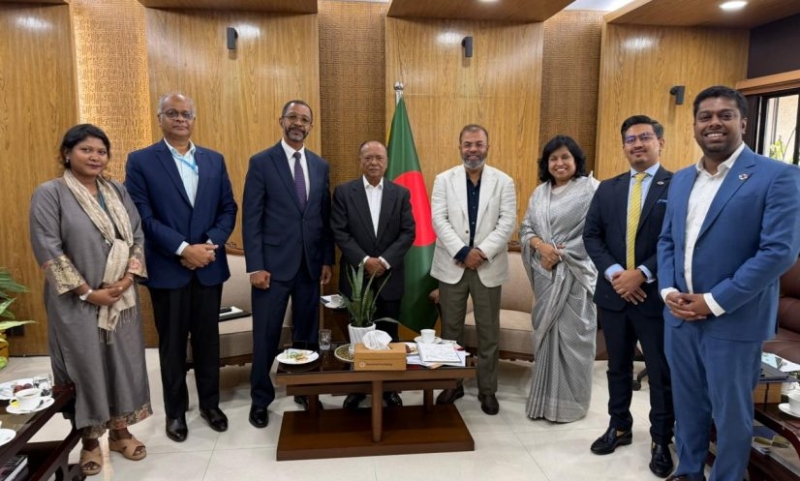
Environment, Forest and Climate Change Minister Abdul Awal Mintoo has stressed the need to strengthen cooperation with the United Nations Development Programme (UNDP) on climate resilience, biodiversity conservation, climate finance and Bangladesh’s participation in carbon markets.
He made the remarks during a meeting with UNDP Bangladesh Resident Representative Stephen Rodriques at his office at the Bangladesh Secretariat on Thursday.
State Minister for Environment, Forest and Climate Change Sheikh Faridul Islam also attended the meeting.
The discussions reviewed existing cooperation between Bangladesh and UNDP in the environment, forestry and climate sectors and explored opportunities to expand the partnership.
Particular emphasis was placed on Bangladesh’s Biodiversity Finance Plan (BIOFIN), the National Cooling Plan for low-carbon development, climate-change adaptation, pollution control, plastic-waste management and strengthening the climate resilience of local communities.
Minister Abdul Awal Mintoo said Bangladesh is among the countries most vulnerable to climate change and that adaptation efforts therefore need to be more effective, locally relevant and results-oriented.
He also stressed the importance of balancing environmental and natural-resource conservation with people’s livelihoods and economic development.
“Bangladesh is working to address the impacts of climate change by mobilising its own resources and capacities. However, international cooperation, accessible climate finance, technology transfer and capacity building are critically important to address growing climate risks,” he said.
The minister said Bangladesh wants to make its longstanding partnership with UNDP more practical and results-oriented.
He also underscored the need for stronger international support to help Bangladesh mobilise greater financing from international climate funds and development partners to implement its national climate commitments.
State Minister Sheikh Faridul Islam stressed greater involvement of local governments and communities in climate-adaptation initiatives.
He highlighted the need to expand nature-based solutions and climate-resilient livelihood programmes in vulnerable areas, particularly coastal regions, char lands, hill tracts, haor areas and the drought-prone Barind region.
The meeting also discussed strengthening UNDP’s technical assistance to help Bangladesh access international climate finance and improve implementation of its national climate commitments.
UNDP Bangladesh Resident Representative Stephen Rodriques reaffirmed the organisation’s commitment to supporting Bangladesh’s climate-resilient and environmentally sustainable development.
He said UNDP was keen to work in line with the government’s priorities in climate adaptation, nature and biodiversity conservation, pollution and plastic-waste management, climate finance and strengthening resilience at the local level.
Rodriques also said UNDP would continue providing technical assistance and fostering partnerships to scale up successful initiatives by bringing together government institutions, local communities, development partners, the private sector and other stakeholders.
The two sides agreed to accelerate implementation of ongoing joint projects and identify new areas of cooperation, including climate adaptation, ecosystem restoration, biodiversity financing, mitigation, air-pollution control and carbon credits.
The meeting also stressed the importance of developing practical financing mechanisms and stronger institutional coordination to translate climate policies and commitments into concrete programmes and benefits for vulnerable communities.
Acting Secretary of the Ministry of Environment, Forest and Climate Change Dr Fahmida Khanam and senior UNDP Bangladesh officials were also present.