

- Climate Crisis May Displace 7.5% of Bangladeshis by 2050 |
- NEIR Rollout Targets Tk 2,000cr Revenue Loss From Illegal Phones |
- Dhaka Ranks 7th Among World’s Most Polluted Cities on Thursday |
- Document: Two Bangladeshis Executed After Detention in 2023 |
- Global Warming May Exceed 1.5°C, but Recovery Is Possible |
Climate Crisis May Displace 7.5% of Bangladeshis by 2050
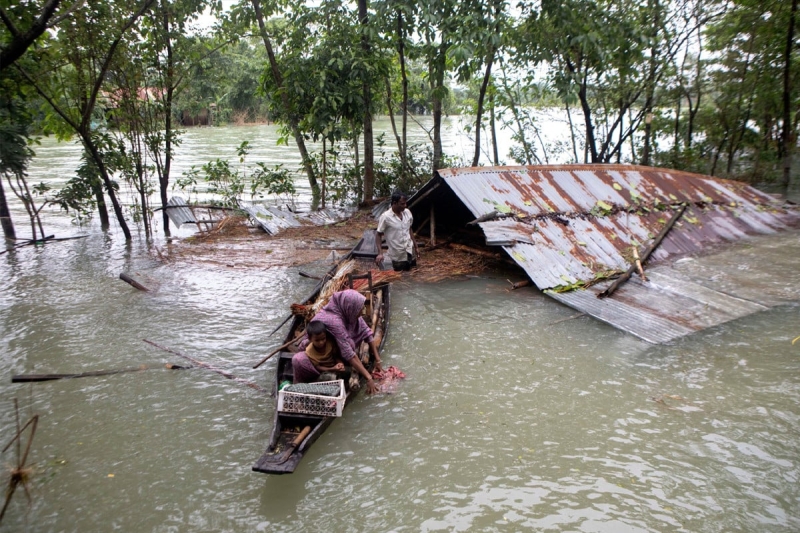
In June 2022, a family in Bangladesh’s Sylhet district sets out by boat in search of shelter after their home is submerged by an extraordinary flood. Photo: Collected
Around 7.5% of Bangladesh’s population could be forced to move from one part of the country to another by 2050 because of climate change, driven by rising sea levels, freshwater shortages and declining agricultural productivity, according to a new report by the Asian Development Bank (ADB).
The report, titled Asia-Pacific Climate Report 2026: Coastal Risks on the Rise — Actions for a Resilient Future, was released on October 21. It assesses growing coastal climate risks across the Asia-Pacific region and outlines measures needed to strengthen resilience.
Bangladesh, Myanmar and India face a dual challenge, the report says. Many people living in areas at high risk of coastal flooding are poorer than their neighbours and have fewer resources to prepare for disasters, cope with their effects and recover from losses.
Bangladesh’s coastal delta is increasingly threatened by global sea-level rise and local land subsidence. Parts of the delta are sinking by between 4mm and 55mm a year, accelerating the loss of agricultural land and increasing the risk of coastal flooding.
Under a high-emissions scenario, known as SSP5-8.5, around 17.4 million people in Bangladesh could be exposed to coastal flooding annually by 2100. The resulting annual economic losses could reach as much as 15% of the country’s gross domestic product (GDP).
People living in flood-prone coastal areas are significantly poorer than those in less exposed locations, leaving the most vulnerable communities with limited financial capacity to adapt to climate change, relocate or recover from disasters.
Saltwater intrusion is also creating serious health risks. Increasing salinity in coastal groundwater and drinking-water sources has been linked to high blood pressure during pregnancy, cardiovascular conditions and kidney disease.
Women and girls face additional burdens. Food insecurity can worsen after disasters, while unpaid domestic work increases. As shallow tube wells become saline, women often have to travel longer distances to collect safe drinking water.
The loss of homes, farmland and ancestral land is also taking a toll on mental health, contributing to heightened stress, anxiety and depression among affected communities.
Without adaptation measures, annual coastal flood losses across Asia and the Pacific could increase more than sixfold by 2050 and nearly twentyfold by 2100, the report warns.
Across 30 coastal economies, annual losses could rise from around $27 billion currently to between $172 billion and $199 billion by 2050, and between $520 billion and $739 billion by 2100.
The report estimates that annual investment of $9 billion to $19 billion in coastal protection could help keep losses near current levels and potentially avert $178 billion to $360 billion in flood damage each year.
“Coastal areas are the unsung engines of growth in Asia and the Pacific, but they are shrinking under rising seas and intensifying hazards,” said ADB Director General for Climate Change and Sustainable Development Yevgeniy Zhukov.
He said the region was at a critical juncture and needed long-term, adaptive and risk-informed solutions to build resilient coastlines, protect lives and sustain economic activity.
More than 400 million people in ADB’s coastal developing member economies live within 10 kilometres of the sea, representing more than one in 10 residents. Coastal areas are also vital centres for ports, trade, tourism and cultural heritage.
Under high-carbon emissions scenarios, annual flood losses in island economies could reach 30% to 60% of GDP by 2100. Floods that historically occurred once every 100 years in cities such as Bangkok, Jakarta, Kolkata and Mumbai could become annual events by the end of the century.
Disruptions to port operations could also put an estimated $40 billion to $45 billion at risk annually across the region.
The report notes that Bangladesh has taken long-term steps to strengthen climate adaptation and disaster preparedness.
The Bangladesh Delta Plan 2100, adopted in 2018, outlines an investment framework of around $52 billion for 80 priority projects in coastal and riverine areas. It also aims to increase annual government spending on delta-related activities to 2.5% of GDP.
Bangladesh has built around 5,000 multipurpose cyclone shelters, many of which serve as primary schools during normal periods. Combined with improved forecasting, early-warning systems and community preparedness, these measures have helped reduce cyclone-related deaths by more than 99% compared with historical levels.
Community-led initiatives are also strengthening preparedness. For example, youth-run weather clubs in coastal schools train students to interpret forecasts and relay early warnings to their families.
However, continued sea-level rise, land subsidence, saltwater intrusion and declining agricultural productivity could significantly increase climate-driven migration from coastal areas.
The report calls for climate adaptation to be integrated into long-term planning for housing, employment, healthcare, safe drinking water and urban infrastructure in areas likely to receive displaced people.
The Asia-Pacific coastline generates around $7 trillion in economic output each year but faces increasingly severe climate risks. Investing in resilience could deliver benefits worth up to 20 times the cost, the report says.
It recommends four priorities: integrating adaptation into development decisions, strengthening institutions and governance, mobilising finance, and ensuring sustained implementation and ownership.
International adaptation finance for coastal economies in the region nearly doubled from around $5 billion in 2015 to an annual average of $11.4 billion in 2022–23. However, a substantial funding gap remains.
Public finance will continue to play a central role in building coastal resilience, the report says. Bridging the gap will require stronger long-term revenue capacity and additional public, private and concessional financing.