

- Biman Flight Carrying PM Set to Leave Tokyo After Repairs |
- PM’s Flight to Dhaka Delayed by Technical Glitch in Tokyo |
- July Killings: Hanif Gets Death Sentence for Crimes Against Humanity |
- What is Iran’s Seven-Day Plan to reopen the Strait of Hormuz? |
- Bangladesh’s Banking Crisis: The Road to Reform |
Bangladesh Moves to Protect Learning From Climate Disasters
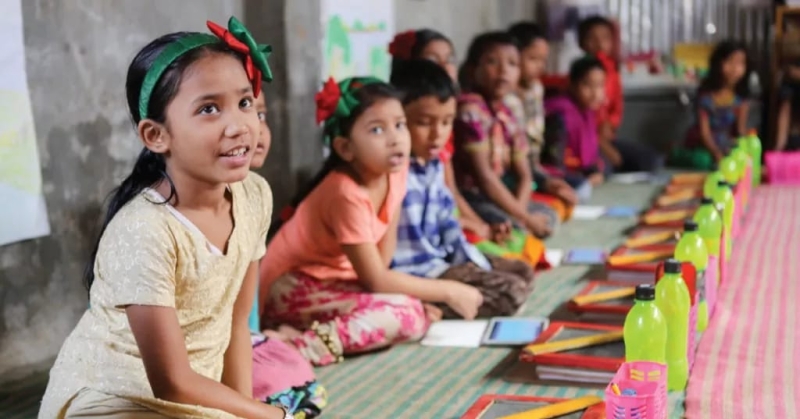
Bangladesh is working to better integrate climate, disaster and education data to make its education system more resilient to climate change and protect children’s learning from disruptions caused by extreme weather.
Floods, cyclones and heatwaves continue to threaten school infrastructure and disrupt education across the country.
However, climate and education data remain fragmented across institutions, making it difficult to identify vulnerable schools, assess preparedness and prioritise support, officials said.
To address these challenges, the Ministry of Education (MoE) and the Ministry of Primary and Mass Education (MoPME), with support from UNESCO, are working to improve coordination among existing information systems and expand the availability of climate-related data for education planning.
A three-day national workshop under the Climate Smart Education Systems Initiative (CSESI) concluded at the Holiday Inn in Dhaka on Thursday. It brought together government officials, education planners and technical experts to identify gaps in existing data systems and explore ways to improve information sharing.
Discussions focused on reviewing and validating existing education, climate and disaster data sources, assessing information gaps and identifying priorities for improvement. Participants also examined possible revisions to the Annual Primary School Statistics (APSS) to strengthen the collection of climate-related information.
Other areas of discussion included stronger data-sharing arrangements, improved interoperability among existing systems and initial proposals for incorporating climate-related questions and variables into future data collection.
Speaking as the chief guest, Delwora Begum, additional secretary of the Secondary and Higher Education Division under the Ministry of Education, emphasised the importance of protecting investments in education from climate risks.
“When any disaster or extreme heat closes a school, every other investment loses some of its value. So planning for the climate is not an extra task. It protects everything else we build,” she said.
Norihide Furukawa, head of education at UNESCO Dhaka, attended as a special guest and highlighted the importance of strengthening existing information systems.
“Building climate resilience in education requires more than collecting data. By connecting existing information and addressing critical gaps, we can help education authorities make better-informed decisions to protect schools and sustain learning,” he said.
The workshop was chaired by Rokeya Khaton, ndc, joint secretary and development wing chief of the Secondary and Higher Education Division.
The initiative builds on earlier CSESI workshops held in October 2025 and May 2026, which examined climate risks, vulnerabilities and institutional capacities within Bangladesh’s education system.
A further workshop in September 2026 explored climate education in curricula and teacher readiness. Together, these activities aim to strengthen the evidence base and institutional capacity needed to integrate climate resilience into education policies, planning and learning.
Improved access to reliable, interconnected data could help education authorities identify climate-vulnerable schools, guide investment in safer infrastructure, strengthen preparedness and sustain learning opportunities, particularly for children in high-risk and underserved communities.
Led by the MoE and MoPME, CSESI is being implemented with technical support from UNESCO and the UNESCO International Institute for Educational Planning (UNESCO-IIEP), with funding from the Global Partnership for Education (GPE).
The initiative supports Bangladesh in integrating climate resilience and environmental sustainability into education-sector policies, plans, budgets and strategies.