

- Bangladesh Targets $1 Billion in Fish Exports by 2030 |
- US Lifts Nationwide Flight Restrictions After Four Hours |
- Protecting the Climate Means Protecting Territorial Rights |
- Bangladesh Targets $1 Trillion Economy by 2034 |
- Dhaka ranks world's third most polluted city this morning |
Bangladesh Could Get $30m for Coastal Climate Projects
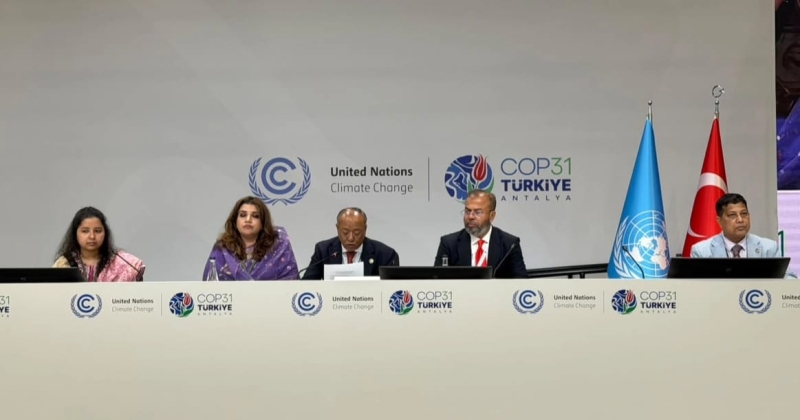
Bangladesh could receive up to $30 million under a new international climate investment programme to strengthen coastal protection, restore mangrove forests and improve the resilience of vulnerable communities.
The funding is expected to come through the first phase of the Climate Investment Funds' (CIF) new programme, Accelerating Resilience Investments and Strengthening Economies (ARISE), according to a press release.
Meanwhile, Bangladesh has called for increased international climate finance to expand renewable energy and strengthen its resilience to climate change, saying predictable financial support and technology transfer are essential to achieving its emissions-reduction targets.
Environment, Forest and Climate Change Minister Abdul Awal Mintoo made the call while presenting Bangladesh's position at a press conference organised by the country's delegation at the COP31 climate summit in Antalya, Türkiye, on Friday.
State Minister for Environment, Forest and Climate Change Faridul Islam, State Minister for Foreign Affairs Shama Obaid, Additional Secretary of the Environment Ministry Navid Shafiullah and MP Monsura Islam were also present.
According to the written statement presented by Mintoo, Bangladesh's Nationally Determined Contribution (NDC) 3.0 sets a target of reducing greenhouse gas emissions by 6.39 percent below the business-as-usual (BAU) level by 2035 using domestic resources.
The country has also committed to an additional 13.92 percent reduction, conditional on receiving international financial and technological support.
Although Bangladesh accounts for less than 0.5 percent of global greenhouse gas emissions, it remains highly vulnerable to climate-related disasters, including cyclones, floods, salinity intrusion and heatwaves, the statement said.
Against this backdrop, Bangladesh is seeking easier access to international climate finance to increase investment in renewable energy and address the growing costs of climate adaptation.
In a message issued on Saturday, Dr Saimum Parvez, special assistant to the prime minister on environment, forest and climate change, said the prospective funding would primarily benefit coastal communities.
The money would help strengthen coastal protection systems, restore mangrove forests and improve the livelihoods and adaptive capacity of vulnerable communities, he said.
He described the prospective funding as an important step towards securing Bangladesh's fair share of international climate finance as a climate-vulnerable country.
The CIF provides financing to developing countries for climate-related investments, while its ARISE programme aims to strengthen resilience through investment.
The Bangladesh delegation also highlighted the urgency of climate action, citing the World Meteorological Organization's 2026 climate update, which estimated that global temperatures from January to September were around 1.47 degrees Celsius above pre-industrial levels.
The delegation said the first four days of formal negotiations at COP31 had concluded, with discussions entering their fifth day on Friday. Although negotiations were progressing on several key issues, a number of critical matters remained unresolved and no final decisions had been reached.
Bangladesh said it wanted the negotiations to deliver concrete decisions and practical support for countries on the frontlines of the climate crisis.
Expanding renewable energy, particularly rooftop solar, is among the country's priorities. However, meeting its emissions-reduction commitments and strengthening energy security will require increased investment, technology transfer and predictable international climate finance, the delegation said.