

- As wars spread, the global food system unravels |
- Holy Eid-e-Miladunnabi Wednesday |
- EU sees Bangladesh as partner of growing strategic importance: Miller |
- Journalism’s main task is to question power: Swapon |
- Rohingya Crisis: Global Community Urges Long-Term Strategy |
Lessons from Fifteen Years: Never Again
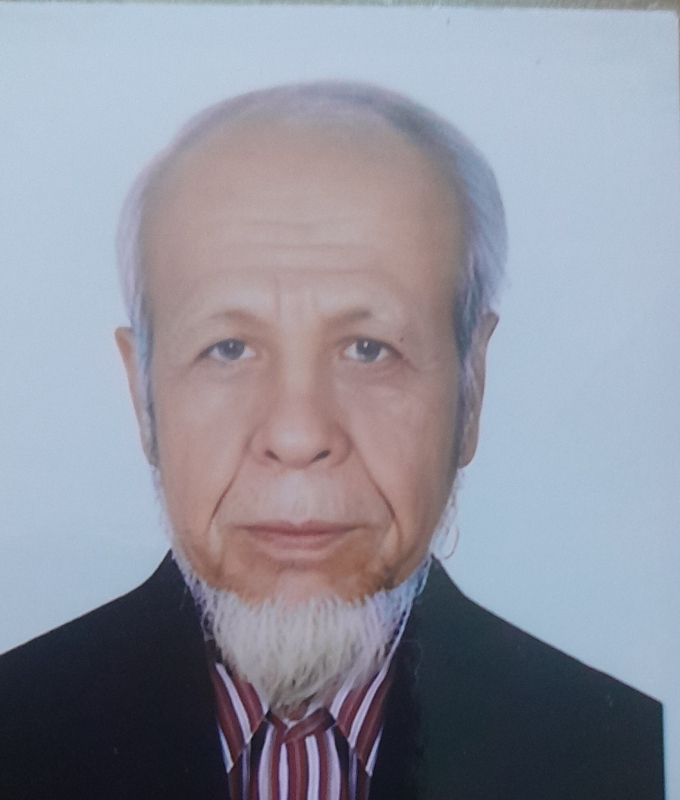
Siddiqur Rahman
Mohd Siddiqur Rahman
It is with a heavy heart that I recall what our country experienced during the past fifteen years. For many citizens, it was a period in which constitutional rights, democratic institutions and the rule of law appeared to be progressively weakened. Politicians, journalists, professionals and ordinary citizens who disagreed with the government often felt insecure and frustrated, wondering when this difficult chapter of our national life would come to an end.
The purpose of recalling these events is not to promote hatred or political revenge. It is to remind ourselves that a nation cannot build a stable future by forgetting the lessons of its painful past.
One of the darkest episodes was the Pilkhana tragedy of February 2009, when 74 people, including 57 serving army officers, were killed at the then BDR headquarters. The incident has remained a matter of deep national concern. A new independent investigation was subsequently undertaken to examine whether the full truth behind the tragedy had been uncovered.
The violent events surrounding the May 2013 Hefazat-e-Islam demonstrations at Shapla Chattar also remain deeply controversial. Human Rights Watch, after examining hospital records, eyewitness accounts and media reports, estimated that at least 58 people died during the May 5–6 violence, while noting that the government, opposition and Hefazat gave sharply different accounts. The important lesson is that allegations involving loss of life by security forces must be investigated independently and transparently, rather than left unresolved.
The prosecution of political and religious opponents through controversial legal processes also created serious debate about the independence and fairness of the justice system. The International Crimes Tribunal trials, including the case of Abdul Quader Molla, attracted international criticism over procedural and legal questions, even though the crimes of 1971 themselves demand justice. Justice must never be confused with political retribution.
Perhaps the most disturbing allegations of the period concerned enforced disappearances and secret detention facilities, including the facility popularly known as Aynaghar. Families spent years searching for missing relatives without knowing whether they were alive or dead. Such allegations cannot simply be buried with the passage of time. Every disappearance deserves an impartial investigation, and every victim and family deserves truth, justice and, where appropriate, compensation.
Political opponents were also subjected to large numbers of criminal cases and arrests. Pre-trial detention became a source of considerable concern, while the use of the police and administration for political purposes weakened public confidence in state institutions. A democracy cannot function properly when citizens believe that their political affiliation determines how the law will be applied to them.
Freedom of expression suffered as well. The Digital Security Act became particularly controversial because of its use against journalists, activists, politicians and ordinary citizens. Human Rights Watch documented the use of the law to harass and detain critics, while a later study by the Centre for Governance Studies and the Clooney Foundation for Justice analysed 222 cases involving 396 journalists and concluded that the law had a significant chilling effect on journalism and criticism.
The unresolved murder of journalists Sagar Sarowar and Meherun Runi is another painful reminder of the importance of accountability. More than fourteen years after their deaths, the investigation report has repeatedly been postponed; in July 2026, the deadline had been extended for the 128th time. Such prolonged delay inevitably weakens public confidence in the administration of justice.
The electoral process also became a major source of public dissatisfaction. The elections of 2014, 2018 and 2024 were accompanied by serious allegations concerning participation, intimidation, electoral fairness and the ability of opposition parties to compete on an equal footing. Whatever one's political allegiance, a government derives its strongest legitimacy from an election in which citizens freely choose among genuine alternatives. The credibility of an election is therefore as important as the result itself.
Another serious concern was the gradual politicisation of state institutions. The administration, police, bureaucracy, universities and other public bodies were increasingly perceived through a partisan lens. When institutions become dependent upon political patronage rather than law, merit and professionalism, corruption and impunity can flourish.
The banking and financial sectors also suffered from serious governance problems. Loan defaults, politically connected lending and weaknesses in financial supervision became matters of repeated public concern. At the same time, allegations of large-scale illicit financial flows and capital flight raised questions about accountability and the effectiveness of financial regulation. Such figures should be independently verified rather than repeated as established facts; nevertheless, the underlying problem deserves urgent attention.
There were also serious concerns about corruption in public projects, procurement, recruitment and the misuse of state resources. When corruption becomes institutionalised, its cost is ultimately paid by ordinary citizens through higher prices, weaker public services, unemployment and declining confidence in the economy.
The most important lesson, however, is that no political party, leader or government should ever be allowed to become bigger than the state. Institutions exist to protect citizens, not to protect those in power. Parliament must remain effective, the judiciary independent, the Election Commission credible, the Anti-Corruption Commission genuinely autonomous, and the police professional and accountable.
We must also remember that political revenge is not an alternative to political repression. Those who suffered under one regime must not become the perpetrators of the same injustice against their opponents. A new Bangladesh cannot be built by replacing one form of intolerance with another.
Our greatest responsibility today is therefore to establish safeguards against the recurrence of authoritarianism. Constitutional rights must be protected; elections must be genuinely competitive; enforced disappearances and extrajudicial killings must never return; journalists must be able to work without fear; and law enforcement agencies must remain servants of the law rather than servants of political power.
We should establish the principle that no one is above the law—not the Prime Minister, not a minister, not a political leader, not a police officer and not an ordinary citizen.
Our memory is short, but the lessons of history should not be. The objective of remembering the past is not to reopen wounds endlessly; it is to ensure that future generations do not inherit the same wounds.
Bangladesh has enormous potential. What the country needs now is not another cycle of political confrontation, revenge and institutional capture, but a culture of constitutionalism, accountability, tolerance and respect for human dignity.
May Allah protect Bangladesh and guide all political leaders and citizens towards a peaceful, democratic and prosperous future. Let us work together so that never again can any government—regardless of political colour—take the country down the road of authoritarianism, impunity and institutional destruction.
(Writer Mohd Siddiqur Rahman, Ex-Country Manager, Frankfurt, Germany, Biman Bangladesh Airlines)