

- Covered van hits Gazipur police patrol team, killing SI, BNP leader |
- Korean City scrambles to rescue dusky shark after it returns to canal |
- PM inspects Mongla Port, Sundarbans, proposed economic zone |
- Early winter cucumber brings hope of bumper harvest in Sirajganj |
- Saudi coalition intercepts Houthi missile after blasts in Riyadh |
Middle East War Puts Bangladesh Jobs at Risk
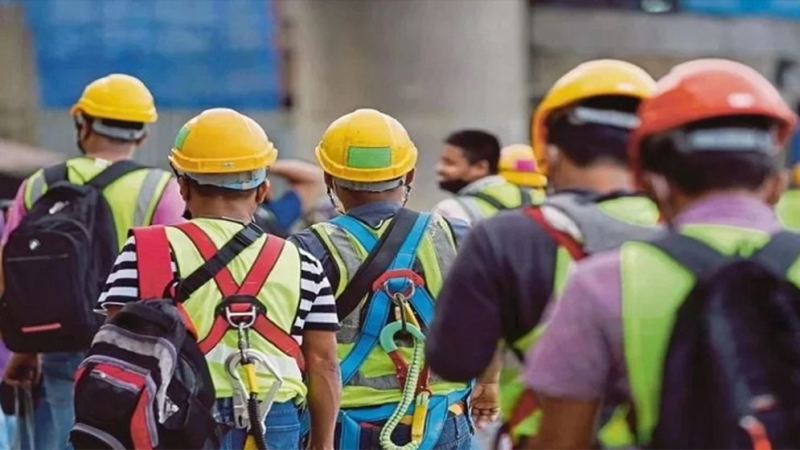
Bangladesh’s overseas labour market faces mounting uncertainty as conflict spreads across the Middle East — the primary destination for the country’s migrant workers and a key source of remittance income.
Around 67 percent of Bangladeshi migrant workers head to Saudi Arabia, while Qatar, Kuwait, the United Arab Emirates and Jordan are also major destinations, according to the Bureau of Manpower, Employment and Training (BMET). Any prolonged instability in the region could disrupt employment and remittance flows that are vital to the economy.
Remittances and export earnings from the readymade garment sector are widely regarded as the two pillars of Bangladesh’s economy. In 2025, the country received a record $32.8 billion in remittances. Economists warn that sustained conflict could significantly reduce inflows, particularly if expatriates lose jobs or are forced to return home.
Nearly six million Bangladeshi workers currently live in the Middle East. Many are facing anxiety as airspace closures and security risks disrupt travel. Some expatriates are unable to return to work after leave, while others are grappling with visa complications as permits near expiration.
So far, one Bangladeshi worker has been reported killed in the United Arab Emirates and another in Bahrain. Several others have been injured in Kuwait and Bahrain.
Professor Imtiaz Ahmed, a former International Relations academic at the University of Dhaka, said short-term conflict may not severely disrupt the labour market and could even create reconstruction-related demand. However, he cautioned that a prolonged war would shrink opportunities, increase fear and potentially trigger a wave of return migration. He urged the government to prepare contingency plans for repatriation if necessary.
Experts also stress the need to diversify labour destinations. Bangladesh’s workforce remains largely unskilled or semi-skilled, limiting access to markets such as Japan and Europe, where demand is higher for trained professionals. Investment in skills development is seen as critical to reducing reliance on the Middle East.
The Ministry of Expatriates’ Welfare and Overseas Employment has opened hotlines and advised workers to remain indoors and avoid sensitive areas. At Hazrat Shahjalal International Airport, 74 domestic and international flights were cancelled over three days due to regional airspace restrictions, leaving thousands stranded. Authorities have arranged temporary accommodation and meals for affected workers.
According to BMET data, more than 1.13 million Bangladeshis went abroad for work in 2025, with Saudi Arabia remaining the top destination. Malaysia, the country’s second-largest labour market, has also become uncertain following renewed restrictions and recruitment challenges.
Industry representatives warn that if the war persists, recruitment may decline sharply, jobs could be lost, and remittance growth may slow — posing a serious challenge to Bangladesh’s economic stability.