

- Measles Death Toll in Children Surpasses 350 |
- Global Eid on Same Day ‘Not Practical’: Mufti Malek |
- PM Rides Teen Inventor’s Smart Car in Dhaka |
- Man beaten to death in Chuadanga over financial dispute |
- Dhaka's air 5th worst in the world Saturday morning |
Iran Warns US as Pakistan Hosts Crisis Talks
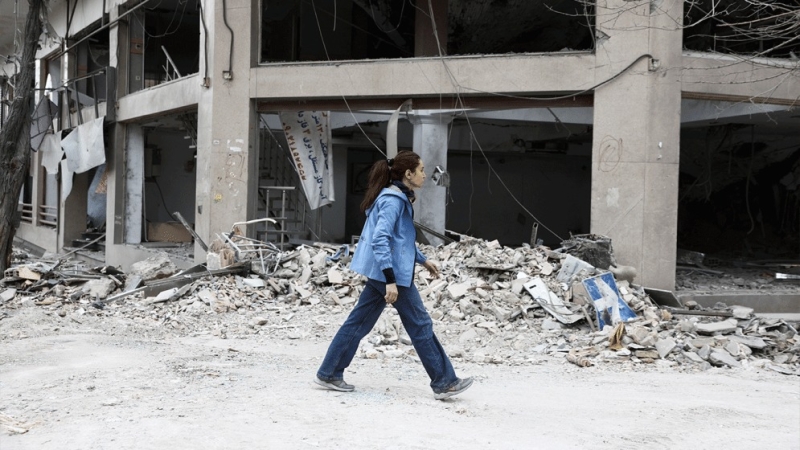
Iran on Sunday warned it was ready to respond to any US ground attack, accusing Washington of preparing for a possible land assault even as diplomatic efforts intensified to contain the widening conflict.
The warning came as the foreign ministers of Pakistan, Saudi Arabia, Turkey and Egypt gathered in Islamabad for talks aimed at halting the month-long US-Israeli war on Iran, which has already killed thousands and triggered major disruption to global energy supplies.
Iranian Parliament Speaker Mohammad Baqer Qalibaf accused the United States of publicly signalling interest in negotiations while secretly preparing military escalation.
“As long as the Americans seek Iran’s surrender, our response is that we will never accept humiliation,” he said in a message to the nation.
The conflict, which began on February 28 with US and Israeli strikes on Iran, has spread across the Middle East and is now threatening to draw in more regional actors.
Yemen’s Iran-aligned Houthi rebels launched their first attacks on Israel since the start of the war on Saturday, raising fears of a wider escalation and fresh disruption to maritime trade routes.
The involvement of the Houthis has heightened concerns over the security of the Bab el-Mandeb Strait, while the effective closure of the Strait of Hormuz continues to rattle global oil and gas markets.
US military build-up
The United States has already expanded its military presence in the region, deploying thousands of Marines, with the first of two contingents arriving aboard an amphibious assault ship on Friday.
Reports from Washington suggest the Pentagon is preparing options for weeks of possible ground operations in Iran, including Special Operations raids and deployments of conventional infantry troops.
However, it remains unclear whether President Donald Trump would approve any plan involving US ground forces.
US Secretary of State Marco Rubio has said Washington could achieve its objectives without deploying ground troops, but added that military reinforcements were being sent to give the White House greater strategic flexibility.
Pakistan-led diplomacy
Pakistan, seen as a possible intermediary between Washington and Tehran, is playing an increasingly active diplomatic role in efforts to de-escalate the crisis.
Ahead of Sunday’s consultations, Pakistani Foreign Minister Ishaq Dar held separate meetings in Islamabad with his Turkish and Egyptian counterparts, while Prime Minister Shehbaz Sharif spoke with Iranian President Masoud Pezeshkian a day earlier.
Diplomatic and military-level contacts are also continuing behind the scenes as regional powers seek a pathway to a ceasefire.
Turkey is also said to be working with partner countries on a proposal to reopen the Strait of Hormuz, a move widely seen as critical to any broader de-escalation effort.
Strikes continue across region
Even as diplomacy gathered pace, military attacks continued across the region.
Israel said on Sunday it had struck Tehran’s weapons manufacturing infrastructure, including dozens of storage and production sites.
In southern Iran, five people were killed in a strike on a pier in Bandar-e-Khamir, where two vessels were also destroyed, according to Iranian state media.
Israel also carried out strikes in Lebanon as part of its campaign against Hezbollah, while fighting and cross-border attacks continued to raise fears of a broader regional war.
Meanwhile, Iran maintained missile and drone attacks against Israel and several Gulf states. Security sources said air defences intercepted a drone near the residence of a senior Kurdish political leader in Erbil early Sunday.
Shipping fears deepen
The widening conflict is also intensifying concerns over global trade and shipping security.
With the Strait of Hormuz effectively shut and the Houthis re-entering the conflict, analysts warn that shipping lanes around the Arabian Peninsula and the Red Sea could face renewed threats.
The Houthis had previously targeted vessels in the Bab el-Mandeb Strait during the Gaza war, and any resumption of such attacks would likely place additional pressure on the global economy.
Iran has so far allowed limited passage for some foreign-flagged vessels through the Strait of Hormuz, but uncertainty remains high as the war continues to escalate.