

- Assam’s Citizenship Crisis: The Politics of Expulsion |
- How Biofertilisers Help African Farmers Adapt to Climate Change |
- COP31’s Just Transition Paradox: Where Are Critical Minerals in Talks? |
- COP31 deadlock holds as nations launch new ‘climate reality check’ |
- Dhaka Ranks 2nd in Global Pollution Index on Thursday |
Beyond the boundary, cricket fuels Sylhet’s economy
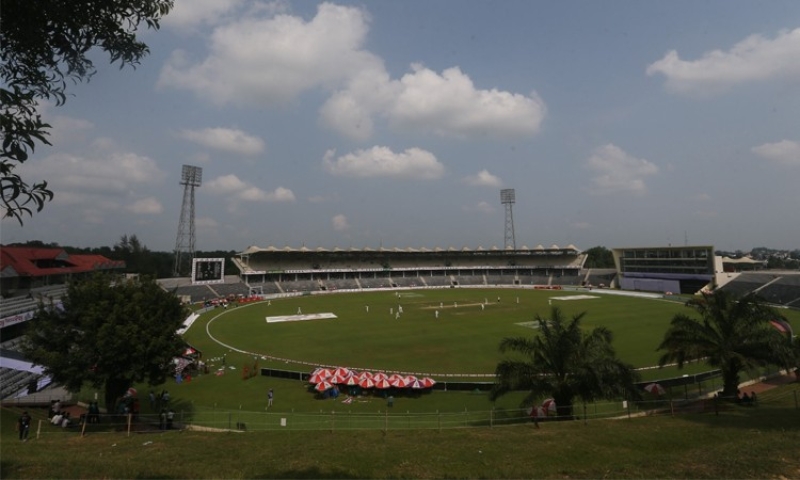
Sylhet, Nov 12 - Huddled amid lush green tea gardens, Sylhet International Cricket Stadium offers a setting unlike any other cricket venue in Bangladesh. Its picturesque surroundings have become an attraction in themselves, drawing cricket fans from across the country to boom Sylhet’s economy whenever the northeastern city hosts international matches.
The impact of cricket in Sylhet goes well beyond the excitement inside the stadium. Every international match brings a fresh wave of visitors, creating business opportunities for hotels, restaurants, transport operators and even small street vendors, turning the sport into an important contributor to the local economy.
As thousands of spectators descend on the city, cricket fever spills into its streets, restaurants and tourist destinations, providing a welcome boost to businesses that depend on visitors.
Bangladesh Cricket Board (BCB) director Abdul Quiyum Choudhury, an elected director representing Sylhet, believes the region can further capitalise on this potential by linking cricket with its tourism appeal.
Choudhury, who also serves as the administrator of Sylhet City Corporation, acknowledged that the region remained behind other divisions in attracting private sponsorship for sporting activities.
He said government support alone would not be enough to develop the region's sporting infrastructure, making private investment and individual sponsorship essential.
"We are thinking about how cricket can become a brand for Sylhet as a tourist city. It is a brand not only for Sylhet but also for the country. We are considering what can be done in this regard," he said.
He also expressed his willingness to bring cricket enthusiasts, sports lovers and potential sponsors together to explore ways of turning the idea into reality.
Choudhury said he was keen to utilise his institutional positions to support the expansion of sporting activities and create greater opportunities for cricket in the region.
The prospect of sports tourism has also attracted attention from the local tourism sector, which has already experienced the economic benefits of major sporting events.
Kazi Wahidur Rahman, manager of Sylhet Parjatan Motel, said tourist arrivals usually increase during domestic and international sporting events, benefiting hotels and motels while encouraging more visitors to explore the city's tourist attractions.
He believes sports tourism could emerge as a promising sector to further strengthen Sylhet's economy.
"Sports tourism could play an important role in strengthening Sylhet's economy. We have plans to revamp the tourism sector to tap into this potential," he said.
The economic benefits, however, extend well beyond hotels and tourism establishments, reaching transport workers, restaurant owners and small vendors who see sporting events as opportunities to increase their earnings.
CNG auto-rickshaw driver Jasimuddin said his income increased considerably whenever Sylhet hosted international cricket matches, as thousands of people travelled to the city to watch the games.
"When cricket matches are held here, it feels as though Sylhet's population doubles. From my experience, I can say that I earn more during international cricket matches because a large number of people come to watch and enjoy the games," he said.
Jasimuddin said he often picked up passengers outside hotels, many of whom were visitors from outside Sylhet. Some even saved his phone number to contact him whenever they needed transport during their stay.
The restaurant business also experiences a significant surge during international cricket matches, particularly at two of Sylhet's most popular dining destinations, Panshi and Pach Bhai.
Situated in the heart of the city, the two restaurants have long been favourite destinations for visitors seeking traditional Sylheti cuisine. However, the influx of cricket fans during international matches often puts their capacity to the test, with both establishments struggling to accommodate the crowds.
Jahangir Alam, manager of Sylhet city Panshi restaurant, said business pressure was already high during extended holidays but increased considerably when international cricket matches were staged in Sylhet.
"The pressure during long holidays is always high. But when it comes to international matches, the frenzy reaches an extraordinary level. To accommodate more people, we have expanded our restaurant. Hopefully, it will help," he said.
Several other restaurants similar to Panshi and Pach Bhai have also opened in Sylhet in recent years, helping cater to the growing number of visitors.
The impact is equally visible around the stadium, where street vendors selling fuchka, toys and other small items line up to take advantage of the crowds attending matches.
For these small traders, an international cricket match can mean earnings several times higher than on an ordinary day.
Fuchka vendor Abu Raihan said he earned more than Tk 50,000 on a single match day, thanks to the large number of spectators and visitors who gathered around the stadium.
"I earned more than Tk 50,000 in a single day during a match. People came from far outside Sylhet to watch the game, and many of them tasted my fuchka after the match. When there are no matches, my income drops significantly," he said.
For people like Jasimuddin, Malik and Abu Raihan, cricket is therefore much more than entertainment. It brings customers, creates business opportunities and provides an additional source of income.
The challenge now is to turn this match-day boom into a sustainable economic opportunity by building a stronger connection between cricket, tourism and private investment. If that happens, Sylhet's picturesque cricket stadium could become more than a sporting landmark, serving as a gateway to broader economic growth for the region.BSS