

- PM Urges People of All Faiths to Build Desired Bangladesh |
- Bangladesh Moves to Tap Vast Potential of Blue Economy |
- Five-Day Holiday Rush: Crowds Swamp Dhaka Bus Terminals |
- Dhaka Ranks Seventh Among 126 Cities on Tuesday |
- BD Consulate in Toronto tops global ranking for Diplomatic Service |
Bangladesh Moves to Tap Vast Potential of Blue Economy
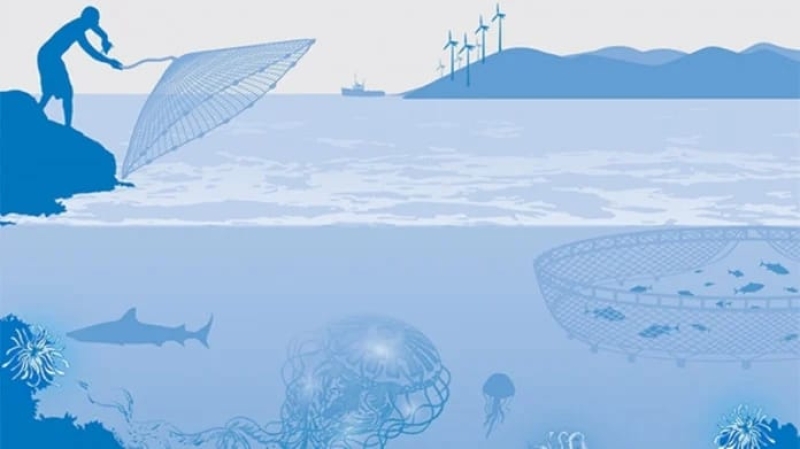
Representational photo.
Bangladesh is stepping up efforts to unlock the potential of its blue economy through policy initiatives targeting sustainable marine fishing, marine aquaculture, crab farming, deep-sea fishing and marine research, while offshore energy exploration remains a key area requiring greater investment and technical capacity.
Despite its strategic location along the Bay of Bengal and abundant marine resources, Bangladesh has yet to make substantial progress in commercial deep-sea fishing and offshore oil and gas exploration compared with regional neighbours India and Myanmar.
Experts say effective policy implementation, modern technology, scientific research and stronger regulatory oversight will be crucial to turning the maritime sector into a major driver of economic growth, export diversification and employment.
The government has prepared several draft guidelines and policy initiatives to improve marine resource management, strengthen fisheries production and expand investment in maritime industries.
These measures aim to balance commercial exploration with marine biodiversity conservation and the long-term sustainability of ocean resources.
Petrobangla Chairman Abdul Mannan said the authorities had invited bids for all 26 offshore blocks under a substantially relaxed framework.
Speaking about offshore exploration, he said gas discoveries in coastal areas, including Bhola and Feni, had strengthened expectations of finding additional reserves offshore.
The Bangladesh Offshore Bidding Round 2026, which is set to replace the Model Production Sharing Contract (PSC) 2024, introduces revisions to the country's offshore production-sharing framework, including changes to gas pricing mechanisms, pipeline investment support and additional financial incentives for unsuccessful exploration wells.
Bangladesh Petroleum Corporation (BPC) Chairman Dr Md Rafiqul Islam said the Ministry of Power, Energy and Mineral Resources was working on various initiatives to realise the potential of the blue economy.
Finding new gas reserves through offshore exploration would be highly beneficial for the country, he said, adding that the energy sector offered significant opportunities under blue economy initiatives.
### Policies Target Sustainable Fisheries
The draft National Mericulture Policy identifies marine aquaculture as a potential source of food security, export earnings and employment.
According to a June 2026 report by the Food and Agriculture Organization (FAO), Bangladesh ranks second globally in fish caught from rivers, lakes and wetlands and fifth in farmed fish production.
The fisheries sector has become an increasingly important contributor to the country's food security.
According to the Bangladesh Economic Survey 2025, total fish production reached 5.255 million tonnes in the 2024–25 fiscal year, exceeding estimated annual domestic demand of around five million tonnes.
Officials at the Ministry of Fisheries and Livestock said the draft policy proposes a dedicated framework to expand marine farming, encourage investment and develop production technologies while safeguarding marine ecosystems.
The proposed policy could help diversify fisheries production beyond conventional coastal fishing and create opportunities for seaweed cultivation, marine aquaculture and other marine-based industries.
The government has also drafted the Guidelines on Sustainable Crab Production, Harvesting, Management and Export, 2026, to improve production practices, protect crab biodiversity and increase export earnings.
The proposed guidelines focus on attracting investment, reducing post-harvest losses, improving cold-chain facilities, developing value-added products and strengthening coordination among stakeholders.
Better farming and harvesting practices are expected to improve product quality and help Bangladesh compete in international markets.
Meanwhile, the Department of Fisheries has prepared the draft High Seas Fishing Guidelines, 2026, to regulate Bangladesh-flagged fishing vessels operating beyond the country's exclusive economic zone.
The proposed framework covers vessel licensing, fishing operations, catch reporting, transshipment, traceability, monitoring, crew safety and enforcement.
It places particular emphasis on preventing illegal, unreported and unregulated fishing and ensuring compliance with national laws and international fisheries requirements.
The guidelines could provide a regulatory foundation for expanding Bangladesh's fishing activities into international waters. Their effective implementation, however, will require reliable vessel-monitoring systems, scientific stock assessments, controls on fishing capacity and adequate enforcement resources.
### Marine Conservation and Export Ambitions
The government has also taken steps to strengthen marine conservation. Two new marine protected areas at Kuakata and Salimpur have been declared through gazette notifications, bringing the number of nationally declared marine protected or marine reserve areas to seven.
The designations are intended to protect marine habitats and support fisheries sustainability alongside the government's ambition to increase fisheries exports to US$1 billion by 2030, from around US$450 million in the 2024–25 fiscal year.
Marine protected areas can help restore fish stocks and preserve biodiversity, but their effectiveness depends on enforcement, scientific monitoring, sustainable financing and the participation of coastal fishing communities.
The government has allocated Tk 200 crore for blue economy research and development in the current fiscal year's budget, including Tk 100 crore for a dedicated Blue Economy Research Fund.
### Offshore Energy and Maritime Industries
Offshore energy exploration remains another major area of untapped potential. The government has signed a new production-sharing contract for offshore exploration and is working to increase domestic gas production through planned drilling activities.
Shipping, Railways and Road Transport and Bridges Minister Shaikh Rabiul Alam has highlighted the potential of the maritime sector, including initiatives to enhance the capacities of Chattogram and Mongla ports, develop a deep-sea port at Matarbari and improve the operational efficiency of Payra port.
State Minister for Planning Md Zonayed Abdur Rahim Saki has also said the government plans to drill 150 onshore gas wells, with initiatives to drill 30 wells in the current fiscal year. Three of the planned wells were already operational, he said.
Beyond fisheries and energy, Bangladesh has opportunities in shipbuilding, ship repair and recycling, port management, maritime transport, logistics and offshore services.
Developing these industries will require stronger links between ports and production centres, improved infrastructure, skilled technical personnel and greater private-sector participation.
### Turning Plans into Results
Bangladesh's blue economy ambitions will depend on translating policy proposals into effective implementation. Coordination among government agencies, universities, research institutions and the private sector will be important for developing reliable marine data, improving resource management and attracting investment.
With draft frameworks covering mericulture, crab production and high-seas fishing, alongside new conservation measures and proposed research funding, Bangladesh has begun establishing a policy foundation for developing its blue economy.
The key challenge is to strengthen enforcement, mobilise investment and build scientific and technical capacity so that the country's maritime resources can contribute more effectively to export growth, energy security, employment and sustainable economic development.