

- BNP finalizes 36 nominations for women’s seats in Parliament |
- Alarming trans-fat levels in food despite regulations: BFSA |
- BD, EU to sign Partnership Coop Agreement (PCA) Monday |
- Missed opportunities, institutional failures mark BD reforms |
- Telcos Seek Priority Power, Fuel to Avert Outages |
Bangladesh, US discuss future generations cooperation
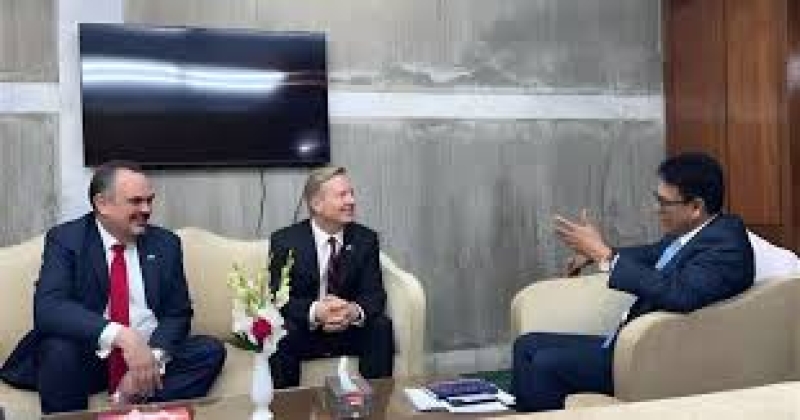
US Special Envoy for Best Future Generations Charles J. Harder has met senior government officials and stakeholders to expand partnerships that support Bangladesh's next generation.
He is paying a three-day visit to Bangladesh from April 18 to strengthen Bangladesh-US strategic cooperation on education and the well-being of children.
Special Envoy Harder and US Ambassador to Bangladesh Brent T Christensen had a 'productive meeting' with Education Minister Ehsanul Hoque Milon on Monday.
They discussed how American educational expertise can equip Bangladeshi youth with skills that drive economic growth and prosperity.
Special Envoy Harder and Ambassador Christensen also met Foreign Secretary Asad Alam Siam to advance bilateral cooperation and work together on partnerships that benefit future generations in both countries.
Earlier, Special Envoy Harder and Ambassador Christensen visited the Surovi school and health camp.
Their discussion with founder Syeda Iqbal Mand Banu focused on the school's integrated approach to education, nutrition, and health—and how this model is critical for helping future generations thrive, said the US Embassy in Dhaka.
Special Envoy Charles Harder and Deputy Chief of Mission Megan Bouldin visited Lalbagh Fort, hosted by Bangladesh's Department of Archaeology.
The Special Envoy toured the Mughal-era Hammam Khana, which the Ambassadors Fund for Cultural Preservation helped restore—demonstrating U.S. dedication to safeguarding cultural heritage for future generations.
The US Special Envoy arrived in Dhaka on Saturday to advance the 'strategic cooperation' on education and the well-being of children.
The mission of Special Envoy Harder’s office is to protect and promote the interests and well-being of children (0-17) throughout the world.
The focus of his office is the protection and well-being of children throughout the world, with particular focus on food security, education, healthcare, WASH (water, sanitation and hygiene), and ending child labor, trafficking, and recruitment into gangs and armed conflict, reports UNB.