

- PM urges vigilance against creating confusion in potics |
- Japanese sweet potato brings new hope to Brahmanbaria farmers |
- Dhaka’s air turns moderate after rain Sunday morning |
- Rajshahi rally wants reparation from India for river diversion |
- Scientists find climate change is reducing oxygen in rivers |
Dhaka-Seoul Ties Set for Strategic Partnership Push: Envoy
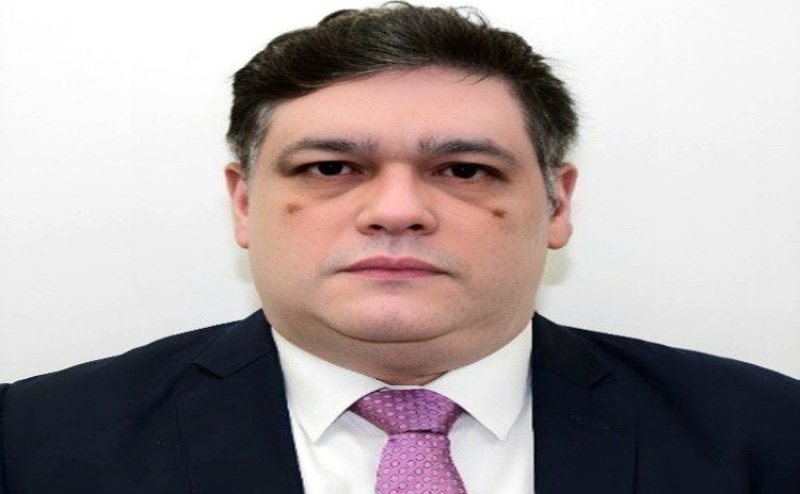
Bangladesh and South Korea are entering a new phase in their relationship, moving beyond traditional trade and aid toward a broader, strategic partnership. With shifting global dynamics and new leadership in both countries, Dhaka and Seoul are now looking to deepen cooperation in trade, investment, technology and human resources. In a detailed interview, Bangladesh Ambassador to South Korea Toufiq Islam Shatil outlines the evolving trajectory of bilateral ties and future opportunities.
Q: How does Seoul view relations with Bangladesh under the new government?
A: Bangladesh and South Korea have enjoyed strong and stable relations since establishing diplomatic ties in 1973. Politically, the relationship has remained friendly and free of major disputes, with regular high-level engagements and cooperation in regional and global forums.
Under the leadership of Prime Minister Tarique Rahman, Bangladesh is expected to maintain continuity in foreign policy while gradually shifting toward a more strategic, investment-driven partnership with South Korea.
At the same time, South Korea’s new government led by President Lee Jae Myung has adopted a pragmatic and outward-looking foreign policy, with a renewed focus on strengthening ties with countries in the Global South. This presents Bangladesh with a significant opportunity to enhance engagement across multiple sectors.
Beyond political ties, South Korea remains a key humanitarian partner for Bangladesh, particularly in supporting Rohingya refugees, and has consistently backed international efforts for a peaceful resolution of the crisis. Defence cooperation and multilateral collaboration are also expected to expand in the coming years.
Economically, relations are rapidly diversifying. What was once largely centred on trade and development cooperation is now extending into manufacturing, ICT, infrastructure, transport and energy. With more than 200 Korean companies already operating in Bangladesh, the foundation for deeper economic engagement is firmly in place.
Q: What is the target for bilateral trade over the next five years?
A: Bilateral trade has shown steady growth over the past decade, rising from below $2 billion in the early 2010s to over $3 billion in recent years. After a temporary slowdown during the pandemic, trade rebounded strongly, reflecting renewed demand and economic recovery.
However, the trade structure remains somewhat imbalanced. Bangladesh imports petroleum products, machinery, chemicals and electronics from South Korea, while its exports are still dominated by ready-made garments, textiles and footwear.
Efforts are underway to diversify Bangladesh’s export basket through targeted initiatives such as business delegations, trade fairs and addressing non-tariff barriers, particularly in agricultural and food exports.
With the proposed Comprehensive Economic Partnership Agreement (CEPA) under negotiation, bilateral trade is expected to grow at a moderate but steady pace of 6–8 per cent annually. Projections suggest trade could reach around $4 billion by 2028, with further growth possible if both countries expand cooperation in high-value sectors such as shipbuilding, semiconductors, renewable energy and advanced manufacturing.
Q: What is South Korea’s position on the Rohingya crisis, and how can it help Bangladesh?
A: South Korea has consistently maintained a balanced and supportive approach to the Rohingya crisis. It has emphasised humanitarian assistance, voluntary repatriation and the importance of a peaceful resolution in Myanmar.
Seoul has provided financial assistance through both bilateral channels and international organisations, including the UNHCR and the World Food Programme, contributing to relief efforts for displaced Rohingyas in Cox’s Bazar.
At the diplomatic level, South Korea has supported relevant resolutions within the United Nations system, calling for safe, dignified and voluntary repatriation.
Looking ahead, South Korea could expand its role by increasing humanitarian funding, investing in infrastructure and livelihood programmes in host communities, and strengthening technical cooperation in disaster management and camp administration. It could also use its diplomatic influence, particularly through ASEAN and its bilateral ties with Myanmar, to help create conditions conducive to repatriation.
Q: How significant is the Bangladeshi community in South Korea?
A: The Bangladeshi diaspora in South Korea, estimated at 35,000 to 40,000 people, plays a meaningful role in the country’s economy. A large portion of this workforce is engaged in manufacturing, construction, agriculture and fisheries under the Employment Permit System.
Bangladeshi workers are widely regarded as diligent, adaptable and reliable, helping to address labour shortages in small and medium-sized enterprises, particularly in sectors that face declining domestic participation.
In recent years, opportunities have expanded beyond traditional sectors. Agreements with local governments have opened doors for employment in shipbuilding, agriculture and even power distribution.
The number of Bangladeshi students in South Korea is also rising steadily. Many are pursuing higher education under scholarships or self-financing schemes and are increasingly finding employment in Korean companies and academic institutions after graduation.
Despite challenges such as language barriers and workplace integration, strong labour protections and embassy support have helped improve conditions. Over time, Bangladeshis are becoming an integral part of South Korea’s evolving multicultural society.
Q: Can South Korea recruit more skilled professionals from Bangladesh?
A: There is clear potential for increased recruitment of skilled Bangladeshi professionals, although opportunities vary across sectors.
Engineers and IT professionals currently have the most accessible pathways, particularly under skilled visa programmes. South Korea’s growing demand in sectors such as semiconductors, shipbuilding, manufacturing and software development creates strong prospects for qualified Bangladeshi talent.
For nurses, opportunities exist but remain limited due to strict licensing requirements, language proficiency standards and adaptation processes. However, pilot programmes and future bilateral arrangements could expand this pathway.
The situation is more restrictive for doctors, as foreign-trained professionals must pass rigorous licensing exams and meet strict regulatory requirements. As a result, only a small number are able to enter the Korean healthcare system, mostly in research or specialised roles.
Q: Do you expect more South Korean investment in Bangladesh?
A: Although foreign direct investment in Bangladesh has faced some challenges in recent years, the country continues to offer strong fundamentals, including a large domestic market, competitive labour costs and a favourable production environment.
South Korean investors are increasingly recognising these advantages. However, Bangladesh has in the past missed some major investment opportunities, particularly from large Korean conglomerates that instead moved to countries like Vietnam.
Recent initiatives aim to change that trend. Investment seminars, business-to-business meetings and direct engagement with Korean companies have generated growing interest in sectors such as manufacturing, leather goods, infrastructure and energy.
With both governments prioritising economic cooperation and working toward finalising the CEPA, the outlook for increased Korean investment in Bangladesh is positive. The involvement of business chambers and private sector stakeholders is also expected to accelerate this momentum.
Q: How is Bangladesh’s economic progress viewed in South Korea?
A: Perceptions of Bangladesh among South Korean civil society are generally positive, though awareness remains somewhat limited.
Bangladesh is increasingly seen as a fast-growing economy with strong potential in manufacturing and human resources. Korean NGOs, academics and development partners often highlight the country’s achievements in poverty reduction, education and resilience in the face of challenges such as climate change and the Rohingya crisis.
The presence of Bangladeshi workers and students has also contributed to a favourable image, with Bangladeshis viewed as hardworking and community-oriented.
Importantly, the traditional perception of Bangladesh as an aid-dependent country is gradually shifting. There is growing recognition of its economic progress, cultural diversity and emerging role as a regional partner.
Efforts by the Bangladesh mission in Seoul to promote cultural exchange and public engagement are further helping to strengthen this evolving image.
As global dynamics shift and economic priorities evolve, Bangladesh and South Korea are redefining their relationship. What began as a partnership rooted in trade and development is now transforming into a multifaceted engagement driven by investment, technology and shared strategic interests—pointing to a more dynamic and forward-looking future for both nations.