

- Document: Two Bangladeshis Executed After Detention in 2023 |
- Global Warming May Exceed 1.5°C, but Recovery Is Possible |
- Three Tourists Die, Two Missing at Himchari Beach |
- Road crashes claim over 1.25 lakh lives from 2014 to June 2026: BJKS |
- Juvenile Crime in Bangladesh: Causes and Ways to Prevent It |
Hormuz Strait Reopening Depends on Multiple Actors: Dhaka
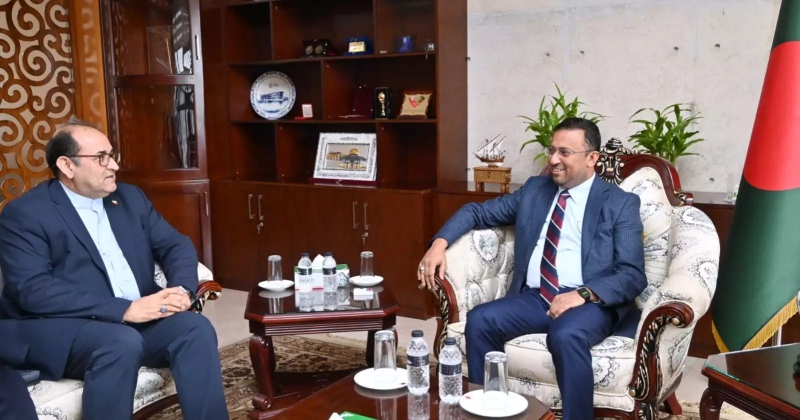
State Minister for Foreign Affairs Humaiun Kobir on Wednesday said reopening the Strait of Hormuz does not depend on any single party, stressing that the situation involves complex issues and multiple actors.
“Keeping the Strait of Hormuz open does not depend on the decision of any single party. There are a range of complex issues involved, and multiple parties are directly or indirectly engaged in the conflict in the region,” he told reporters at the Ministry of Foreign Affairs.
Kobir said Bangladesh has reiterated its call for de-escalation of the conflict in the Middle East and urged all sides to resolve the crisis through dialogue and diplomatic means.
“We have reiterated our call for de-escalation. This has always been our consistent diplomatic position — to seek de-escalation of the conflict,” he said.
He expressed Bangladesh’s hope for an early end to tensions in the region and lasting peace and stability in the interests of people in the region and beyond.
The state minister also highlighted the longstanding historical ties between Bangladesh and Iran, saying people-to-people exchanges and bilateral relations between the two countries date back to the period following Bangladesh’s independence. The two sides also discussed cultural cooperation, he said.
Meanwhile, Iranian Ambassador to Bangladesh Dr Jalil Rahimi Jahanabadi said there were “no problems or difficulties” from Iran’s side regarding shipments of LNG, gas and fuel to Bangladesh.
“There is no problem and difficulty from Iran’s side for the shipment of your LNG, gas and fuel,” he told reporters after paying a courtesy call on Kobir.
The ambassador blamed US attacks and what he described as an American blockade against Iran for difficulties surrounding energy supplies.
“From Iran’s side, there’s no problem. The problem is caused by the Americans,” he said.
Bangladesh also stressed that the safety and wellbeing of around 8 million Bangladeshis living and working across the Middle East remain a top priority.
Kobir said he discussed recent developments in the region, the ongoing conflict, the safety of Bangladeshi nationals and the movement of Bangladesh-bound cargo with the Iranian envoy.
He said Bangladesh would continue working with countries in the region on issues affecting its relations with the Middle East, particularly the safety of Bangladeshi citizens.
Kobir thanked Iran for helping evacuate Bangladeshi citizens who had been stranded in Tehran.
“On behalf of the Prime Minister, I expressed our gratitude to them and appreciated their supportive initiatives,” he said.
The discussions also covered Bangladesh’s security cooperation and defence-related engagements in the Middle East, including its longstanding maritime cooperation with Saudi Arabia in addressing security challenges posed by the Houthis.
“This cooperation is vital because the Kingdom of Saudi Arabia is the custodian of the two holy mosques. Iran understands our position clearly in this regard,” Kobir said.
He, however, reiterated Bangladesh’s position regarding the conflict involving Iran.
“Our position is clear: we do not support, participate in, or call for any aggression or attacks against Iran,” he said.
“Our role is strictly limited to supporting Saudi Arabia in addressing the security challenges posed by the Houthis,” Kobir added.
Bangladesh also requested that its stranded cargo containers be given priority once a peaceful resolution is reached and the situation around the Strait of Hormuz is de-escalated.
Asked about the movement of Bangladeshi ships and energy vessels affected by the disruption, Kobir said vessels from many countries were facing similar difficulties.
“It is not just Bangladesh; vessels from many nations across the world are currently affected,” he said.
He added that Bangladesh had requested that its shipments and containers be facilitated and prioritised as soon as the Strait of Hormuz reopens.