

- Bangladesh Polls: Campaign Ends as Voters Weigh Pledges |
- Bangladesh Heads to First Gen Z-Driven Competitive Poll |
- EC Lifts Mobile Phone Ban, Bars Photos Inside Booths |
- Youth participation vital to BD’s democratic future: C’wealth Group |
- Stocks retreat on week’s first trading day as turnover drops |
US Cuts Tariff on Bangladeshi Goods to 19% Under New Deal
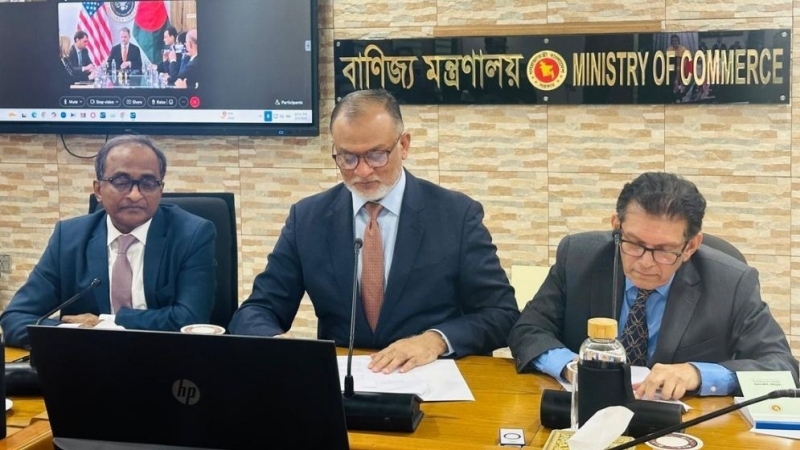
The United States has reduced the reciprocal tariff on Bangladeshi goods to 19%, down from the initially announced 37% and a revised 20% set in August last year.
Bangladesh and the United States signed the reciprocal tariff agreement on Monday, following more than nine months of negotiations that began in April last year.
Commerce Adviser Sk Bashir Uddin and National Security Adviser Khalilur Rahman signed the agreement on behalf of Bangladesh, while US Trade Representative Ambassador Jamieson Greer represented the United States.
After the signing, Bashir Uddin said the agreement marked a historic milestone in bilateral economic and trade relations, adding that it would significantly improve market access for both countries.
Ambassador Greer praised Chief Adviser Prof Muhammad Yunus for his overall leadership during the negotiations and commended the Bangladeshi negotiating team for their efforts, noting that the agreement aligns Bangladesh more closely with US trade policy.
Under the deal, the United States has also agreed to establish a mechanism allowing certain Bangladeshi textile and apparel products made with US-produced cotton and man-made fibre to enter the US market with zero reciprocal tariff.
Khalilur Rahman said the tariff reduction would strengthen the competitiveness of Bangladeshi exporters, while duty-free access for selected garments using US inputs would provide a major boost to the country’s apparel sector.
The agreement was approved by the Council of Advisers on Monday and will come into effect once formal notifications are exchanged by both sides.