

- Mount Everest season opens late, despite huge ice block, high travel costs |
- 2 more children die with measles-like symptoms in Sylhet |
- Dhaka again ranks world’s most polluted city Friday morning |
- Speed up nationality verification for ‘illegal’ migrants: Delhi |
- Rosatom Launches Bangladesh's First Nuclear Power Plant |
Single LPG Shipment Reaches Bangladesh Amid Crisis
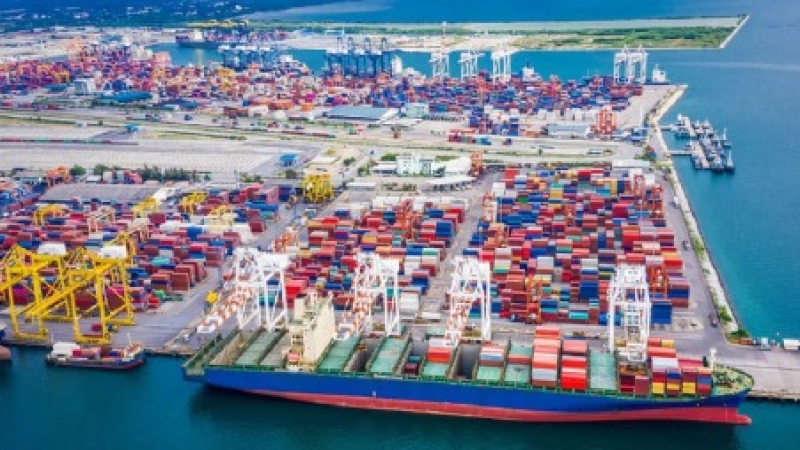
A view of Chattogram Port.
Only one LPG-carrying vessel has reached Bangladesh from the Middle East since tensions escalated in the region, as shipping through the Strait of Hormuz has effectively remained suspended, according to port data and shipping sources.
No ships have arrived through the key route since the conflict began, leaving at least two fuel-laden tankers stranded in the region.
Amid the disruption, a small LPG tanker, MT BWEK Bornholm, arrived at Sitakunda on 25 March via the Gulf of Oman, carrying around 3,800 tonnes of liquefied petroleum gas.
Industry insiders said it was the first LPG shipment to arrive from the conflict-affected zone since hostilities intensified.
The cargo was imported by BM Energy (BD) Ltd, a concern of Smart Group.
Earlier this month, seven vessels delivered a combined 39,716 tonnes of LPG to Chattogram port and Sitakunda, though all had originated outside the conflict-hit route.
Among them, Morning Jane transported 4,968 tonnes in two consignments from Malaysia, while Senna 9 and Schumi 7 carried shipments from India. Additional cargoes arrived on Epic Sunter from Malaysia and Paul from Singapore.
Another vessel, LPG Sevan, brought 7,020 tonnes from Oman, but had departed before tensions escalated.
Captain Moinul Ahsan, executive director of Smart Group, said Bangladesh remained heavily dependent on Middle Eastern sources for LPG.
“Since the conflict began, we have been maintaining close communication with suppliers to keep the supply chain intact. At our request, one supplier arranged shipment from within the conflict zone,” he said.
Humayun Kabir, proprietor of Seaside Traders and local agent of the tanker, said the vessel had left Oman’s Duqm port in mid-March, discharged part of its cargo in Sri Lanka, and unloaded the rest at Sitakunda before departing last Friday.
Hormuz Route Effectively Closed
Regional tensions surged after strikes on Iran on 28 February triggered retaliation and widened the conflict across the Middle East.
Iranian authorities later declared the Strait of Hormuz closed, raising security concerns across the Persian Gulf.
A drone attack on an oil tanker near Oman’s Duqm port on 3 March further heightened fears over maritime safety.
Captain Anam Chowdhury, president of the Bangladesh Merchant Marine Officers' Association, said a vast maritime corridor — stretching from the Persian Gulf through the Strait of Hormuz, Gulf of Oman, Bab el-Mandeb and the Red Sea — had been designated a war-risk zone by the International Bargaining Forum.
“No vessel can pass through Hormuz from the Persian Gulf without Iran’s approval now. Even vessels operating from Oman are facing significantly higher war-risk insurance premiums,” he said, adding that transport costs had risen sharply.
Two Tankers Still Stranded
Diplomatic efforts are under way to ensure safe passage for Bangladesh-bound vessels. Sources said Dhaka had sought Tehran’s cooperation, and Iran had responded positively, asking for detailed information about the stranded ships.
Bangladesh sent a formal letter on 25 March to Iran’s foreign ministry with details of the two vessels.
However, as of Saturday, both tankers had yet to cross the Strait of Hormuz.
One of them, MT Libreltha, is carrying around 62,000 tonnes of liquefied natural gas from Qatar’s Ras Laffan port.
The other, MT Nordic Pollux, loaded with about 100,000 tonnes of crude oil from Saudi Arabia’s Ras Tanura terminal, is also awaiting clearance. Shipping data showed both vessels remained anchored near their respective loading points.
Supply Concerns Deepen
According to the National Board of Revenue, Bangladesh sourced around 80 per cent of its crude oil, 65 per cent of LNG and 51 per cent of LPG imports from the Middle East in the first eight months of FY26.
Although refined fuel imports mostly come from other Asian countries, those suppliers also rely heavily on Middle Eastern crude, leaving Bangladesh vulnerable to prolonged disruption.
Industry insiders warned that unless transit through the Strait of Hormuz resumes soon, shipment delays could worsen and put further pressure on fuel supply chains.
They said a diplomatic breakthrough to ensure safe passage could quickly stabilise the situation. Otherwise, a prolonged disruption may increase costs and deepen uncertainty in LPG and the broader energy market.