

- Tarique Seeks Japan’s Support to Diversify Bangladesh’s Exports |
- Dhaka Among World’s 12 Most Polluted Cities on Wednesday |
- Cyclone Arnab Hits India, Four Bangladesh Ports on Alert |
- Greenhouse Gas Levels Reach Record High in 2025: WMO |
- Dengue deaths hit 400 as 11 more die in 24 hours |
EC seeks to maintain consistent standards in future polls: CEC
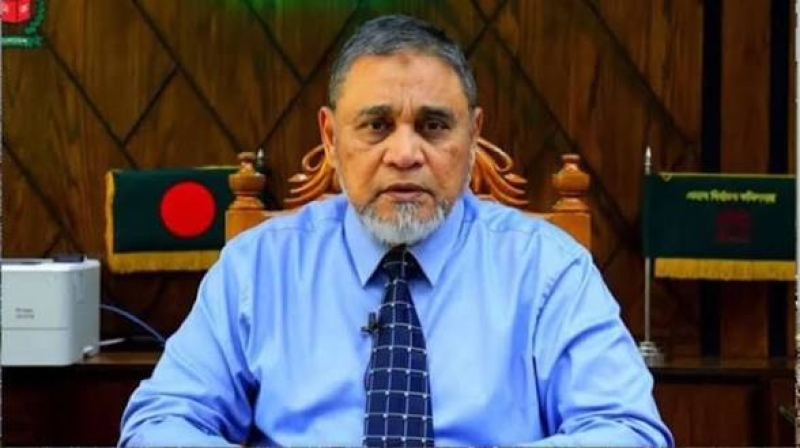
Chief Election Commissioner (CEC) A M M Nasir Uddin has said the Election Commission (EC) aims not only to conduct free, fair and credible elections but also to establish a sustainable electoral culture in which all future elections meet the same standards.
In an exclusive interview with BSS, Nasir Uddin said the commission would seek to preserve the standards established in the 13th parliamentary election while striving to improve the quality of future polls.
The same standards, he said, would be maintained in the upcoming local government elections.
The CEC stressed that electoral reform must go beyond a one-time arrangement, adding that the country needs to develop a lasting culture of credible elections.
Drawing on the experience of the parliamentary election, the commission hopes to deliver local government polls of an equally high standard, or better, with cooperation from all stakeholders.
Highlighting the commission's commitment to credible and impartial elections, the CEC said this determination had helped it overcome multiple challenges.
Alongside the parliamentary election, the commission organised a referendum and introduced technology-based postal voting to facilitate voting by expatriate Bangladeshis and election officials and employees engaged in electoral duties inside the country.
Arrangements were also made to enable members of law enforcement agencies and prisoners to exercise their voting rights.
"Our commitment has no shortcomings," he said.
Expressing confidence about the upcoming Union Parishad (UP) elections, Nasir Uddin said the commission hoped to organise the polls in a manner comparable to the February 12 national election.
He said the commission was not under pressure from any quarter and that officials had been instructed to perform their duties professionally and impartially.
However, he emphasised that cooperation from candidates would also be essential to ensuring a peaceful and fair election.
The commission plans to hold discussions with political parties by November to seek their cooperation ahead of the local government elections, the CEC said.
Although local government candidates will not contest under party symbols, political parties may still support individual candidates.
Their cooperation would therefore be important to ensuring a fair electoral process.
The CEC said free and fair elections were indispensable to establishing a sound and sustainable democracy.
Electoral fraud, he added, could not lead to genuine democratic governance.
The EC is fully prepared to hold the upcoming UP elections, with polling centres, voter lists, election officials and necessary equipment ready, the CEC said.
The deadline for updating the voter list has been set for October 31.
Considering Union Parishads whose terms have expired and those covered by court directives, elections may be held in phases, each covering around 800 to 1,000 Union Parishads, he said.
Identifying electoral violence as one of the biggest challenges, Nasir Uddin said past experience had shown that Union Parishad elections were often marked by violence and fatalities.
The commission's authority to enforce the electoral code of conduct had been strengthened, while surveillance would be intensified at polling centres identified as vulnerable.
CCTV cameras are being arranged for every polling centre. Body-worn cameras will also be used by members of law enforcement agencies to record incidents of violence or electoral irregularities.
"We will enforce the code of conduct strictly. No one will be given any concession in this regard," the CEC said.
He added that preparations are continuing to ensure the elections are held within the scheduled timeframe.
Nasir Uddin said restoring public trust in the EC and the wider electoral system had been identified as the commission's foremost challenge after he assumed office in late November 2024.
An initial assessment indicated that public confidence in the electoral system had declined significantly, particularly amid concerns surrounding the 2014, 2018 and 2024 elections.
Voters had expressed concerns about exercising their voting rights and reaching polling centres safely, he said.
The commission therefore prioritised restoring public confidence, rebuilding its credibility and making the electoral process more trustworthy.
As part of these efforts, around 77,000 workers were recruited and trained to collect voter information through door-to-door visits.
The initiative resulted in the inclusion of around 10 lakh women on the voter list, while the names of more than 21 lakh deceased voters were removed, the CEC said.
He described an accurate voter list and transparency throughout the electoral process as critical to rebuilding public confidence.
The CEC underscored the importance of maintaining public trust, ensuring transparency in every stage of the electoral process and securing continued cooperation from all stakeholders.
He said every action taken by the commission should help citizens clearly understand the electoral process and leave no room for irregularities or a lack of transparency.
Acknowledging the support received from political parties, voters, civil society and journalists during the parliamentary election, he said such cooperation would remain important in future polls.
The CEC also assured journalists that the commission's doors remain open to them and that they would be allowed to enter polling centres to perform their professional duties.
However, given the large number of journalists, accreditation would be issued under established guidelines to ensure proper management.
The commission would issue accreditation cards to journalists working at the national level.
For local journalists, the relevant returning officers would arrange accreditation in consultation with local press clubs.
Nasir Uddin said the commission expected journalists to play an effective and responsible role in maintaining transparency throughout the electoral process.
The commission plans to strengthen local-level grievance redress mechanisms to ensure the prompt resolution of complaints and greater accountability during local government elections, the CEC said.
Complaints would be addressed through executive magistrates, judicial magistrates and electoral inquiry committees to ensure that electoral irregularities could be addressed promptly at the local level, reports BSS.