

- Bangladesh to Introduce New Law to Curb Extortion, IGP Says |
- UN Marks 81 Years of Global Cooperation and Peace |
- Dhaka's air 5th worst in the world this morning |
- Around 7,500 Bangladeshis imprisoned in Saudi Arabia: Shama Obaed |
- Bangladesh Outperforms India in Global Hunger Index 2026 |
Load Shedding to Ease Significantly Soon: Adviser Zahed
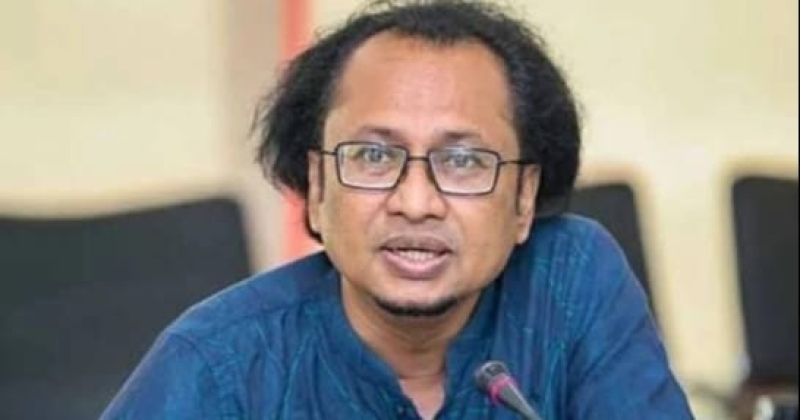
Prime Minister’s Information and Broadcasting Adviser Dr Zahed Ur Rahman on Tuesday expressed hope that the country’s ongoing load shedding will ease significantly within a short period.
“The burden of load shedding caused by the ongoing power crisis is now being shared relatively evenly between urban and rural areas,” he said at a press briefing on the progress of various government activities at the Secretariat.
Zahed said Dhaka residents have recently experienced load shedding at a level that was relatively uncommon in the capital in the past.
“Earlier, electricity supply was prioritised in Dhaka while rural areas faced more load shedding. But the current government has decided that everyone should share the burden of the crisis,” he said.
He explained that electricity supply is generally prioritised in major cities because economic activities are concentrated there, rather than because influential people live there. However, the government has decided to distribute the burden of load shedding more evenly across the country.
The adviser said the government would also publish data comparing the actual extent of load shedding during the previous Awami League government and the interim government, despite claims of uninterrupted power supply during those periods.
“Hopefully, I will provide you with that data next week. I am working on it—how much load shedding there actually was at that time and how many megawatts of load shedding occurred,” he said.
He claimed that a large portion of the load shedding during those periods was imposed on rural and remote areas. “We have moved away from that approach. We hope people will understand this,” he said.
Explaining the reasons behind the current power shortage, Zahed cited fuel shortages, sudden mechanical faults at power plants, maintenance work, limitations in the transmission grid and rapidly rising electricity demand.
He said electricity demand tends to increase as economic activity expands after a democratic government assumes office.
“During the interim government’s tenure, this demand was comparatively lower,” he said.
Zahed said load shedding is being adjusted in areas served by Dhaka Power Distribution Company (DPDC) and Dhaka Electric Supply Company (DESCO) to keep outages in rural areas at a tolerable level and prevent prolonged load shedding in any particular area.
He said electricity saved through such adjustments is being redistributed to rural areas and other parts of the country.
As a result, the power supply situation for important consumer groups, including industries outside Dhaka, is improving, he said.
At the same time, prolonged and frequent load shedding in rural areas is declining, making it possible to distribute the burden of the power crisis more evenly across the country, the adviser added.