

Sunday, October 4, 2026
News update
- PM Orders Faster Work on Dhaka Inner Circular Road |
- Dhaka ranks world's third most polluted city this morning |
- Houthis Claim Missile, Drone Attack on Aramco Facility |
- Four Earthquakes Rattle Bangladesh Within Four Hours |
- Clean your plate – to reduce food loss and waste |
Why Are Global Oil and Diesel Prices Rising So Fast?
GreenWatch Desk:
Energy
2026-10-04, 1:32pm
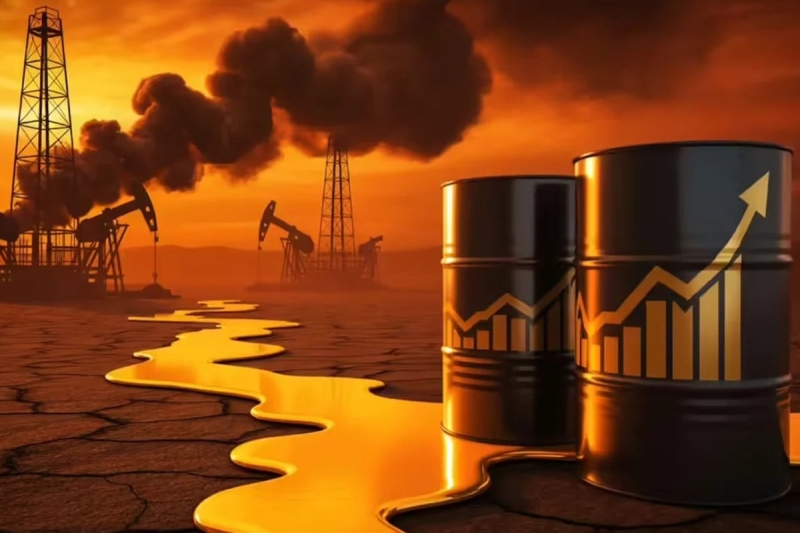
Global oil and diesel prices have surged sharply in recent months, driven by disruptions to energy supplies, damage to refineries and continuing geopolitical tensions.
In response to the price shock, G7 countries have agreed to release 100 million barrels of oil and petroleum products from emergency reserves over four months through a coordinated programme with the International Energy Agency (IEA). A substantial amount of diesel will be released within the first 20 days in an effort to ease pressure on the market.
The move could provide some short-term relief, particularly in the diesel market. However, analysts warn that releasing emergency stocks will not resolve the underlying supply problems if disruptions caused by conflicts and refinery outages continue.
### Why are oil and diesel prices rising?
Two major conflicts are contributing to the disruption of global energy markets: the war involving Iran and the continuing war in Ukraine.
Fighting involving Iran has disrupted energy supplies and shipping routes in the Gulf, while attacks on Russian energy infrastructure and refineries have reduced the availability of refined petroleum products. These disruptions have put additional pressure on both crude oil and diesel supplies.
The result has been a sharp increase in fuel prices. Crude oil prices rose by more than $4 a barrel in a single trading session last week, while diesel prices have reached record or near-record levels in several markets.
The G7’s emergency stock release is expected to ease some of the immediate pressure. However, analysts caution that the measure is temporary and cannot by itself restore the normal balance between global supply and demand.
### What has the G7 announced?
Following a virtual meeting of G7 leaders chaired by French President Emmanuel Macron, the group agreed to coordinate the release of 100 million barrels of oil through the IEA over four months.
The programme will begin immediately, with a substantial amount of diesel to be released during the first 20 days. The G7 has also agreed to consider additional diesel releases if necessary.
The group also called on its members to avoid imposing energy export restrictions and agreed to coordinate refinery maintenance schedules. The aim is to prevent several refineries from being taken offline at the same time, which could further reduce supplies of refined products, particularly diesel.
The G7 has asked the IEA to monitor the impact of the measures and provide a follow-up assessment within 20 days.
### Why is the diesel shortage particularly severe?
Diesel has become one of the most pressured segments of the global fuel market.
Supplies have been affected by disruptions to refining capacity and international trade routes. European markets have faced reduced supplies from traditional sources, while damage to Russian refineries has further constrained exports of refined fuels.
China has also reduced diesel exports, adding to pressure on international supplies.
At the same time, demand for diesel remains strong. The fuel is widely used by trucks, freight trains, ships, tractors, farm machinery, construction equipment and generators.
Seasonal agricultural activity can also increase diesel consumption, particularly during harvest periods.
### Will the G7 move bring prices down?
The announcement initially put downward pressure on crude prices, showing that additional supply can provide some relief to the market. However, prices can remain volatile as long as major supply risks persist.
The G7 itself has acknowledged the need to address broader energy-security risks, including disruptions affecting navigation through the Strait of Hormuz and instability in global energy markets.
Analysts say the effectiveness of the emergency release will depend partly on how quickly the stocks reach the market and how much diesel is released during the initial phase.
The measure may therefore ease short-term pressure without eliminating the structural supply shortage.
### Why does expensive diesel raise the cost of everything?
The impact of higher diesel prices extends far beyond fuel stations.
Unlike petrol, which is heavily associated with private vehicles, diesel is essential to the movement of goods and to several major industries. Trucks, ships, agricultural machinery, construction equipment and backup generators all rely heavily on diesel.
When diesel prices rise, transportation and production costs increase. Those higher costs can eventually be passed on to consumers through higher prices for food, construction materials and other goods.
Farmers can face a double burden because higher diesel prices increase the cost of operating machinery while higher energy costs can also raise the price of agricultural inputs.
Economists therefore warn that a prolonged diesel-price shock could add to inflation while weakening economic activity, increasing the risk of stagflation.
### Pressure is also mounting on Trump
Rising fuel prices are creating economic and political pressure in the United States, where the administration is facing concerns about the impact of higher energy costs on consumers.
US President Donald Trump has pushed European countries to release emergency diesel reserves. Washington had also considered restricting US diesel exports if European countries failed to increase supplies from their stockpiles, but Trump later said the United States would not impose such a ban.
The G7 agreement followed those discussions and provides for a coordinated release of emergency supplies through the IEA.
### What happens next?
The emergency release could provide some relief to global fuel markets in the short term, particularly if substantial diesel supplies reach the market quickly.
But the longer-term outlook will depend on whether energy flows through key shipping routes recover, whether damaged refineries return to operation and whether geopolitical tensions ease.
As long as major supply disruptions continue, emergency stock releases can only provide temporary relief. A sustained reduction in global oil and diesel prices will ultimately depend on restoring more stable supplies and refining capacity.