

- Dhaka's air 5th worst in the world this morning |
- Around 7,500 Bangladeshis imprisoned in Saudi Arabia: Shama Obaed |
- Bangladesh Outperforms India in Global Hunger Index 2026 |
- Covered van hits Gazipur police patrol team, killing SI, BNP leader |
- Korean City scrambles to rescue dusky shark after it returns to canal |
Experts Urge Overhaul of Energy Plan to Accelerate Renewables
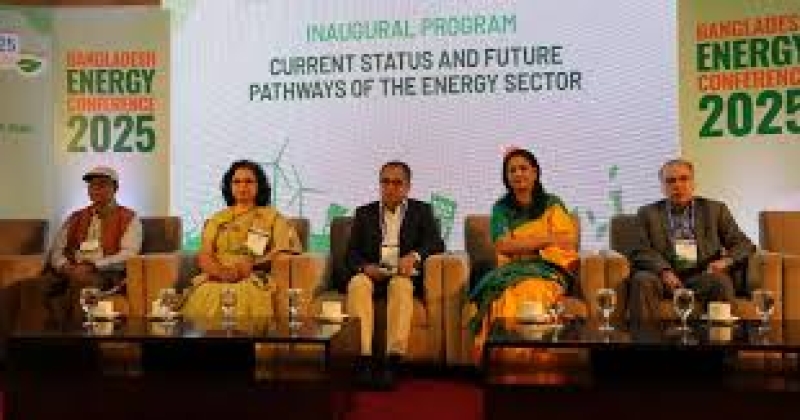
Experts have called for an urgent revision of Bangladesh’s Integrated Energy and Power Master Plan (IEPMP) to significantly increase the share of renewable energy in the country’s future power mix.
The appeal was made at the inauguration of the 3rd Bangladesh Energy Conference 2025, held on Saturday at the Bangladesh Military Museum in Dhaka, where policymakers, researchers, and civil society representatives gathered to discuss key energy challenges and transition pathways.
Addressing the event as chief guest, Environment Adviser Syeda Rizwana Hasan said energy transition is a long-term process requiring practical action, not just ambitious targets. She highlighted ongoing initiatives to expand renewable energy, including a nationwide program to install solar panels on government building rooftops. “We need a realistic and implementable roadmap. Targets mean little if they don’t translate into generation,” she said.
Dr. Khandakar Golam Moazzem, Research Director at the Centre for Policy Dialogue, stressed that an effective transition must integrate technical expertise, strong policies, and trained human resources. He emphasized the need to reduce dependence on foreign consultants and strengthen domestic institutional capacity.
Professor Shahriar Ahmed Chowdhury, Chairman of the Centre for Renewable Energy Services Limited, noted that the government spends around $4 billion annually on electricity subsidies. Redirecting even part of this amount to renewable development, he said, could dramatically reshape the sector. He also observed that existing electricity policies are not sufficiently supportive of renewables, slowing progress.
Transparency International Bangladesh Executive Director Iftekharuzzaman pointed to longstanding malpractices in the energy sector, saying that master plans shaped by foreign consultants have often failed to prioritize renewable interests. Greater engagement of local experts in planning, he said, is essential.
Advocate Shimonuzzaman, Research Director of LEAD Bangladesh, underscored the importance of legal transparency and accountability to ensure a just energy transition. He said public participation and protection of marginalized communities must be embedded in all energy policies.
Banshree Mitra Niyogi of Manusher Jonno Foundation added that marginalized groups, including women, must be meaningfully represented in energy planning to ensure equitable outcomes.
The three-day conference is organized by BWGED in collaboration with 16 national partner organizations.