

- November 7 Declared a Public Holiday Every Year |
- LPG Shortage, Overcharging Hit Consumers Across Dhaka |
- Energy, investment, Rohingya issue to top Bangladesh-Indonesia talks |
- Japan Remains Bangladesh’s Trusted Development Partner: Envoy |
- Dhaka ranks world’s second most polluted city this morning |
Triple Climate Threats Endanger Half of Children
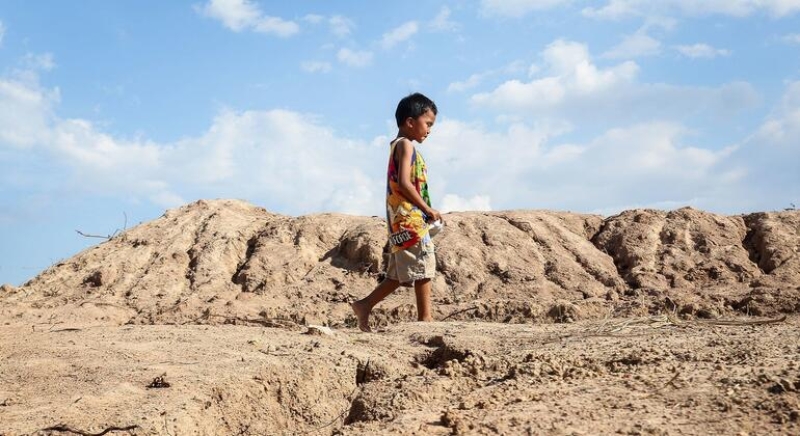
Children in Thailand are enduring extremely hot temperatures and drought. (file)
Drought, extreme heat and heatwaves are among the most common overlapping climate threats affecting millions of children worldwide, according to a newly released report by the United Nations Children’s Fund (UNICEF).
The Children’s Climate Risk Report 2026 found that around 1.1 billion children — nearly half of the world’s children — are exposed to at least three simultaneous climate-related hazards, putting their health, education and survival at risk.
UNICEF warned that climate change is increasingly disrupting children’s daily lives through recurring heatwaves, wildfires, droughts and floods.
“The lives of children continue to be upended by the impact of heatwaves, wildfires, droughts and floods,” UNICEF Executive Director Catherine Russell said.
“Half of the world’s children are now living with at least three overlapping climate threats shaping their daily lives,” she added.
The report, published for the first time with detailed geographic analysis, identifies where and how multiple climate hazards are affecting children and the critical social services they depend on, while also outlining measures governments can take to address the growing risks.
According to the findings, nearly every child globally faces at least one climate hazard, while more than four million children are exposed to as many as six overlapping threats.
The report examined children’s exposure to eight major climate hazards, including coastal flooding, droughts, extreme heat, wildfires, heatwaves, river floods, sand and dust storms, and tropical storms.
More than 296 million children live in areas exposed to the most common combination of threats — drought, extreme heat and heatwaves. Another 115 million children face a second major combination of risks involving drought, extreme heat and tropical storms.
In addition to climate hazards, UNICEF also assessed children’s vulnerability to air pollution and malaria, both of which are strongly influenced by climate change.
The report found that air pollution affects nearly every child globally, while around one billion children remain exposed to malaria, compounding the dangers faced by children already living under multiple climate stresses.
UNICEF warned that without urgent action to cut greenhouse gas emissions, climate-related disasters are expected to become more frequent and severe, placing growing pressure on national systems and public services.
Among the hardest-hit areas is the Sahel region in Africa, where more than four million children face a triple threat of heatwaves, extreme heat and sand and dust storms.
Children in parts of Asia, including Bangladesh, Myanmar and Pakistan, face some of the highest levels of climate exposure, often experiencing multiple hazards at greater intensity than other regions.
The report also highlighted that wealthier countries remain vulnerable. In Italy, for example, more than six million children are exposed to prolonged heatwaves and droughts, though investments in climate adaptation have helped reduce some risks.
UNICEF urged governments, businesses and global stakeholders to take stronger action by cutting emissions, strengthening climate adaptation and disaster preparedness, and ensuring children’s voices are included in climate-related decision-making.
The agency also called for increased investment in climate education and stronger protections for child-focused services, including healthcare and education systems.
“This analysis can help governments and decision makers plan better and invest more effectively in resilient services,” Russell said.
“When we strengthen health and education systems and improve infrastructure with children in mind, we protect them from today’s climate threats and help secure their future.”