

- Heatwaves Cost Bangladesh Nearly Tk 77,000 Crore a Year |
- Protecting Bangladesh’s coastal people From Tide-induced Loss, Damage |
- Four Warehouses Linked to Salman Muqtadir’s In-Laws Sealed |
- Dengue surge: N’ganj hospitals treat patients on floors, verandas |
- Dhaka ranks 5th among world’s most polluted cities on Friday |
Heatwaves Cost Bangladesh Nearly Tk 77,000 Crore a Year
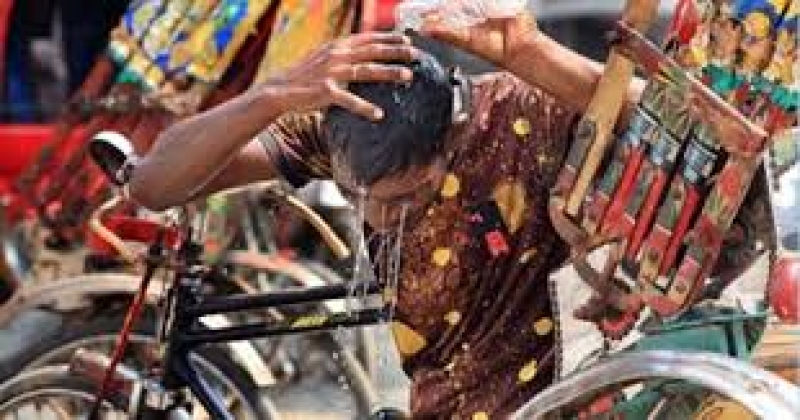
Around 66% of informal-sector workers in Bangladesh suffer from heat-related exhaustion during severe heatwaves, while reduced productivity, lost income and illness caused by extreme heat cost the national economy nearly Tk 77,000 crore every year.
As climate change intensifies the frequency and severity of heatwaves, informal workers are increasingly exposed to serious health risks and economic hardship. They are particularly vulnerable to kidney and cardiovascular diseases.
Informal workers are those employed without formal institutional or legal arrangements, written contracts or permanent appointment letters, often working on the basis of verbal agreements for daily or contract-based wages.
According to data from the Bangladesh Institute of Labour Studies, around 65% of the country's workforce is employed in the informal sector, representing approximately 40 million people.
A joint study by the International Institute for Environment and Development and local development organisation OKUP has highlighted the severe health and economic consequences of extreme heat for informal workers in urban Bangladesh.
The study, titled "Health and Economic Impacts of Heat Stress on Informal Workers," found that 66.4% of workers employed outdoors and 66% of those working indoors experienced heat-related exhaustion during periods of extreme heat.
The study also found that 36.1% of outdoor workers and 15.1% of indoor workers suffered heatstroke during heatwaves.
Researchers surveyed 175 informal-worker households in Dhaka. Of these, 122 households were engaged in outdoor occupations such as construction, road construction and rickshaw driving, while 53 households were involved in garment-related work.
The study found that extreme temperatures caused outdoor workers to lose an average of 23.7 working days a year, while indoor workers lost 13.5 days. As a result, outdoor workers lost an average of Tk 20,000 in annual wages, while indoor workers lost around Tk 10,000.
Reduced productivity, lower income and illness caused by extreme heat result in an annual economic loss of $6.22 billion, equivalent to around 1.38% of Bangladesh's gross domestic product.
Direct losses from missed working days and wages during periods of extreme heat account for around Tk 5,500 crore annually, equivalent to 0.91% of GDP. Long-term economic losses linked to heat-related chronic kidney disease account for an additional Tk 250 crore.
Researchers said workers often slow their pace of work because of extreme heat, effectively absorbing the resulting economic losses themselves. Their incomes decline, and many are forced to take on debt to meet household expenses. Because they work outside formal employment structures, they generally receive no compensation for such losses.
Labour experts also noted that the government lacks adequate research on how many working hours informal workers are losing because of climate change. The absence of a comprehensive database on informal workers also leaves many of them outside existing social safety-net programmes.
They called for government measures to compensate workers affected by climate change, along with alternative employment opportunities to help reduce their economic vulnerability.