

- No Plan for Operation Clean Heart-Style Drive Now: Home Minister |
- Bangladesh Eyes $10b in UK Exports Through Diversification |
- 20 Bangladeshis Killed After Trafficking to Russia for War |
- Guterres proposes slimmer $3.3 billion UN budget for 2027 |
- President Proposes National Committee to Protect Minority Rights |
World Lost Over 7 Million Hectares of Forest in 2025
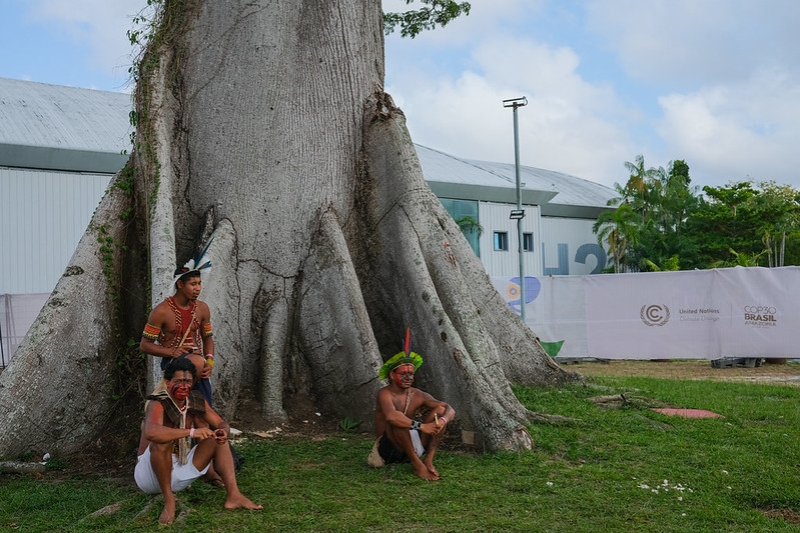
A new report on deforestation reflects the persistent gap between global ambitions to conserve and restore forests and enduring practices that continue to destroy them.
The world lost more than 7 million hectares of forest to deforestation in 2025, marking a modest improvement over recent years but remaining far off track to meet global forest protection targets by 2030, according to a new assessment.
The Forest Declaration Assessment 2026, released on October 14 by a coalition of civil society organisations and researchers, found that deforestation remains persistently high despite international commitments to halt and reverse forest loss. The average annual area cleared since 2021 has exceeded 8 million hectares, highlighting the gap between government pledges and progress on the ground.
Ivan Palmegiani, a senior consultant at Climate Focus and one of the report's authors, said commitments to protect forests had not been matched by sufficient action to deliver lasting results.
He cited Brazil as an example of what political leadership can achieve, noting that targeted policies, enforcement and political commitment under President Luiz Inácio Lula da Silva had reduced deforestation within a single term. However, he warned that such successes remained exceptions and could quickly be reversed when political priorities changed.
Palmegiani said forest protection commitments had not brought about the structural changes needed in the governance and use of natural resources. Agriculture, infrastructure development, resource extraction and other economic activities continue to place pressure on forests, while existing decision-making systems often favour powerful interests over communities that depend on forests for their livelihoods, well-being and cultural identity.
The assessment also found that at least 65.4 million hectares of forest worldwide lost ecological integrity in 2024 because of human activities. This highlights that forest degradation extends beyond the complete removal of trees, as forests can remain standing while losing biodiversity, carbon-storage capacity and their ability to support wildlife and local communities.
The report examines progress in forest protection, sustainable production, finance and governance. Although some initiatives have improved forest monitoring and recognition of Indigenous land rights, these developments have not yet produced the scale of change needed to reverse forest destruction.
More than 140 countries pledged under the Glasgow Leaders' Declaration on Forests and Land Use, announced at the 2021 United Nations climate conference, to halt and reverse forest loss and land degradation by 2030. Five years later, the world remains far from achieving that goal.
Tropical forests face particular pressure from agricultural expansion, infrastructure projects and commercial activities. Weak enforcement of environmental laws and economic incentives that favour forest-damaging activities further compound the problem.
Regional Progress Remains Uneven
Tropical Latin America recorded the largest absolute area of deforestation among the regions assessed, but it also made the most significant progress compared with the 2018–2020 baseline. Deforestation in the region fell by 33 per cent in 2025.
Tropical Africa, by contrast, experienced a continued rise in forest loss, with annual deforestation reaching approximately 2.4 million hectares in 2025. This was comparable to the 2.5 million hectares recorded in tropical Latin America.
Tropical Asia lost around 1.6 million hectares of forest in 2025, a 12 per cent reduction compared with the 2018–2020 baseline. However, the report cautioned that the underlying drivers of deforestation in the region remain largely unchanged.
Two consecutive years of modest declines may indicate that the region's recent peaks have passed, but they do not establish a sustained path towards forest recovery.
Tropical Oceania was the only tropical region assessed as being on track to meet its 2030 forest targets. Its relatively small share of global tropical forest area and lower current pressure on forests partly explain this progress.
Palmegiani said the assessment focuses on regional and global figures rather than country-level data because global datasets can sometimes misrepresent national trends.
He noted that independent analyses and regional initiatives suggest Indonesia and Malaysia have contributed significantly to the decline in deforestation across tropical Asia. Nevertheless, the region continues to face economic pressures, including rising demand for critical minerals, particularly nickel, as well as uncertainty linked to geopolitical conflicts and disruptions in global markets.
Agriculture and Commercial Interests Drive Forest Loss
Agriculture remains a major driver of deforestation, with commercial production and growing demand for food, animal feed and bioenergy putting increasing pressure on natural ecosystems.
The report estimates that between 61 and 94 per cent of tropical deforestation linked to commercial agriculture may be illegal. Environmental crime, including illegal deforestation and timber and wildlife trafficking, generates as much as $281 billion annually.
These activities frequently overlap with other criminal enterprises. A 2025 study by the United Nations Office on Drugs and Crime cited in the assessment found links between environmental offences and crimes such as drug trafficking, illegal mining and human trafficking.
The scale of these activities presents a significant challenge for governments seeking to protect forests while regulating international commodity supply chains.
The assessment also highlights shortcomings in corporate accountability. Although companies operating in sectors associated with forest loss have increasingly adopted sustainability commitments and reporting systems, disclosure and implementation remain uneven.
Financial institutions have begun to recognise deforestation as an environmental and financial risk. However, many regulatory frameworks still lack detailed guidance on how banks should assess and manage those risks.
More than 60 per cent of the countries assessed had yet to establish disclosure requirements covering deforestation-related risks for banks or insurance companies.
The report argues that voluntary commitments and corporate reporting must be accompanied by stronger enforcement and clearer requirements to bring measurable changes in production and investment.
Forest Finance Remains a Major Challenge
The scale and distribution of funding are also major obstacles to forest protection.
Although international funding commitments have increased, financial support for conservation remains difficult to reconcile with economic incentives that encourage activities harmful to forests.
The report estimates that subsidies linked to fossil fuel production and use reached $921 billion in 2024. Emergency measures introduced in 2026 to ease high energy prices could push the global total above $1 trillion this year.
Such subsidies can undermine efforts to shift towards less harmful energy sources, the assessment warns.
Redirecting public support towards nature-restoring activities could offer significant economic and environmental benefits.
“Every dollar of agricultural support that is repurposed to support farming practices that restore nature, such as agroforestry, silvopasture, and low-carbon agriculture, can generate up to USD 30 in economic benefits, especially for rural communities,” the report says.
The findings highlight an opportunity for governments to reform existing spending rather than relying entirely on new funding.
However, international forest finance does not consistently reach Indigenous peoples and local communities responsible for managing and protecting forest territories. Community-led funding mechanisms can help direct resources towards local priorities, but such communities remain secondary recipients of direct funding from governments and multilateral institutions.
Indigenous Rights and Participation
The assessment identifies recognition of Indigenous land rights as a crucial element of effective forest governance.
At the 2025 United Nations climate conference, COP30, an intergovernmental commitment involving 16 countries and one subnational jurisdiction pledged to recognise or strengthen rights over an additional 160 million hectares of Indigenous lands and territories.
The launch of the Tropical Forests Forever Facility also introduced a provision reserving 20 per cent of country-level payouts for direct transfers to Indigenous and local community organisations.
Despite these developments, the report warns that participation in international policymaking does not necessarily translate into decision-making power.
Indigenous coalitions have argued that their increased presence at COP30 remained largely consultative. Indigenous peoples still lack formal standing in United Nations climate negotiations, including COP31, scheduled to take place in Antalya, Türkiye, from November 9 to 20, 2026.
National climate plans also frequently mention Indigenous peoples and local communities without specifying how they will participate in designing or implementing policies.
A 2026 review of 84 national climate plans found that 61 referred to under-represented groups, including Indigenous peoples and local communities. However, most references were descriptive rather than linked to concrete measures.
The report argues that meaningful participation requires more than recognition in policy documents. It requires secure land rights, opportunities to influence decisions and access to the financial resources needed to manage territories.
Environmental Defenders Face Continuing Threats
Forest protection also carries serious risks for people who challenge illegal activities and defend community land.
The assessment cites data from Global Witness showing that at least 124 land and environmental defenders were killed in 2025. More than half of the documented killings were linked to land disputes, while nearly three-quarters of the victims were Indigenous people, small-scale farmers or people of African descent.
Separately, Front Line Defenders reported that at least 358 human rights defenders were killed in 28 countries in 2025. Those working on land, environmental and peasant rights, as well as Indigenous rights, were among the groups frequently targeted.
Erin Matson, a lead consultant at Climate Focus and one of the report's authors, said the number of documented killings was likely a significant underestimate because many killings and disappearances go unreported.
She said many attacks were rooted in governance failures and land disputes, including cases in which mining operations encroached on Indigenous territories. Without secure and legally recognised land rights, communities find it harder to resist operators acting illegally.
Matson identified stronger land-tenure protections, action against corruption and an end to impunity as essential steps for governments. She warned that corruption within public institutions and law enforcement could allow powerful interests to escape accountability for violence against environmental defenders.
The report identifies weak enforcement, limited government capacity and impunity for powerful actors as major obstacles to effective forest governance. Environmental defenders also face intimidation beyond lethal violence, including criminalisation, threats and harassment.
Technology Offers New Tools, but Enforcement Is Essential
Advances in technology are helping authorities detect illegal forest clearance. Satellite monitoring, traceability systems and investigative tools can help identify offences and strengthen cross-border cooperation.
In Guatemala's Maya Biosphere Reserve, researchers are testing artificial intelligence-powered acoustic sensors designed to recognise chainsaws, gunshots and engines. The technology can alert rangers to potential illegal logging in remote areas that are difficult to patrol regularly.
However, the assessment stresses that improved detection must be matched by fair and effective enforcement. Otherwise, small-scale producers and local communities could bear a disproportionate share of the burden while more powerful actors avoid accountability.
The report acknowledges progress in reducing deforestation in 2025 compared with much of the preceding decade, alongside increased forest financing, improved monitoring systems and steps by several countries to recognise Indigenous land rights.
Nevertheless, it cautions against interpreting these gains as evidence of a lasting turnaround.
The reduction in deforestation may partly reflect temporary factors, including stronger enforcement in some jurisdictions, changing commodity prices and economic conditions that slowed the conversion of forest land.
“These wins should not be mistaken for the transformation still needed,” the report says.
Source: IPS