

- PM stresses discipline, professionalism, public trust in armed forces |
- COP17: Can the World Deliver on Its Biodiversity Goals? |
- Dhaka Ranks 8th in Global Pollution Index on Sunday |
- Deadly Inani Beach Fire Exposes Gaps in Tourism Safety |
- PM Tarique Rahman Pledges Inclusive Dev in Dialogue with Persons with Disabilities |
COP31 Faces Test of Trust as Climate Disasters Mount
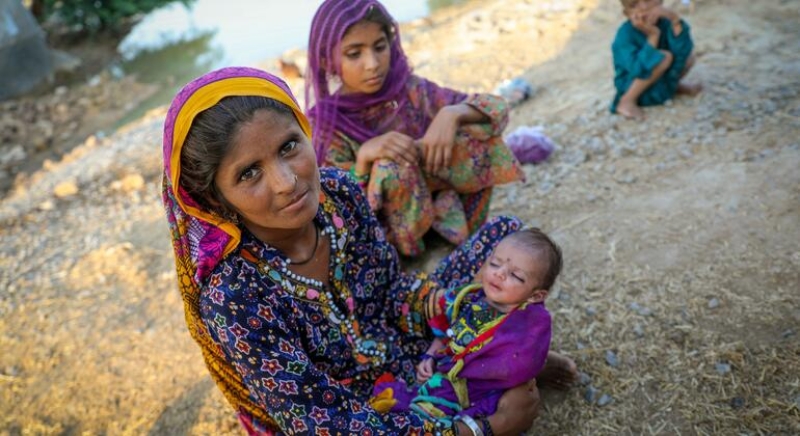
A family take refuge on a roadside in Jacobabad district, Pakistan, after fleeing their flood-hit home.
Less than a month before the UN climate conference COP31 opens in Antalya, Türkiye, representatives of three successive summit presidencies gathered at UN Headquarters to discuss how the world can restore trust in climate action as the consequences of global warming intensify.
The devastation in Nepal offered a stark reminder of the risks facing vulnerable communities.
Opening the high-level meeting, UN General Assembly President Khalilur Rahman described a wall of water rushing down a mountain valley, sweeping away people, homes and entire communities.
“Scientists had long warned that such events were becoming a reality, yet none of us were prepared for the shocking footage,” he said.
Rahman warned that the strengthening El Niño could become one of the strongest since at least 1950. Under current climate policies, global temperatures are projected to rise by around 2.8°C above pre-industrial levels, significantly exceeding the goals of the Paris Agreement.
Behind these figures are families forced from their homes, children who have gone missing, women travelling farther to collect water and communities facing devastating losses, he said.
World leaders gathering for COP31 must turn commitments into action and promises into trust.
“COP31 must be more than another negotiating milestone. It must demonstrate that multilateralism delivers,” Rahman said.
From promises to investment
Türkiye, which will host the conference from November 9 to 20, has outlined plans to accelerate clean energy development, reduce methane emissions and strengthen climate resilience.
A key initiative is the Climate Implementation Bridge, developed with the UN Development Programme (UNDP). It aims to turn national climate commitments into investment-ready projects and connect them with financing.
“The issue is not simply the overall volume of finance. It is also whether finance is available, accessible, affordable and predictable,” Türkiye's Ambassador to the UN, Ahmet Yıldız, said.
For Pacific island nations, climate action is already an urgent necessity, as rising sea levels and extreme weather threaten homes, livelihoods and infrastructure.
Australia, which is leading the COP31 negotiations under an unprecedented arrangement involving shared responsibilities with Türkiye, called for greater access to climate financing and stronger adaptation plans based on scientific evidence and local needs.
“By listening to our most vulnerable communities, partnering with those in need, and accelerating the implementation of practical initiatives, I believe we can restore trust through climate action,” Australian Ambassador James Larsen said.
Difficult negotiations ahead
Brazil, which hosted COP30 last year, identified three priorities for COP31: making the new just transition mechanism operational, improving how countries measure progress on climate adaptation and expanding climate investment in developing countries struggling with debt.
“In a world of States with severe fiscal constraints and high indebtedness, the [finance] talks need to lead to viable solutions for expanding fiscal space for climate investment,” Brazilian Ambassador Sérgio França Danese said.
The question of who pays for climate action and who benefits from it is also central to Ethiopia's concerns ahead of COP32, which it will host.
Africa accounts for only around three per cent of global greenhouse gas emissions but faces some of the most severe consequences of climate change, Ethiopian Ambassador Tesfaye Yilma Sabo told delegates.
“Delayed action carries a compounding cost for developing countries. The pace of action matters because the gap between current plans and what the science requires remains significant,” he said.
Financing and access to technology are increasingly determining which countries benefit from the transition and which risk being left behind, he added.
World leaders are expected to gather for a special summit in Antalya on November 11 and 12, with negotiations set to test whether climate commitments can translate into meaningful change for communities most at risk.
For Rahman, however, the measure of success will extend far beyond the negotiating rooms.
“Let COP31 be judged not by promises we repeat, but by the people we protect. That is how we restore trust,” he said.