

Friday, October 30, 2026
News update
- Bangladesh Gets Three More Years to Prepare for LDC Graduation |
- Dhaka ranks 5th among cities with worst air quality this morning |
- Netanyahu’s Bloc Loses Majority as Party Claims Vote Stolen |
- 3-Day Tourism Fair Begins; Theme 'AI Powered Tourism, Sustainable Destination' |
- Roopor NPP Unit One Gets Approval to Transmit Limited Power to Nat'l Grid |
Nature Restoration Advances, but Funding Must Quadruple
GreenWatch Desk:
Environment
2026-10-30, 1:23pm
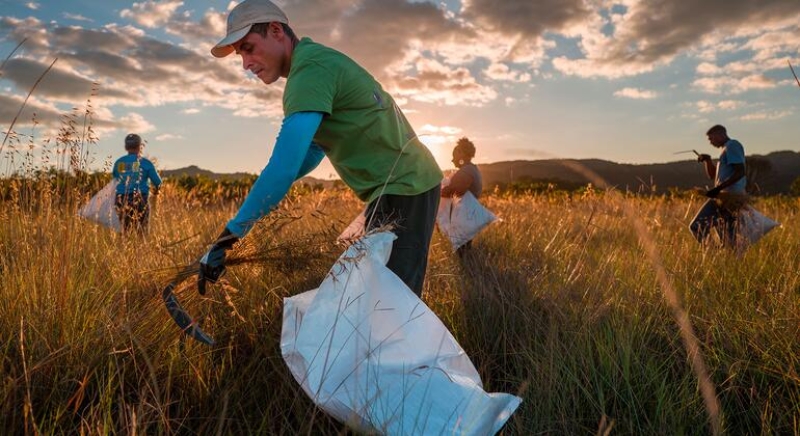
In Brazil’s Cerrado, restoration efforts include natural regeneration, direct seeding and agroforestry with native species.
From salmon spawning grounds in Canada to coral reefs in Indonesia, ecosystems around the world are being restored at an unprecedented pace.
Around 252 million hectares across 149 countries — an area of land and sea roughly equivalent to the size of Kazakhstan — are currently undergoing restoration, marking the largest documented effort of its kind to date. The initiatives have also created more than one million green jobs.
“Today, we are witnessing the makings of one of the largest movements for nature in recorded history,” said Inger Andersen, Executive Director of the UN Environment Programme (UNEP).
Stepping up efforts
However, much more action is needed to achieve global restoration targets, according to a report released on Thursday at the COP17 biodiversity conference in Yerevan, Armenia.
Titled Nature’s Comeback: Scaling Ecosystem Restoration for People and Planet, the report was published at the halfway point of the UN Decade on Ecosystem Restoration, which runs until 2030.
It assesses progress towards a global commitment to restore around one billion hectares of land — roughly the size of China — by the end of the decade and ensure that 30 per cent of the world's ecosystems are under conservation, in line with the 2022 Kunming-Montreal Global Biodiversity Framework.
Achieving these targets will require a rapid acceleration of restoration efforts, particularly in freshwater, marine and coastal ecosystems.
Annual funding for restoration must also increase more than fourfold, from $64 billion to $296 billion. Such investment could create up to 32 million jobs worldwide by 2030.
Restoration works
“Five years into the UN Decade, the message is clear: restoration works,” said Dongyu Qu, Director-General of the Food and Agriculture Organization (FAO), which co-published the report with UNEP and the UN biodiversity secretariat.
“The challenges are to make restoration an integral part of the sustainable management of land, water and natural resources, and to have a coherent transformation of agrifood systems,” he added.
Nature's recovery
Restoring nature is essential for food and water security, climate resilience, employment and human well-being.
Research suggests that restoring just 15 per cent of the world's priority areas could prevent 60 per cent of projected species extinctions. It could also help sequester 30 per cent of carbon dioxide-equivalent emissions.
However, progress varies considerably across ecosystems and countries. Restoration of terrestrial ecosystems has reached nearly half of the 30 per cent target, while efforts to restore marine and coastal ecosystems remain far more limited.
The report stressed that restoration efforts must continue for long enough to allow ecosystems and biodiversity to recover while delivering lasting benefits to local communities.
“We cannot expect to fix nature with one hand while we destroy it with the other one,” said Astrid Schomaker, Executive Secretary of the Convention on Biological Diversity (CBD) Secretariat.
“Governments must address the drivers of ecosystem degradation and invest in monitoring mechanisms to ensure the durability of the restoration movement to date.”