

- Dhaka's air 5th worst in the world this morning |
- Around 7,500 Bangladeshis imprisoned in Saudi Arabia: Shama Obaed |
- Bangladesh Outperforms India in Global Hunger Index 2026 |
- Covered van hits Gazipur police patrol team, killing SI, BNP leader |
- Korean City scrambles to rescue dusky shark after it returns to canal |
Extreme Heat Shatters Records Across the Globe: UN Agency
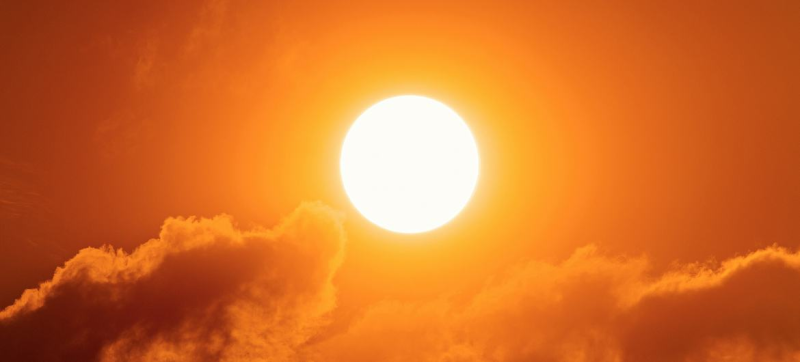
Extreme heat is impacting millions of people around the world.
Extreme heat is breaking records around the world, with wildfires and poor air quality compounding the crisis, according to a report from the World Meteorological Organization (WMO) released Thursday.
Extreme temperatures caused approximately 489,000 heat-related deaths annually between 2000 and 2019, with 36 per cent occurring in Europe and 45 per cent in Asia.
The health impacts of heat are especially severe in cities due to the so-called ‘urban heat island effect’ – the overheating of densely populated urban areas compared with their rural surroundings – which is intensifying problems as urbanisation continues.
Amid rising 21st-century temperatures, the WMO noted that July 2025 was the third-warmest July ever recorded, behind those in 2023 and 2024.
In this record-breaking July, heatwaves significantly impacted Sweden and Finland, which experienced unusually long spells of temperatures above 30°C (86°F).
Southeast Europe also faced heatwaves and wildfires, with Türkiye recording a new national high of 50.5°C (122.9°F).
In Asia, temperatures exceeded the seasonal average across the Himalayas, China, and Japan, continuing into August.
In the week leading up to 5 August, temperatures surpassed 42°C (107°F) across West Asia, southern Central Asia, the southwestern U.S., much of North Africa, and southern Pakistan – with some areas exceeding 45°C (113°F).
Parts of southwestern Iran and eastern Iraq saw extreme temperatures above 50°C (122°F), disrupting power, water, education, and labour.
Morocco issued heat warnings for temperatures up to 47°C (116°F) for the week of 4 August.
South Korea also issued widespread heat alerts, as temperature records were broken in several Chinese provinces.
In Japan, a new national temperature record of 41.8°C (107.2°F) was set on 5 August, breaking the previous record of 41.2°C, set just a week earlier.
According to the World Meteorological Centre in Beijing, heatwaves are expected to persist across the same regions, as well as the Iberian Peninsula and northern Mexico.
These regions are forecast to see maximum temperatures between 38°C and 40°C (100.4–104°F), with parts of Saudi Arabia, Iraq, Iran, North Africa, and the southwestern U.S. likely to exceed 45°C (113°F).
Canada is experiencing one of its worst wildfire seasons on record, with 6.6 million hectares burned. Smoke has polluted skies and caused poor air quality across several provinces and northern U.S. states in late July and early August.
Twice this summer, smoke from Canadian wildfires crossed the Atlantic, affecting skies over Western Europe (5–7 August) and over Central and Southern Europe in late June.
Elsewhere, Cyprus, Greece, and Türkiye have battled wildfires, leading to evacuations and fatalities. In the U.S., a wildfire in Arizona’s Grand Canyon National Park disrupted tourism at the iconic site.
“Extreme heat is sometimes called the silent killer, but with today’s science, data and technologies, silence is no longer an excuse.
Every single death from extreme heat is preventable,”— said WMO Deputy Secretary-General Ko Barrett.
The WMO is strengthening heat early warning systems under its Early Warnings for All initiative. In collaboration with global and local partners, it is helping countries develop heat-health action plans and ensure at-risk populations receive timely alerts.
WMO is one of ten UN agencies supporting the Secretary-General’s Call to Action on Extreme Heat, which seeks to boost global cooperation to reduce heat impacts through economic and social policy. A key goal is to limit global warming to 1.5°C above pre-industrial levels, in line with the 2015 Paris Agreement.
According to WMO and the World Health Organization (WHO), scaling up heat-health warning systems in 57 countries could save nearly 100,000 lives annually.
“Our Network is connecting science, policy, and action so that no community is left behind in the race to adapt to climate change that will continue to worsen extreme heat,”
— said Joy Shumake-Guillemot, lead of the WHO-WMO Climate and Health Joint Programme and co-lead of the Global Heat-Health Information Network (GHHIN).
“This is not just a climate issue — it’s a public health emergency,” she concluded.