

- Bangladesh to Introduce New Law to Curb Extortion, IGP Says |
- UN Marks 81 Years of Global Cooperation and Peace |
- Dhaka's air 5th worst in the world this morning |
- Around 7,500 Bangladeshis imprisoned in Saudi Arabia: Shama Obaed |
- Bangladesh Outperforms India in Global Hunger Index 2026 |
Fisheries Key to Food Security, Jobs, Economic Growth: PM
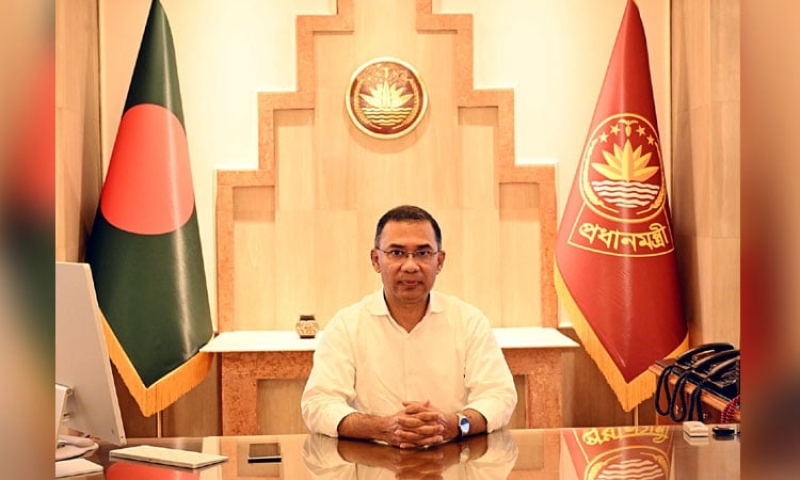
Prime Minister Tarique Rahman. File photo
Prime Minister Tarique Rahman today said fisheries is one of the major foundations of Bangladesh's food and nutrition security, employment generation, poverty alleviation, foreign currency earnings and sustainable economic growth.
In a message on the occasion of 'National Fisheries Fortnight-2026' (Jatiya Matsya Pokkho), to be observed tomorrow, he said the government is implementing timely policies and programmes to build a safe, modern, science-based and export-oriented fisheries sector by harnessing its immense potential.
He said the government's goal is to make the sector more productive, competitive and sustainable through private investment, innovative initiatives by entrepreneurs, modern technology and participatory management.
The theme of this year's fortnight, 'A self-reliant country through silver fish, Bangladesh first', reflects the government's commitment to strengthening the sector, he added.
The Prime Minister said fish is not only a major source of animal protein and nutrition, but the fisheries sector also plays an important role in creating rural employment, maintaining aquatic environmental balance, conserving biodiversity, earning foreign currency and contributing to the country's overall socioeconomic development.
Considering the sector's immense potential and importance, he said, the government has been taking various timely initiatives for its development, while its achievements through concerted efforts are now recognised globally.
According to a 2026 report of the Food and Agriculture Organization of the United Nations (FAO), Bangladesh ranks second in the world in freshwater fish catch and fifth in fish production in inland closed water bodies, he said, commending all concerned for the achievement.
The government is now placing special emphasis on ensuring safe and internationally standard-compliant fish production, he said, adding that effective measures are being taken to eliminate harmful chemicals, heavy metals and microbial contamination from the production and marketing systems of farmed fish.
At the same time, strict monitoring will be strengthened to prevent antimicrobial resistance (AMR) in hatcheries and fish feed, while laboratories across the country are being modernised and expanded to ensure international food safety standards.
The Prime Minister said an initiative has also been taken to establish a separate trade wing in the ministry to expand exports of Bangladeshi fish and fisheries products in the global market.
A target has been set to increase the country's total fish production to 5.64 million metric tonnes in the next fiscal year, he said.
He also said an initiative is being taken to introduce the country's first fisheries insurance scheme to provide financial protection to fishers and fish farmers affected by natural disasters and other risks.
"I believe these measures will make the fisheries sector more productive, competitive and sustainable," he said.
The government is committed to protecting the rights of genuine fishers and poor communities in natural water bodies based on the principle 'Those who own the nets, own the water bodies (Jaal Jar, Jol Tar),' the Prime Minister said.
He stressed the need for more effective and coordinated measures to increase productivity through mechanisation and intensification of fish farming, conserve indigenous fish species, improve the environment and ecosystem of open water bodies and prevent aquatic pollution.
He said restoring interconnections between rivers and haors-baors, canals, wetlands and vast floodplains through canal excavation programmes would significantly increase fish production in open water bodies.
To harness the immense potential of the Blue Economy in Bangladesh's vast marine area, sustainable harvesting of marine fisheries resources must be ensured through regular stock assessment, resource conservation and science-based management, he said.
"Coordinated initiatives by all concerned are essential to this end," he added.
The Prime Minister expressed hope that through collective efforts by government and private institutions, researchers, entrepreneurs, fish farmers and fishers, Bangladesh's fisheries sector would prosper further and make a greater contribution to food and nutrition security, employment, exports and economic growth.
He wished overall success to all programmes organised on the occasion of 'National Fisheries Fortnight-2026' or 'Jatiya Matsya Pokkho'. -BSS