

- Around 7,500 Bangladeshis imprisoned in Saudi Arabia: Shama Obaed |
- Bangladesh Outperforms India in Global Hunger Index 2026 |
- Covered van hits Gazipur police patrol team, killing SI, BNP leader |
- Korean City scrambles to rescue dusky shark after it returns to canal |
- PM inspects Mongla Port, Sundarbans, proposed economic zone |
Is modern tech changing centuries-old Bakarkhani’s familiar taste?
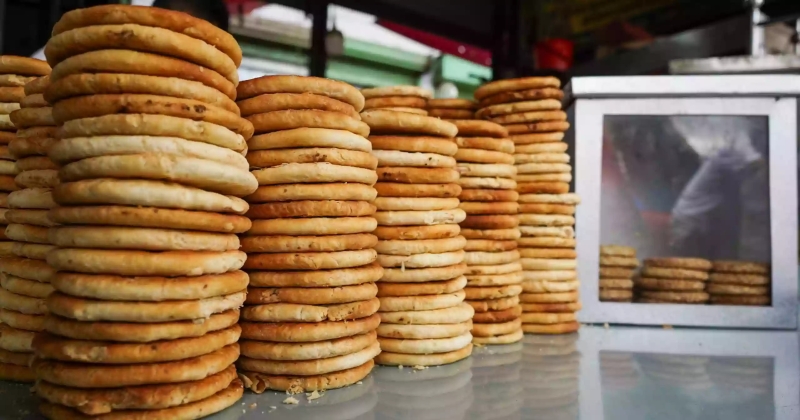
Fresh bakarkhani on display at a bakery shop in Old Dhaka. Photo- Samsul Hady-UNB
Shamsul Hady and Md Ishtiak Hossain
Dhaka, Sep 25 — The crackling heat of a clay tandoor, the smell of burning wood and charcoal and the practiced hands of a baker have long been part of the making of 'Bakarkhani', one of Old Dhaka's most recognisable culinary traditions.
However, the centuries-old bread is now being made in an increasingly modern way.
At bakeries around Dhaka, gas and electricity-powered ovens are gradually replacing traditional clay tandoors, allowing bakers to produce more easily with fewer workers and without the smoke generated by wood and charcoal fires.
The change reflects the practical realities of keeping a traditional food business alive in a rapidly changing city. Yet it is also raising a question among bakers and regular consumers: when the fire, oven and method of preparation change, does the familiar taste of bakarkhani change with them?
UNB's visit to the boat terminal area of Jinjira Bazar in Keraniganj on Wednesday found traditional and modern methods being used side by side, offering a glimpse into how technology is reshaping the production of a food deeply associated with Dhaka's culinary identity.
Bakarkhani is generally traced to the Mughal-era food culture of Bengal, although accounts differ over its precise origin. Banglapedia describes it as a traditional bakery product dating back to the Mughal period and notes that it was, until relatively recently, particularly associated with Dhaka. Culinary historians have also offered different accounts of how the bread reached the city and how its name originated.
One widely circulated story links the name to Agha Baker Khan and Khani Begum, while other accounts connect the bread to broader Persianate, Afghan and Mughal food traditions. The precise history remains debated, but its long association with Dhaka is not.
For generations, bakarkhani became a familiar part of Old Dhaka's food culture, traditionally eaten for breakfast and served with tea, meat preparations or sweets. Historical accounts also record several varieties of the bread, suggesting that what is now commonly recognised as bakarkhani once represented a wider family of breads and preparations.
Its traditional preparation, however, has always depended on more than ingredients.
At the Jinjira bakeries, workers using clay tandoors said the process requires considerable fuel, labour and skill. One traditional baker said around one to one-and-a-half maunds of wood and two to three kilograms of charcoal can be needed every day.
The tandoor must be lit and brought to the right temperature before baking begins, while the heat has to be managed throughout the process. The work requires experience because excessive or insufficient heat can affect the finished product.
Rafique, 60, has spent around 40 years making bakarkhani using the traditional method. For him, the craft begins before the bread enters the oven.
“There is a skill involved even in lighting and managing this oven. Not everyone can do it properly,” he said.
He believes customers who grew up with the traditional taste of Old Dhaka still recognise the difference.
According to Rafique, many such customers specifically look for bakarkhani baked in a wood- and charcoal-fired tandoor. But when the traditional version is unavailable, they buy the oven-made variety instead.
That compromise is becoming increasingly common as traditional production faces pressures beyond the cost of fuel.
The smoke produced by wood- and charcoal-fired tandoors can create difficulties for businesses operating in densely populated urban areas. Workers said landlords in some locations are reluctant to rent space to bakeries that use traditional ovens because of the smoke.
For small businesses, this can turn an old production method into a practical liability. Modern ovens offer an obvious solution.
Workers involved in oven-based production said the method requires fewer workers and makes it easier to maintain a consistent baking process. Since wood and charcoal are not required, operating costs can also be reduced to some extent.
One oven worker said their oven can operate using both gas and electricity. A gas cylinder costs around Tk 1,950 and lasts approximately two and a half days.
Robin, 18, who works with a modern oven, said the difference in labour is significant.
“Compared with the old method, making bakarkhani in a modern oven is easier. Once the dough is prepared and placed in the oven, the rest of the process is relatively simple,” he said.
The modern method therefore answers several immediate problems facing bakers. It reduces dependence on firewood and charcoal, limits smoke and can make production less labour-intensive.
However, what it cannot easily reproduce, according to some consumers and traditional bakers, is the character created by the old method.
Samiha, a bakarkhani admirer who even carried the snack with her while studying abroad, said she prefers bakarkhani made in the traditional way. For her, the flavour produced by a clay tandoor heated with wood and charcoal is different from that of bread baked in a modern oven.
Her preference points to an important distinction in the debate over modernisation. The traditional value of bakarkhani lies not only in the recipe but also in the process through which the food reaches the table.
The clay oven, the smoke, the heat and the skill required to control the fire have historically been part of the craft. The baker's experience determines when the oven is ready, how the bread is placed and how it responds to the heat.
In that sense, technology is changing more than the equipment. It is changing the relationship between the baker and the fire.
Recent accounts of Old Dhaka's food culture also show that traditional bakarkhani continues to survive alongside newer forms of production. While the bread was once concentrated mainly in Old Dhaka, it is now available across different parts of Dhaka and beyond. Modern ovens have increasingly been adopted as producers attempt to meet demand and operate within contemporary urban constraints.
Yet wider availability also creates another paradox. The easier it becomes to produce bakarkhani, the less visible the specialised craft behind its traditional preparation may become.
For traditional bakers such as Rafique, the concern is not simply that a particular oven might disappear. It is that the knowledge required to work with that oven may disappear with it.
The change is unlikely to stop at Jinjira or Old Dhaka. As traditional food businesses confront rising operational pressures, limited space and changing urban regulations, modern equipment offers a practical way to continue producing a traditional food item in a new environment.
The question is whether the food can remain unchanged when the conditions that shaped it are changing.
For consumers who value convenience, the modern oven may simply represent an efficient way to keep bakarkhani available. For those attached to the traditional taste, however, the wood-and-charcoal fire remains part of what makes the bread distinctive.
After nearly three centuries of changing hands, places and tastes, bakarkhani may therefore be facing a new chapter in its long history.
The bread may survive; what remains uncertain is how much of the old craft and flavour will survive with it. - UNB