

- ADB Approves $100m Loan for Affordable Housing in Bangladesh |
- No Respite From Poisonous Air: Radical Cure Urgent |
- Minimising The Energy Shocks In Bangladesh |
- How Bad Loans, Capital Erosion Pressure Banks In BD |
Minimising The Energy Shocks In Bangladesh
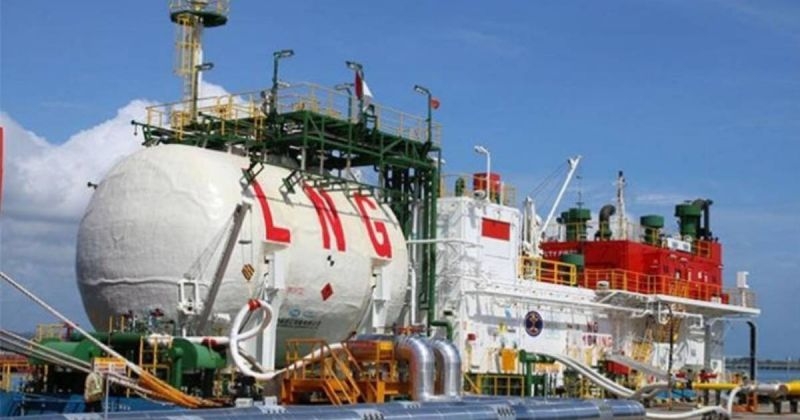
Dependence in imported LNG has created a heavy burden on the national exchequer.
By Imtiaz Ahmed and Samia Tabassum
The government should have short-, medium and long-term planning to come out of the deeper energy crisis that the world is going through against the background of USA-Israel imposed war against Iran, policy-makers, economists, business leaders have said.
Due to heavy reliance on imported fuel to run Bangladesh's energy sector, the country now requires $5.7 billion annually to cover the cost of power from India, as well as Liquefied Natural Gas (LNG), coal, and petroleum products for power generation.
As tensions in the middle-east increased over the control of the Strait of Hormuz and Qatar’s production capacity loss of LNG in the Iran war, Bangladesh had to procure energy products including LNG at high prices during the last six months.
Though the energy crisis slightly eased of late, and the government has adjusted prices of petroleum products of all grades upwards by Taka 20, local and export-oriented industries are curtailing production leading to incurring losses, a leading industrialist told this correspondent.
Dr Muhammad Anisuzzaman Talukder, a Professor at the Department of Electrical and Electronic Engineering of Bangladesh University of Engineering and Technology (BUET), told this correspondent that the past governments never properly engaged national institutes and only gave international companies or bidders contracts to conduct surveys and drilling of natural resources. The capacity building of national institutions could not only help the country to retain interest, but also cut government expenses, he said adding, engagements with multinational companies could have helped the national initiatives to increase their capacity building.
A UN tribunal in 2014 awarded Bangladesh nearly four-fifths of an area sprawling over 25,000 sq km (9,700 sq miles) in the Bay of Bengal, ending a dispute over a sea border with India that ruffled ties between the neighbours for more than three decades. But no headway was made to explore and extract hydrocarbon from the 26 offshore blocks.
Bangladesh should conduct an independent and neutral survey on its natural and mineral resources to have a proper and reliable strategy on the energy sector. He regretted that though Bangladesh got independence 54 years ago, the country lacks a credible report on coal, gas and other mineral resources. He also said that capacities of national institutions like BUET, CUET, KUET and RUET should be increased to conduct surveys on national resources, Dr Muhammad Anisuzzaman Talukder said.
Prime Minister Tarique Rahman has indicated that the government is increasing domestic gas production, setting up LNG terminals and intensifying exploration to protect industries from losses caused by sudden or temporary gas shortages. Recently 12 million cubic feet of gas was pumped into the national grid while another 35 million cubic feet of gas is expected to be put into the grid from old gas field where new wells have been dug.
The Prime Minister told the Parliament, the government plans to drill 150 wells, conduct 4,500 line kilometres of 2D seismic surveys and cover 4,200 square kilometres with 3D surveys by 2030-31.
Tarique Rahman said an international bidding round was announced on May 24 to appoint global firms for oil and gas exploration and extraction in 26 offshore blocks, with bids due in November.
The government is also formulating the “Bangladesh Onshore Model PSC-2026” to attract foreign investment in onshore exploration.
Work is underway on a new floating LNG terminal at Kutubjom in Moheshkhali and a land-based terminal at Matarbari. Two floating LNG terminals currently supply an average of 935 million cubic feet of gas a day. Regasified LNG from Kutubjom is expected in 2028 and from Matarbari by December 2030.
Dr Ijaz Hossain, Professor Emirates of Department of Chemical Engineering of (BUET), told GreenWatch “Bangladesh did manage to attract investment from USA companies in its oil and gas sector during the mid-nineties when several oil and gas companies got involved in exploration.
The USA is the leading country in terms of technology to extract oil and gas. The centre of excellence and of advanced technologies relating to oil and gas are North America and a portion of the EU (Norway and UK). Not only do these two regions have the best technology, they also have spare cash to invest, he said.
Finance and Planning Minister Amir Khasru Mahmud Chowdhury in his budget speech said that through the Bangladesh Petroleum Exploration and Production km of geological surveys, 700 line-km of two-dimensional (20) seismic surveys and 700 square kilometres of three-dimensional (OD) seismic surveys during the period from FY2025-26 to FY2027-28. BAPEX also plans to drill 6 wells and carry out workover operations on 31 wells using its own drilling rigs.
To increase petroleum refining and storage capacity, the government has adopted a phased plan to establish a new crude oil refinery with an annual refining capacity of 50 lac metric tonnes in Chattogram or another coastal industrial zone. As part of this initiative, steps have been taken to establish the Second Eastern Refinery Limited (ERL-2) with a capacity of approximately 30 lac metric tonnes.
In addition, a Smart Fuel Distribution Monitoring System has been introduced in 2,722 fuel tank lorries to strengthen monitoring of fuel transportation. Measures have also been undertaken to operationalise the Single Point Mooring (SPM) facility for petroleum unloading.
To ensure the optimal utilisation of the country's mineral resources, production targets of 6 lac metric tonnes of coal and 14 lac metric tonnes of stone have been set for FY 2026-27, said the minister.
The minister said that new projects have been undertaken for the development of the Barapukuria Second Plate and the Dighipara Coal Field to enhance coal extraction.
Meanwhile, Bangladesh and Algeria have held their first-ever high-level bilateral talks on energy cooperation, putting stress on short- and long-term partnership in energy supply, investment and technical collaboration.
The landmark zoom meeting, held at Bangladesh’s initiative recently, brought together senior government officials and state energy entities from both countries for substantive discussions on crude oil, LNG and gas cooperation, supply arrangements and investment opportunities.
Power, Energy and Mineral Resources Minister of Bangladesh Iqbal Hassan Mahmood and Algerian Energy and Mineral Resources Minister Mohamed Arkab led respective sides at the zoom meeting on energy cooperation. Bangladesh has emphasised growing engagement with African nations, recognising the continent's potential in the changing global scenario.
A Southeast Asian diplomat said “The present government should be transparent in telling the countrymen they have to suffer in the short term as the government in the past did not plan energy security in the long-term. Fuel subsidy is unsustainable; the subsidy needs to be gradually reduced. The government must cut back spending in other areas. The government should step up measures to try to save fuel or reduce energy use and enforce rules on saving energy.”
“On medium and long term, the government should find alternatives to current fuel sources and quickly issue off-shore contracts and cancel contracts that have not been implemented. The country cannot take short cuts or the easy way. there are no easy ways” he said.