

- Potential For Stronger Saudi Investment Considerable: Ambassador |
- Padma Barrage To Restore River Ecosystem In SW Bangladesh |
- The Urge To Contain Super AI, Today’s Frankenstein |
- Dhaka’s Invisible Inferno: 31 Risky Heat Days In Monsoon |
- Glacier Collapse, Himalayan Tsunami In Nepal: Climate Lesson |
Dhaka’s Invisible Inferno: 31 Risky Heat Days In Monsoon
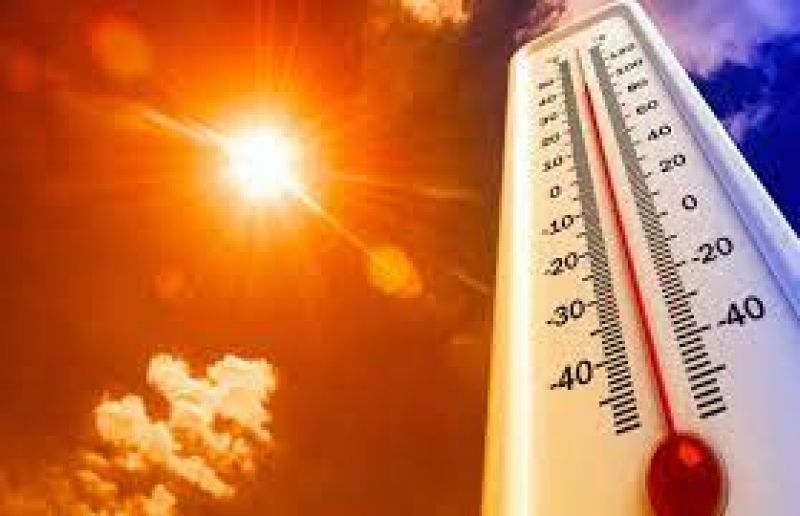
Heat waves are becoming increasingly frequent in Dhaka and other Bangladesh cities.
GreenWatch Desk
The sun on Sunday 21 September felt radiating extra heat and compelling people to go under shades in the metropolitan City of Dhaka. At early afternoon even the shades of buildings were not comfortable enough as the brick-concrete structures also heated up due to warm weather. Only shades of trees were relatively better escapes from the scorching sun, but those are scarce.
It takes time for the buildings to cool down after sunset. Poor, lower-middle and middle-class people who cannot afford air-conditioning of their homes struggle to cool down under electric fans before having dinner. The heat however does not strike every day. Saturday was relatively comfortable after a heavy downpour early in the morning. The sky remained overcast in the rest of the day with drizzles experienced at intervals. Sweltering heat covered the metropolitan city of Dhaka also on Monday.
The air in our cities does not simply warm up anymore; heat blankets our bodies like a heavy, suffocating weight. For millions of us across Bangladesh, this summer offered a gruelling preview of a climate-altered future. According to a global scientific analysis by Climate Central, Bangladesh endured 31 risky heat days between June and August 2026.
These are not just hot days; these are dangerous days when temperatures surge past safe local thresholds, triggering severe health risks. Shockingly, scientists confirmed that human-driven greenhouse gas emissions caused 25 of those 31 dangerous days. Without the global heat built up by burning fossil fuels, our summer would have been typical; with them, it became a threat to our lives.
Worse yet, weather and climate experts warn that this summer was not a one-time event. Our planet is currently trapped in the grip of a powerful "Super El Niño" cycle. This massive atmospheric disruption will persist until next February, meaning we are facing at least five months of highly volatile and unpredictable weather ahead.
If global greenhouse gas emissions are not drastically brought down immediately, next summer will be even more punishing. As citizens, we can no longer treat extreme heat as a temporary seasonal nuisance. We must understand how it affects our neighbourhoods, our health, and our daily routines to protect our families from a systemic crisis.
The heat did not hit every corner of Bangladesh the same way, as our cities turned into massive concrete radiators. Rangpur recorded the highest burden with 50 risky heat days, 38 of which were directly fuelled by climate change, pushing its seasonal temperature a staggering 1.1°C above normal. Gazipur faced 33 risky heat days, with 26 caused by the shifting global climate. Comilla and Dhaka each logged 30 risky heat days, with climate change adding 27 days to Comilla and 26 days to Dhaka, raising local temperatures by 0.6°C. Meanwhile, Khulna recorded 19 risky heat days, and Chattogram recorded 16, both tracking a 0.4°C seasonal anomaly.
When we experience a "risky heat day," it means our body’s natural cooling mechanism—sweating—begins to fail because high temperatures are mixed with heavy tropical humidity. For the millions of us who work outdoors or commute daily—including rickshaw pullers, construction labourers, transport workers, and street vendors—these days bring intense physical agony, lost wages, and sudden health deterioration. Extreme heat systematically cuts down the hours we can safely work, leading to electricity grid failures that leave our homes and workplaces trapped in dangerous indoor temperatures.
The human cost of this rising heat is an immediate medical emergency. Dr. Rashedul Hasan Kanak, an Associate Professor of Medicine at Green Life Medical College & Hospital, emphasises that the health impacts of intense heat are becoming increasingly visible across our communities.
Mothers, children, and pregnant women face the absolute highest health risks. Prolonged exposure to unusually high temperatures makes us highly vulnerable to waterborne illnesses like diarrhoea, typhoid, and jaundice. When temperatures spike, cases of severe heat exhaustion and potentially fatal heat stroke rise exponentially. The stress of thermal discomfort also damages our mental well-being, triggering noticeable spikes in anxiety and depression across crowded urban neighbourhoods.
While our summers are changing, the lingering Super El Niño means our winter months will be highly unpredictable too. Instead of a reliable, cool winter, the next five months are expected to bring warm winter anomalies, sudden droughts, and irregular rainfall. This threatens our farmers and our food prices, especially for vital crops like Boro rice.
To survive this looming threat, we need a joint effort from both the government and our communities. The state must urgently enact a National Heat Action Plan to protect outdoor workers with mandatory shaded rest breaks and adjusted working hours. We must aggressively halt the destruction of our urban lakes and green spaces, while investing in cool-roof technologies and heat early-warning systems, say experts.
At home, we must immediately change how we look after ourselves and our neighbours. We cannot wait until we feel thirsty to drink water; we must maintain continuous hydration and keep oral rehydration salts (ORS) handy if we work or travel under direct sunlight. We need to actively monitor vulnerable family members—especially children and the elderly—and keep them in well-ventilated spaces during peak solar hours from 11:00 AM to 4:00 PM. Most importantly, we must all learn to recognise the early warning signs of heat illness, such as dizziness, rapid heart rates, headaches, and nausea, so we can move to the shade and seek medical help before it becomes fatal.
Ultimately, Bangladesh is paying a catastrophic price for a problem caused by global emissions. As Kristina Dahl, Vice President for Science at Climate Central, noted, the health and economic costs of fossil fuels are now being felt in real time. While we do our part to adapt and stay safe, global polluters must drastically bring down their emissions before future summers become entirely unliveable. The warning signs are written in our skies, and protecting our communities starts with the actions we take today.
(From the print edition – GreenWatch. Please also visit greenwatchbd.com home page.)