

- UN, partners appeal for USD 710.5 mn for Rohingya response in BD |
- Govt to Build Ganga, Teesta Barrages for Water Security |
- Bangladesh Warned Repeatedly Over Measles Vaccine Gap |
- 163 Olive Ridley turtle hatchlings found on Kuakata beach |
Vaccines Save 150 Million Lives, Says WHO Report
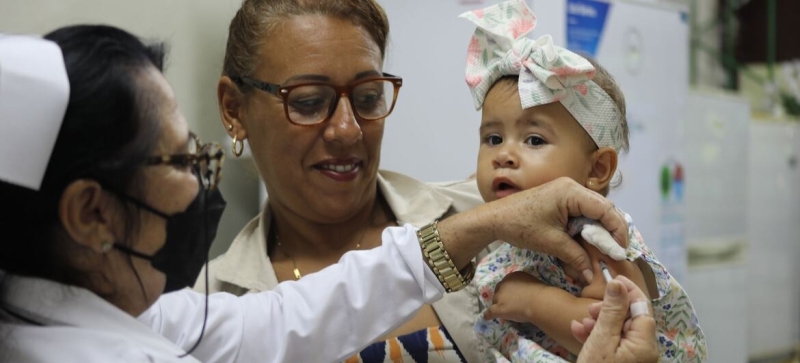
A child is vaccinated against multiple diseases at a health centre in Cuba.
Over the past 50 years, vaccines have saved more than 150 million lives as people around the world chose to protect themselves, their children, and their communities from diseases such as measles, diphtheria, pertussis, polio, and rotavirus.
During World Immunization Week, observed from April 24 to 30, the World Health Organization and its partners are highlighting the life-saving benefits of vaccines at every stage of life. They are also drawing attention to scientific advances that have led to effective vaccines against malaria, HPV, cholera, dengue, meningitis, RSV, Ebola, and mpox.
This year marks the midpoint of the Immunization Agenda 2030, a global initiative led by WHO aimed at ensuring equitable access to life-saving vaccines for all. A new report reviewing progress so far shows that despite major challenges, including the COVID-19 pandemic, geopolitical tensions, climate disruptions, and funding gaps, vaccination efforts over the past five years have prevented millions of deaths.
However, the report warns that most targets remain off track, with persistent gaps in routine immunisation coverage, equity, and outbreak prevention in many countries.
WHO is urging renewed global commitment to strengthen national immunisation programmes, integrate them more closely with primary healthcare, and increase prioritisation by governments and international health partners.
Progress for children
On Friday, WHO, along with the UNICEF and the Gavi, the Vaccine Alliance, announced progress under The Big Catch-Up initiative. The programme, launched in 2023, has reached an estimated 18.3 million children aged one to five across 36 countries.
It has also delivered 23 million doses of inactivated polio vaccine to unvaccinated and under-vaccinated children, supporting global efforts toward polio eradication. The initiative is expected to meet its target of reaching at least 21 million children.
ATmr UN video report from New Jersey will soon feature a family reflecting on how vaccines help protect children and allow them to grow up healthy and safe.