

- Biman signs deal with Airbus to acquire 10 jets |
- Bangladesh Inflation Rises to 8.34% in September |
- GDP growth accelerates to 3.68% in FY26 |
- Bangladesh eyes over $10b bilateral trade with Indonesia |
- Prioritise Multilateralism to Resolve Iran War Humanitarian Crisis |
UN Warns as Global Drug Use Reaches Record High
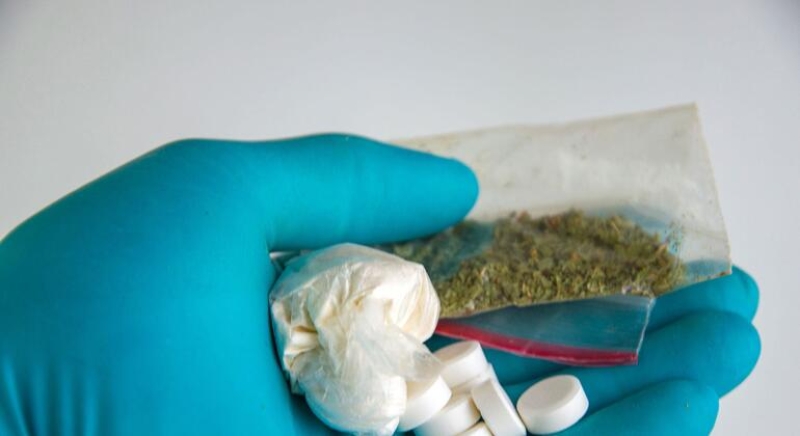
A laboratory worker holds samples of synthetic drugs and marijuana.
Global drug use has reached a record high, with synthetic substances rapidly reshaping illicit drug markets and increasing health risks worldwide, according to the UN World Drug Report 2026 released on Friday.
The report found that an estimated 331 million people used drugs in 2024, equivalent to 6.2 percent of the global population aged 15 to 64. This marks a sharp rise from 5.2 percent a decade earlier.
The United Nations Office on Drugs and Crime (UNODC) warned that the growing spread of powerful synthetic drugs is making global drug markets more dangerous and unpredictable.
“We are seeing an unprecedented rise in new drugs entering the market, and some are significantly more potent and dangerous than before,” said Monica Juma, Executive Director of UNODC.
Cannabis remained the most widely used drug globally, with 256 million users. It was followed by opioids with 63 million users, amphetamines with 32 million, cocaine with 25 million and ecstasy with 21 million users.
The report highlighted the rapid growth of synthetic drugs in global markets.
In 2024 alone, authorities identified 755 new psychoactive substances, including 118 substances reported for the first time. The number of different drugs detected in seizures is now five times higher than before 2000.
Experts warn that this growing diversity has made drug use increasingly risky.
“The market is becoming more diverse and potentially more dangerous,” said lead researcher Chloé Carpentier.
She noted that users often do not know exactly what they are consuming, while emergency responders face increasing difficulty in identifying substances during overdoses and medical emergencies.
The report also pointed to major changes in the global opioid market.
Following Afghanistan’s 2022 ban on opium cultivation, illicit heroin production has declined sharply. Although opium production has increased in Myanmar, Laos and Mexico, these countries have not matched the production levels previously seen in Afghanistan.
As a result, traffickers are increasingly shifting toward synthetic opioids such as fentanyl, nitazenes and other highly potent substances.
The report warned that this transition could permanently reshape the global opioid trade and significantly increase overdose risks.
Synthetic opioids are especially concerning because many are stronger than fentanyl, which is already linked to severe overdose crises in multiple countries.
Methamphetamine trafficking has also expanded globally.
New trafficking routes have emerged across the Near and Middle East, Africa and parts of Europe. Seizures have grown by an average of 13 percent annually, reflecting the rapid expansion of supply networks.
Cannabis trafficking has also become increasingly international, with more countries identifying North America as a major source.
The report stressed that drug-related harm is influenced not only by the substances themselves but also by social and economic inequalities.
Poverty, homelessness, poor mental health and limited access to healthcare continue to worsen the impact of drug use.
Women face major barriers in accessing treatment.
Globally, only one in 23 women with drug use disorders receives treatment, compared with one in nine men. Women who inject drugs are also significantly more likely to be living with HIV.
Young people remain another major concern.
Experts warned that adolescence is a particularly vulnerable period, as the brain is still developing and drug use during these years can have long-term impacts on cognitive function and behaviour.
The report also highlighted growing risks for people affected by conflict and displacement.
Refugees and internally displaced people are more vulnerable to drug use disorders while often facing limited access to treatment and healthcare.
UNODC warned that conflict and drug trafficking often reinforce each other, creating a dangerous cycle in which instability fuels illicit markets and trafficking profits finance further violence.
As drug markets become increasingly complex and interconnected, the report stressed that stronger international cooperation is essential to address the growing global crisis.