

- Tide Rising, Time Running Out For Coastal People, Wildlife |
- Dhaka Turns To Solar As Fuel Crisis Turns Power Plants Idle |
- El Niño Gathers Force; BD Economy Has Little Room To Absorb |
- How ‘Lula’s Army' WhatsApp channel helped turn Brazil election around |
- Kane becomes first Englishman in 25 years to win Ballon d’Or, Putellas claims third |
Study Finds Excess Antibiotic Residues in Poultry Meat
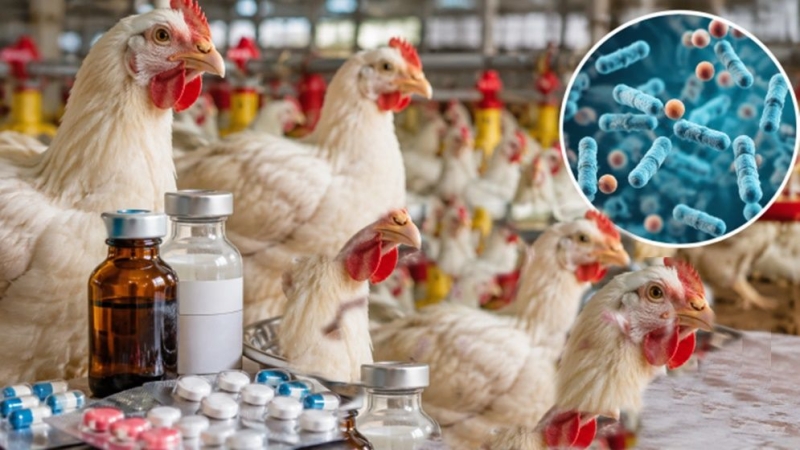
A recent study has found alarmingly high levels of antimicrobial residues in poultry meat from Bangladesh, India and Vietnam, raising fresh concerns over food safety and public health.
The research, conducted by the Royal Veterinary College (RVC) in London, found that antimicrobial residues in chicken meat samples exceeded internationally accepted safety limits by a significant margin.
According to the researchers, the excessive use of antimicrobial drugs in food-producing animals is the main reason behind the problem. The study, supported by several research institutions across South and Southeast Asia, was reported by UK-based Poultry News.
Researchers analysed 558 chicken breast samples collected during 2021 and 2022 from Bangladesh, India and Vietnam at Nanyang Technological University in Singapore.
The samples were screened for 69 veterinary antimicrobial substances using European Union food safety standards. They were collected from both retail markets and poultry farms where chickens were ready for sale.
The findings showed that between 3.7% and 8.6% of retail samples contained antimicrobial residues above the permitted limits. By comparison, the European Union recorded only 0.05% to 0.09% of samples exceeding safety thresholds during the same period.
Researchers said the results suggest that antimicrobials may have been administered to many birds shortly before slaughter, leaving insufficient time for the drugs to clear from their systems.
Professor Pelligand said the findings should help raise awareness about antimicrobial residues in food animals and encourage better veterinary practices and stronger food safety measures.
The study was funded by the UK Research and Innovation Global Challenges Research Fund under the One Health Poultry Hub initiative.