

- Messi Bids Farewell to Argentina After 21-Year Career |
- Toyota Tsusho briefs PM on plan to manufacture vehicles in Bangladesh |
- Security, sacrifice or opportunity: Climate action visions differ |
Venezuela Quake Survivors Fear Returning to Homes
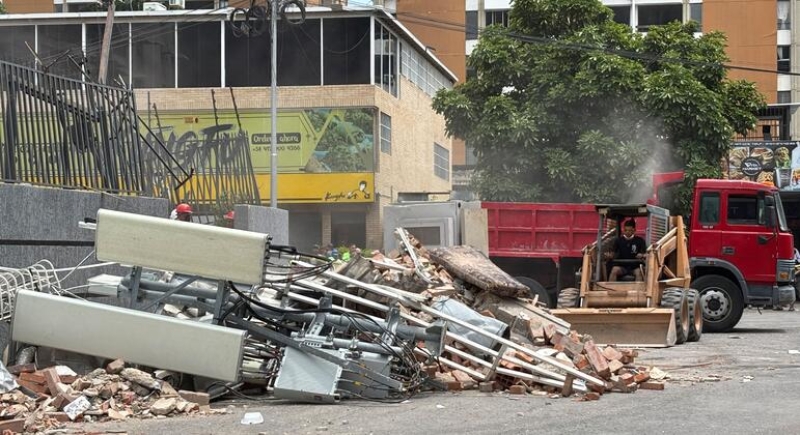
Debris clearance in El Paraíso, southwestern Caracas, following the double earthquake disaster in Venezuela on Wednesday.
Aid agencies on Friday warned of growing humanitarian needs across Venezuela after two powerful earthquakes killed at least 235 people and left thousands displaced, with search and rescue efforts still underway for people trapped beneath collapsed buildings.
According to the International Organization for Migration (IOM), up to 6.8 million people could be affected by Wednesday’s twin earthquakes, based on population and damage assessments.
More than 41,000 people have also been reported missing through an online emergency portal, raising fears that the death toll could rise significantly in the coming days.
Rescue operations continue in several badly affected areas, with reports indicating that emergency workers and local residents are digging through debris by hand in desperate attempts to find survivors.
The International Federation of Red Cross and Red Crescent Societies (IFRC) said many survivors remain too frightened to return to damaged homes or buildings due to fears of further collapses.
“People are still terrified to re-enter what were their homes or other structures,” said IFRC Regional Director for the Americas Loyce Pace during a virtual briefing from Panama City.
She said many residents fled with nothing and are now struggling to access food, water, shelter and other essentials.
“People left everything behind, and normal life has completely stopped in many areas. Ensuring people can survive with basic necessities is now our top priority,” she said.
Health agencies also warned of mounting pressure on hospitals and emergency medical teams.
Dr. Ciro Ugarte, Health Emergencies Director for the Pan American Health Organization (PAHO), said the immediate focus is on lifesaving medical treatment and rescue efforts.
“The first hours are critical for saving lives,” he said.
Medical teams are working under intense pressure to treat mass casualties, including patients suffering from fractures, burns and other trauma caused by collapsing buildings.
However, access to affected areas remains difficult, complicating rescue and relief operations.
“We are struggling to reach many health facilities and assess the full scale of the damage,” Dr. Ugarte said.
In addition to emergency healthcare, aid agencies stressed the urgent need for temporary shelter, clean water, sanitation services, protection and essential relief supplies.
IOM officials said long-term recovery support will also be crucial to help affected families rebuild homes and restore livelihoods.
The disaster has further strained a country already facing deep economic and social challenges. Millions of Venezuelans are living abroad after years of economic hardship and political instability.
The Office of the United Nations High Commissioner for Human Rights (OHCHR) also raised concerns over an internet blackout reported in parts of Venezuela following the disaster.
UN human rights officials urged authorities to protect digital access and ensure people can receive vital information during the emergency.
“We call for measures to safeguard digital space and guarantee access to information and freedom of expression in Venezuela,” said OHCHR spokesperson Marta Hurtado.
As rescue operations continue, humanitarian agencies warn that the coming days will be critical for saving lives and providing urgent support to millions affected by one of Venezuela’s deadliest natural disasters in recent years.