

- Death toll rises in Nepal-China border disaster, new flood looms |
- Two-day Sultan Festival begins in Narail |
- Pakistan Welcomes Bangladesh’s Interest in Makkah Pact |
- Nepal Floods Highlight Rising Glacier Risks in Himalayas |
UN Hosts Virtual Diplomatic Visit to Gaza Camp
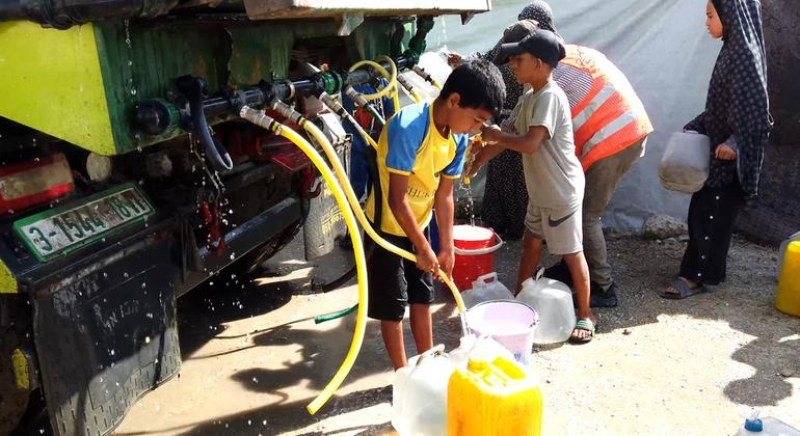
Representatives from 12 countries took part in a virtual diplomatic visit to a displacement site in the Gaza Strip, where they witnessed the humanitarian situation firsthand and heard directly from displaced families about their urgent needs, the United Nations said on Thursday.
The online visit was led by UN Humanitarian Coordinator for the Occupied Palestinian Territory (OPT), Ramiz Alakbarov, and Deputy Humanitarian Coordinator Suzanna Tkalec. The delegation toured a displacement site in Al Mawasi, Khan Younis, via video link.
UN Spokesperson Stéphane Dujarric said the virtual visit was organised because diplomatic missions, like journalists, have faced significant restrictions on entering Gaza since October 2023.
During the visit, diplomats observed living conditions at the site and relief operations carried out by humanitarian agencies. They interacted with displaced children, adults and aid workers and visited a water distribution point supported by a local partner with funding from the UN's OPT Humanitarian Fund.
According to Dujarric, displaced residents told diplomats they urgently need reliable access to clean water, particularly during the summer heat, as well as cash-for-work opportunities to help provide for their families.
The delegation also toured hundreds of tents lining the shoreline, highlighting the overcrowded conditions in which many displaced families continue to live.
Alakbarov thanked donor countries for supporting humanitarian operations but stressed that substantially more funding and stronger political action are needed to sustain and expand relief efforts and remove obstacles hampering aid delivery.
Meanwhile, the UN Relief and Works Agency for Palestine Refugees (UNRWA) reported that access to safe water continues to deteriorate across Gaza.
According to the latest Water and Sanitation Cluster assessment conducted in June, around 84 percent of surveyed households experienced moderate to high levels of water insecurity.
Between June 16 and 30, UNRWA distributed approximately 79 million litres of domestic and drinking water, reaching more than 860,000 displaced people each day.
During the same period, health workers screened nearly 5,000 children aged between six and 59 months at UNRWA health centres and medical points, identifying 203 cases of malnutrition.
Separately, the World Health Organization (WHO) said it is providing specialised feeding bottles for 45 infants in Gaza born with cleft lip or cleft palate, conditions that make normal breastfeeding difficult.
WHO warned that specialised feeding supplies are becoming increasingly scarce because of ongoing shortages of medical equipment and humanitarian supplies in the territory, underscoring the mounting health challenges facing vulnerable children amid the prolonged conflict.