

Friday, October 23, 2026
News update
- COP31 to Focus on Implementing Climate Policies |
- 16 Killed, 46 Injured as 7.0-Magnitude Quake Hits Xizang |
- Dhaka Ranks 12th Among World's Most Polluted Cities on Friday |
- 10 universities in US and UK voted the best in the world |
- Speaker sees no possibility of Hasina's return even in 10-yrs |
UN Launches $33 Billion Appeal to Aid 135 Million People
GreenWatch Desk:
Humanitarian aid
2025-12-08, 2:20pm
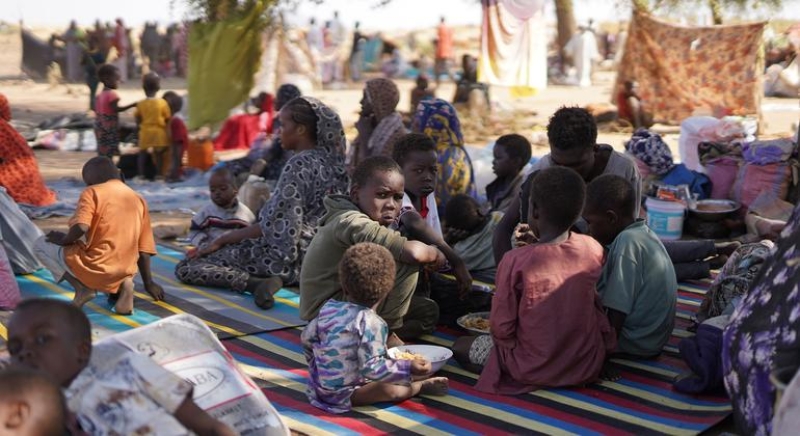
Families fleeing violence in Darfur, Sudan, arrive at a camp for displaced people.
The UN and its partners are seeking $23 billion to provide lifesaving support next year to 87 million people worldwide affected by war, climate disasters, earthquakes, epidemics and crop failures.
This funding forms the immediate priority of the $33 billion Global Humanitarian Overview 2026, launched on Monday, which aims to reach 135 million people across 50 countries.
“This appeal sets out where we need to focus our collective energy first: life by life,” said UN humanitarian chief Tom Fletcher.
Millions in need
The updated GHO follows a year marked by severe cuts to humanitarian operations and a record number of deadly attacks against aid workers.
It includes 29 detailed response plans. The largest is for the Occupied Palestinian Territory, where $4.1 billion is needed to assist around three million people.
In Sudan, $2.9 billion is required to deliver lifesaving aid to 20 million people caught in the world’s largest displacement crisis, along with an additional $2 billion for the seven million Sudanese who have fled the country.
The largest regional plan is for Syria, seeking $2.8 billion to reach 8.6 million people.
Cuts and consequences
Mr. Fletcher noted that the 2025 appeal received only $12 billion — the lowest funding level in a decade. As a result, humanitarians were able to reach 25 million fewer people than the previous year.
The impact was immediate: rising hunger, overstretched health systems, and worsening conditions “even as famines hit parts of Sudan and Gaza,” he said at a briefing ahead of this year’s launch.
“Programmes to protect women and girls were slashed, hundreds of aid organizations shut down. And over 380 aid workers were killed – the highest number on record.”
Humanitarians under attack
The UN relief chief described aid workers as “overstretched, underfunded and under attack.”
“Only 20 per cent of our appeals are supported. And we drive the ambulance toward the fire on your behalf,” he said.
“But we are also now being asked to put the fire out. And there is not enough water in the tank. And we are being shot at.”
Member State support
Humanitarians will now present the appeal to UN Member States and seek their support over the next 87 days — “one for each of the million lives that we will set out to save,” Mr. Fletcher said.
Countries will also be urged to strengthen protection for aid workers “not with statements of concern, but by holding accountable those killing us — and those arming those killing us,” he added.