

- Solar irrigation brings savings, extra income to Jhenaidah farmers |
- ADB Approves $100m Loan for Affordable Housing in Bangladesh |
- No Respite From Poisonous Air: Radical Cure Urgent |
- Minimising The Energy Shocks In Bangladesh |
Bangladesh Shipbuilding Could Create 100,000 New Jobs
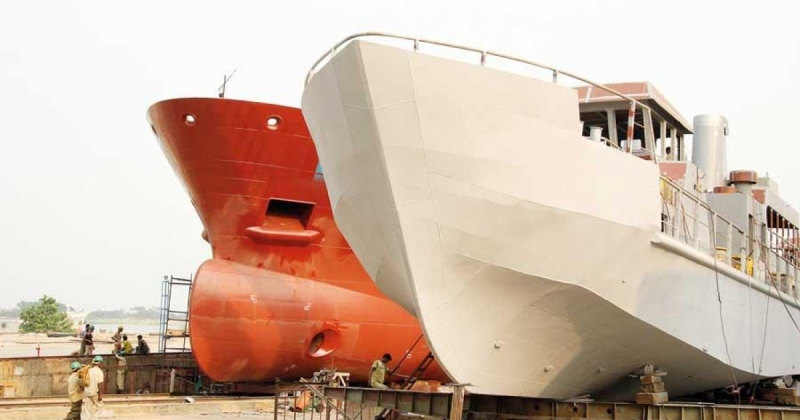
Representational photo
Bangladesh’s shipbuilding industry has the potential to generate up to 100,000 new jobs within three to five years, provided the sector adopts environmentally friendly practices and ensures proper working conditions.
Experts also emphasised the need for cash incentives, duty-free import of raw materials, development of ancillary industries, low-interest loans, capital support, and product diversification to make the industry globally competitive.
These insights were shared by economist Zaidy Sattar in a keynote presentation at a seminar on “Green Shipbuilding and Industrialisation,” organised by the International Business Forum of Bangladesh (IBFB) at Hotel Intercontinental in Dhaka on Saturday.
The seminar was attended by key government and business figures, including Advisor to the Ministry of Industries and Housing & Public Works Adilur Rahman Khan and Anisuzzaman Chowdhury, Special Assistant to the Chief Advisor (Ministry of Finance).
Sattar, also Chairman of the Policy Research Institute (PRI), noted that Bangladesh faces stiff competition in large shipbuilding markets dominated by China, South Korea, and Japan. However, the country holds significant potential in the small and medium-sized vessel sector.
The global market for multipurpose ships, feeder vessels, and ferries with capacities up to 12,000 DWT is worth approximately $115 billion. Capturing even 1% of this market by 2027 could earn Bangladesh around $1 billion annually. Currently, the nation’s annual shipbuilding capacity is around 20 vessels.
“About 80% of global trade occurs via sea routes, and demand for shipbuilding rises with international trade,” Sattar said. “Shipbuilding is a labour-intensive and promising industry in Bangladesh. By diversifying production, we can compete in the small and medium-sized vessel market. Demand cycles fluctuate every decade, and we are currently in an upward phase. Now is the right time to focus on this industry.”
Advisor Adilur Rahman Khan emphasised that the global demand is shifting toward environmentally friendly vessels. Countries capable of producing green ships will lead the maritime economy of the future. The Ministry of Shipping will work to secure global green certifications, promote renewable energy use in shipyards, and ensure eco-friendly production for international markets.
Special guest Anisuzzaman Chowdhury added that industrialisation encourages new technology adoption. As Bangladesh transitions from LDC status, export diversification is vital. While shipbreaking poses environmental and health risks, it also offers economic opportunities. To mitigate uncertainties, banks should provide counter-refund guarantees and insurance support.
IBFB President Lutfun Nisa Saudia Khan noted that over 50 Bangladeshi-built ships are engaged in trade with 18 countries, highlighting the industry’s potential to earn foreign currency. She stressed the need for $50 million in funding to develop environmentally friendly infrastructure and called for increasing cash incentives for ship exports from 6% to 12% to better compete with India and Vietnam.
IBFB Director Shakhawat Hossain added that Bangladesh can compete with countries like India and Croatia in commercial shipbuilding but will require strategic policies and financial support from banks to fully realise the sector’s potential. Former IBFB President Humayun Rashid and founder Mahmudul Islam Chowdhury also contributed to the discussions during the seminar.