

- First cruise ship crosses Strait of Hormuz since war began |
- MDBs stress co-op support global stability amid uncertainty |
- PM opens first Hajj flight, visits Ashkona camp |
- River ports asked to hoist cautionary signal No 1 |
- Oil prices drop 9% & Wall Street rallies to a record after Iran reopens Hormuz |
Trump Mulls Cabinet Shake-Up Amid Iran War
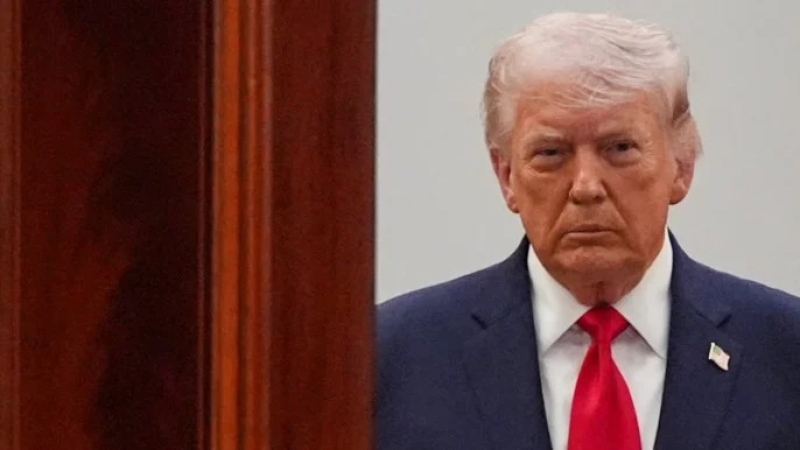
President Donald Trump arrives from the Blue Room to speak about the Iran war from the Cross Hall of the White House on Wednesday, 1 April, 2026, in Washington.
US President Donald Trump is considering a broader cabinet reshuffle as political pressure mounts over the war with Iran, according to multiple sources familiar with internal White House discussions.
The potential changes come after the removal of Attorney General Pam Bondi this week, amid growing concern inside the administration over the political and economic fallout from the conflict.
The five-week war has pushed up fuel prices, dented Trump’s approval ratings and raised fresh anxiety among Republicans ahead of November’s midterm elections.
Sources said the White House is weighing whether personnel changes could help reset the administration’s image at a time when public frustration over the war is rising.
Several officials reportedly seen as vulnerable include Director of National Intelligence Tulsi Gabbard and Commerce Secretary Howard Lutnick.
According to sources, Trump has in recent months expressed dissatisfaction with Gabbard, and has privately discussed possible alternatives for the intelligence post with close allies.
Lutnick is also facing pressure from some of Trump’s allies, who have raised concerns over renewed scrutiny surrounding his past links to convicted sex offender Jeffrey Epstein.
Despite the speculation, the White House publicly denied any immediate plans for major changes. White House spokesman Davis Ingle said Trump retains “total confidence” in both Gabbard and Lutnick.
He said the president had assembled a strong cabinet that has delivered major policy victories, including trade and investment deals and national security gains.
Still, officials said Trump remains deeply frustrated by the administration’s handling of the political narrative around the war, especially after his televised address to the nation this week failed to reassure many voters.
One official described the speech as an effort to project control and confidence, but said it did not achieve its intended impact.
During the address, Trump did not outline a clear path to ending the conflict, leaving the impression that the war could continue indefinitely. He also offered little detail on how the administration would address rising economic pressure on Americans.
Officials said the speech intensified internal debate over whether changes in personnel or messaging are needed to stabilise the administration politically.
Recent polling has added to those concerns. A new Reuters/Ipsos survey found that only 36% of Americans approve of Trump’s overall job performance, the lowest level of his current term. The war with Iran is also facing broad public disapproval.
Even so, sources said Trump may still avoid a sweeping overhaul, partly because frequent staffing changes during his first term often fuelled criticism and reinforced perceptions of dysfunction inside the White House.
Instead, any moves are more likely to involve a limited and targeted reshuffle rather than a dramatic reset.
But several sources said the possibility of further changes has become increasingly serious in recent weeks, with some inside the administration believing more departures could come well before the midterm campaign intensifies.