

- PM Seeks Marubeni Investment in AI Data Centre, KAFCO |
- Global trade reaches record $35 trillion despite conflicts |
- Attack on Riyadh airport kills 12, injures over 300: Saudi |
- Dhaka ranks 6th most polluted city |
- El Niño Could Threaten 347 Million Children Worldwide |
300 Gaza Children Killed in 300 Days: UNICEF
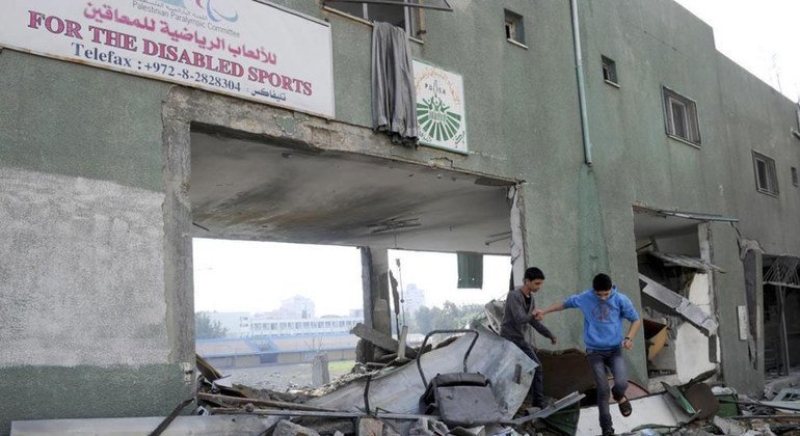
Boys playing in the rubble of the Palestine Stadium in Gaza City after it was targeted in Israeli airstrikes.
At least 300 children have reportedly been killed in Gaza during the 300 days since a ceasefire agreement took effect in October last year, the UN Children's Fund (UNICEF) said on Thursday, warning that the truce has failed to protect children.
UNICEF said families remain confined to about one-third of the Gaza Strip, living among destroyed buildings, rubble and uncleared waste despite the ceasefire.
"A ceasefire that leaves an average of one child dead each and every day is failing children," UNICEF Regional Director for the Middle East and North Africa Edouard Beigbeder said.
The agency welcomed reports of renewed efforts to end the conflict and increase humanitarian aid but stressed that the real test is whether the violence stops, aid reaches people at scale, hospitals reopen, water supplies are restored and children can safely return to school.
The war began after Hamas-led attacks on Israel in October 2023 and has since triggered a prolonged humanitarian crisis across Gaza.
UNICEF said children continue to face severe malnutrition, disease, unsafe drinking water and collapsing sanitation systems.
Health workers have also reported a rise in premature births as malnourished mothers struggle to access adequate healthcare. Many hospitals remain short of medicines and medical equipment, with some incubators reportedly shared by two or three newborns.
UNICEF spokesperson Louise Wateridge said newborn babies are fighting for survival in hospitals that are only partially functioning.
The UN Office for the Coordination of Humanitarian Affairs (OCHA) said ongoing Israeli military operations and airstrikes continue to cause civilian casualties, damage shelters and critical infrastructure, trigger new displacement and restrict access to essential services.
According to Gaza health authorities cited by OCHA, 1,209 people have been killed and 3,943 injured since the ceasefire was announced on 10 October 2025.
The World Health Organization (WHO) also reported that attacks near Al-Aqsa Hospital in Deir al-Balah destroyed essential medical supplies, including aid delivered by the agency.
Despite the challenges, the UN and its humanitarian partners continue relief operations across Gaza.
Last week, emergency shelter materials and essential household items were distributed to around 9,000 families, while improvements were made to about 3,000 temporary shelters in Gaza City.
UNICEF also delivered more than 600 pallets of school bags, recreational kits and hygiene supplies ahead of the new academic year.
Meanwhile, more than 250,000 preschool and school-age children are taking part in summer learning activities aimed at restoring routine and helping them recover from prolonged disruptions to their education.