

- BB launches Tk 1,000cr green fund for rural, local industries |
- Sirajganj farmers gear up for Eid with over 617,000 cattle |
- Trump rejects Iran proposal as fragile ceasefire faces uncertainty |
- BGB seizes smuggled Indian goods in Cumilla border raids |
- Central Bank to give targeted support to closed industries |
Ekushey Book Fair Showcased the Heart of Bangla Culture
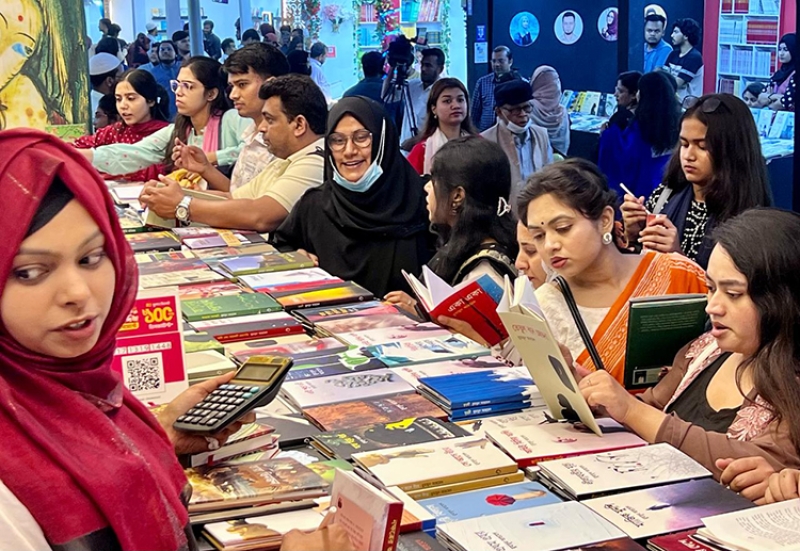
The Amar Ekushey Book Fair 2026, which closed on March 15, has emerged as one of the most significant and widely discussed cultural events in recent memory. Spanning the grounds from Bangla Academy to Suhrawardy Udyan, the Fair offered a lively yet reflective atmosphere, shaped by shifting schedules, deep-rooted cultural traditions, and enthusiastic participation across generations.
The fair opened on 26 February under the theme “Multidimensional Bangladesh”, a reflection of the country’s literary diversity and evolving cultural identity. This year’s edition was inaugurated by Prime Minister Tarique Rahman, who underscored the continuing importance of literature in shaping national values and identity. During the opening ceremony, he also presented the Bangla Academy Literary Awards 2025, signalling the fair’s high cultural status.
Unlike most years, when the fair began on 1 February, the 2026 edition was delayed due to the national elections. Organisers and publishers worked together to adjust both the schedule and the fair’s practical arrangements, mindful of an unprecedented overlap with the holy month of Ramadan. These changes illustrate how the fair continues to adapt to Bangladesh’s social rhythms without losing its core purpose.
The intersection between the fair and Ramadan was one of the most talked‑about aspects of the 2026 edition. Many publishers, writers and visitors had earlier expressed concern that attendance and sales might dip because the event coincided largely with the fasting month. A letter signed by several members of the publishing community called on organisers to reconsider the timing, arguing that the overlap might impact engagement.
While the fair’s calendar could not be shifted again, organisers responded with practical adjustments. They extended opening hours and configured the layout to ensure comfort for those observing the fast. On regular days the fair ran from 2 pm to 9 pm, and on public holidays from 11 am to 9 pm. For many visitors, especially families and young readers, these timings made it easier to plan their day around both prayer and participation in the fair.
To further accommodate worshippers, the fair’s management set up designated spaces for Tarawih prayers near the venue. These areas, equipped with appropriate facilities, allowed fasting visitors to pray without leaving the grounds and interrupting their experience. Short‑term rest areas and refreshment points, respectful of Ramadan observance, were also set up to support visitors throughout the day.
Many visitors praised these arrangements. “It is clear that the organisers thought carefully about how to make this fair accessible and inclusive,” said one attendee, who visited with her family after Iftar. “It feels respectful and welcoming.”
Another recognisable feature of this year’s fair was its “zero waste” initiative. Organisers placed environmental concerns at the forefront, introducing rules to reduce waste and promote sustainability. Plastic bags and single‑use bottles were discouraged in the grounds, and smoking was prohibited.
Cleanliness teams were strategically deployed across the fair, regularly spraying water to control dust and maintain pathways between stalls. At entrances and near food courts, volunteers handed out reusable bags and encouraged visitors to use environmentally friendly materials. Designers, stall owners and sponsors were all urged to build their spaces using jute, cloth and paper-based materials rather than plastics. Banners, leaflets and pamphlets followed the same ethos, encouraging the fair to be remembered not only for its cultural offerings but also its efforts in environmental stewardship.
“It’s an important step for an event of this scale,” said one volunteer overseeing the waste‑management team. “We hope initiatives like this become a permanent part of how the fair operates.”
Comparing the 2026 fair with the 2025 edition reveals subtle shifts in scale and participation. In 2025, the fair welcomed 708 publishing houses spread across 1,084 stalls in Bangla Academy and Suhrawardy Udyan. Thousands of new titles were unveiled, and architecturally striking stalls helped make the fair a visual as well as intellectual highlight.
This year, by contrast, 549 publishing institutions took part, with 1,018 total units allocated. The smaller number reflects several factors — economic caution among some publishers, calendar pressures and ongoing adjustments due to the election and Ramadan. Some houses chose to participate virtually instead, citing cost concerns and a shift towards digital engagement.
Publishers, however, report that the range and diversity of new books remained strong. From fiction and poetry to academic texts and children’s literature, the fair continued to showcase fresh and varied work. A notable feature of the 2026 fair was the presence of 87 little magazine stalls near the Suhrawardy Udyan open stage. These smaller, often independent publications offer experimental writing and grassroots literary content, preserving an important tradition within Bangla literature.
Experts suggest that the dip in participation levels was not merely a result of timing. “Ramadan might have affected physical attendance,” said literary critic Dr Selina Hossain, “but the broader challenge lay in the publishing market’s economics. Commission structures, rental costs and distribution uncertainties made publishers more cautious.” Dr Hossain also pointed to digital publishing and online sales as key influences on how many houses choose to exhibit in person this year.
Bookseller Samir Ahmed offered a different perspective, focusing on visitor experience. “Interest in children’s literature and school‑related texts remains high,” he noted. “Families and students still came out in numbers, especially on holidays and weekends. Even with fasting, the atmosphere feels lively; there’s still real energy around fiction and poetry.”
Ahmed also observed that some visitors treated the fair as a family ritual, not just a place to buy books. “For many, it’s part of the cultural calendar,” he said. “They visit over several days, attend talks, meet authors, or simply walk through the stands looking for hidden treasures.”
Foot traffic at the fair remained strong throughout its run. On its second day, families and young readers crowded around interactive zones and storytelling sessions designed especially for children. These programmes, organised by both local and international cultural groups, drew large turnouts, particularly in the late afternoon.
Long‑time attendee Hossain Ali, visiting with his grandchildren, said the fair continues to reinvent itself each year. “Whether through the stalls, the talks, or the sheer joy of browsing,” he said, “there’s always something that draws you back. This year felt different — quieter in some spots — but the core spirit of Ekushey was still here.”
Many visitors spoke about the joy of discovering books they had not heard of before. “I came looking for a history book, but ended up buying poetry, children’s stories and even a travel memoir,” said a student from Dhaka University. “That’s part of the fun.”
Organisers made several practical changes to the fair’s layout to improve crowd management and accessibility. Much of the overall design from last year was retained, but exit pathways were repositioned near the Mandir Gate in response to changes around the metro rail station. Four main entrances guided visitors efficiently across the expanded site, including points at TSC, Doel Chattar, the MRT base plant and Engineering Institution areas.
Food stalls were clustered near the Engineering Institution boundary, a decision aimed at smoother movement and better management of peak crowds. Refreshment points, prayer areas and rest zones were evenly spread to support comfort across the fairgrounds.
Book sales this year follow a familiar pattern: both Bangla Academy and private publishers sell books on a 25 per cent commission basis, while government institutions sell at their own fixed rates. Bangla Academy maintains robust sales across both main sections of the fair, balancing bestsellers with niche and academic titles.
Since its inception in the late 1970s, the Amar Ekushey Book Fair has remained a cornerstone of Bangladesh’s cultural life. Born from the language movement and shaped by decades of literary engagement, the fair draws readers, writers and thinkers from across the country and beyond. Its multi‑venue format allows a wide range of voices to be heard — from established authors to experimental writers and independent publishers.