

- Bangladesh-Denmark May form Trade and Investment Committee |
- Bangladesh—Pakistan trade crosses $1 b |
- Dhaka Ranks 5th Among World's Most Polluted Cities on Friday |
- PM seeks to make Bangladesh a reliable brand in global livestock market |
- Türk warns of increased risk of atrocity crimes on Palestinians |
EU Tightens Controls on Irregular Migration Amid Political Pressure
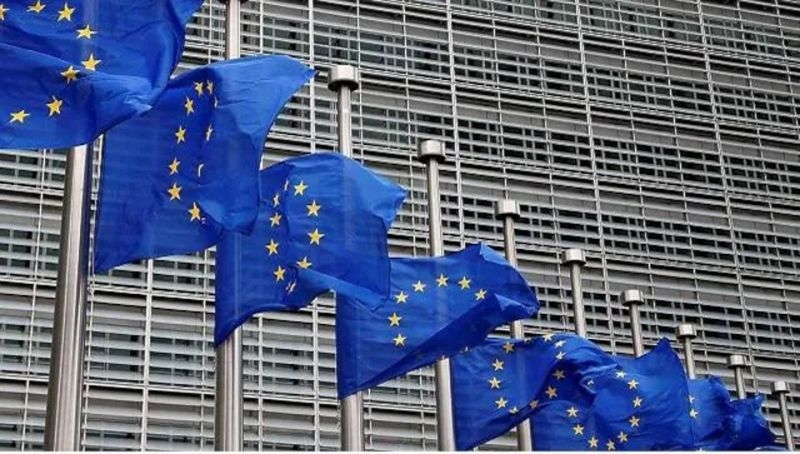
EU flags
By Imtiaz Ahmed and Samia Tabassum
European Union countries are tightening measures against irregular migration as governments face mounting economic pressures, growing anti-immigration sentiment and the rising influence of right-wing political parties across the continent.
Diplomats, migration experts and international agencies say the issue has gained renewed urgency amid sluggish economic growth, high energy costs, housing pressures and the continuing financial effects of the Russia-Ukraine war.
The tougher approach is being reflected in stricter asylum policies, enhanced border controls and new discussions on deportation mechanisms for rejected asylum seekers.
According to Eurostat, EU+ countries registered more than 99,000 asylum applications during the third quarter of 2026. Bangladeshis accounted for about 7 per cent of the total, with nearly 7,000 applications lodged between July and September. France, Italy and Greece were among the countries receiving the highest numbers of asylum claims.
Migration specialists say increasing numbers of Bangladeshis are attempting to reach Europe through irregular routes, often relying on human-trafficking and smuggling networks operating across North Africa and the Mediterranean.
Greece has emerged as a major concern for Bangladeshi authorities. Although overall migrant arrivals to Greece declined in 2026, Bangladeshi arrivals reportedly increased during the past year. Unofficial estimates suggest that around 25,000 Bangladeshis are legally documented in Greece, while another 20,000 may be living there without legal status.
Diplomatic and migration sources attribute the trend to a combination of factors, including Bangladesh's economic slowdown, political uncertainty following developments in 2024, instability in the Middle East and tighter immigration policies in traditional destination countries such as the United States and Canada.
Bangladeshi diplomats say Greece has become increasingly concerned about undocumented migration and has urged countries of origin to take stronger measures to discourage irregular movement. As Bangladesh is considered a safe country of origin by the European Union, asylum applications from Bangladeshi nationals face greater scrutiny and lower acceptance rates.
At the same time, Athens and Dhaka are seeking to expand legal labour migration channels. The two countries signed a labour mobility memorandum of understanding in 2022 that is expected to expire next year. Discussions are underway to extend the agreement, which provides for the recruitment of Bangladeshi workers, particularly in Greece's agricultural sector.
Under the arrangement, Greece pledged to admit up to 4,000 Bangladeshi workers annually. However, official data from Bangladesh's Bureau of Manpower, Employment and Training show that just over 2,000 workers were sent to Greece between February 2022 and September 2026, highlighting the gap between legal migration opportunities and actual labour flows.
Meanwhile, the human cost of irregular migration remains severe. Frontex recorded nearly 110,000 irregular border crossings into the European Union during the first ten months of 2026, a decline of 29 per cent from the previous year. Despite fewer arrivals, migrant deaths and disappearances on Mediterranean routes continued to rise.
According to the International Organization for Migration, at least 920 migrants died or went missing while attempting to reach Europe during the third quarter of 2026, an increase from the corresponding period a year earlier.
Bangladeshi migrants have been among the victims. In March 2026, at least 18 Bangladeshis reportedly died during a sea crossing from Libya toward Greece. In another incident in August, nine Bangladeshis died after a migrant boat ran out of fuel in the Mediterranean.
The EU is also exploring new methods to manage rejected asylum seekers. Austria, Denmark, Germany, Greece and the Netherlands are reportedly discussing a pilot scheme with Rwanda that would allow certain rejected asylum applicants to be transferred to a deportation hub before either integrating locally or returning to their home countries.
Migration experts say the initiative is intended as a deterrent against irregular migration and people-smuggling networks. Critics, however, argue that tougher enforcement alone will not address the underlying economic and humanitarian factors driving migration.
Former Bangladesh Ambassador to Greece Ashud Ahmed said the Bangladeshi community in Greece continues to contribute significantly to bilateral relations and trade. He stressed that expanding legal migration opportunities remains the most effective way to protect migrants while meeting labour market needs in Europe.
As Europe tightens migration controls, the challenge for both European and origin countries will be balancing border security with safe, orderly and legal pathways for migration.