

- Support to coastal security, early completion of MRT lines, Airport Terminal III, business promotion assured |
- Tarique Seeks Japanese Support for Energy, Tech and Infrastructure |
- Japan eyes 1 trillion yen investment in Bangladesh over 5 years |
- Dhaka Among World’s 11 Most Polluted Cities on Tuesday |
- Tide Rising, Time Running Out For Coastal People, Wildlife |
Third Language Plan Targets Overseas Jobs
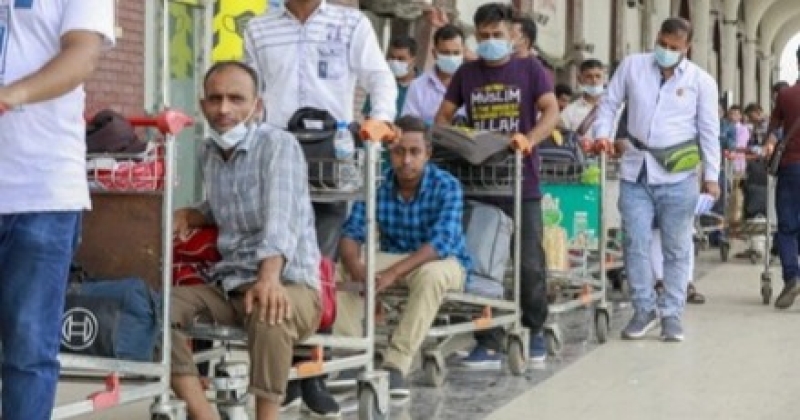
Photo: Collected
For years, Bangladeshi migrant workers have earned respect abroad for their hard work. But in today’s labour market, effort alone is not enough. The ability to communicate in multiple languages is increasingly shaping who gets better jobs and faster promotions.
Despite sending hundreds of thousands of workers overseas each year, many Bangladeshis still lack practical skills in foreign languages beyond basic English or Arabic. As a result, they often remain stuck in low-paid roles with limited job security and little room for advancement. In destinations across the Middle East, Europe and East Asia, language barriers frequently make it difficult to negotiate wages, understand contracts or defend workplace rights.
A study by the Ministry of Expatriates’ Welfare and Overseas Employment found that 52 percent of migrant workers identified language as a major challenge. The survey, conducted among 479 workers mainly in Gulf countries and published in the Annual Labour Migration Report 2021–22, underlined the scale of the problem.
According to the Bureau of Manpower, Employment and Training, language tests are already mandatory for migration to countries such as South Korea, Japan and Hong Kong. Officials say workers who meet these requirements generally face fewer difficulties abroad.
In response, the government has begun steps to introduce a third language at the secondary level. At a programme at the International Mother Language Institute, State Minister for Education and Primary and Mass Education Bobby Hajjaj said a foreign language may be made compulsory alongside Bangla and English. Arabic, Chinese, Japanese and French are among the options under consideration.
Education ministry officials said the plan will initially pilot in selected urban schools before gradually expanding to rural areas. Languages in high global demand, including German, French, Korean, Japanese and Mandarin, are expected to be prioritised.
Demand is particularly strong in countries such as Japan, South Korea and Germany, where language proficiency is often a prerequisite for skilled and semi-skilled jobs. Even in Middle Eastern markets, employers increasingly value communication skills for technical and supervisory roles.
Professor Mohammad Absar Kamal, acting director of the Institute of Modern Languages at Dhaka University, said foreign languages have long been overlooked in the national curriculum. Strengthening multilingual education, he noted, would open wider academic and professional opportunities for students.
Chinese Ambassador Yao Wen recently said efforts are underway to bring around 10,000 Bangladeshi students under Chinese language programmes. The move, he said, would support employment in nearly 1,000 Chinese companies operating in Bangladesh and help build a workforce better prepared for global competition.