

- Rooppur NPP Unit-1 completes nuclear fuel loading |
- Remittance surges 56.4% to $1.44 billion in 11 days of May |
- PM seeks OIC support in resolving Rohingya crisis |
- Influencer Kaarina Kaisar taken abroad for urgent treatment |
- Cumilla sees sharp rise in crimes in April; public concern grows |
From Literary Roots to the Big Screen: Journey of Himu Akram
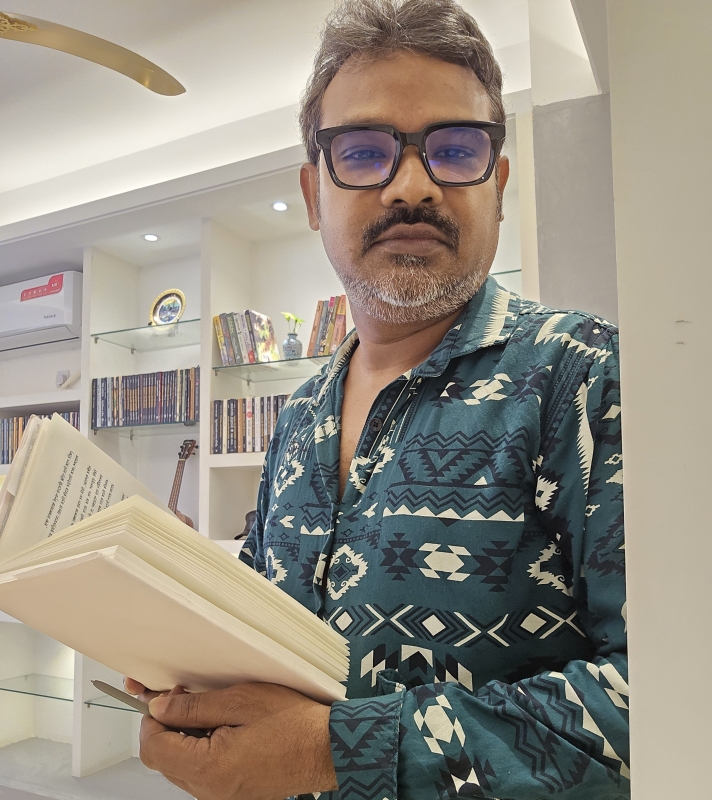
Himu Akran
Himu Akram’s Next Act
After years shaping television drama in Bangladesh, the prolific director prepares for his first feature film
GreenWatch Desk
For years, Himu Akram has quietly built one of the most extensive bodies of work in Bangladesh’s television drama industry. With more than 600 productions to his name over roughly 17 years, he has directed serial dramas, telefilms, and standalone television plays that have reached a wide audience across the country.
Himu Akram
Now, Akram is preparing for a significant shift in his career: his first feature film, Alta Banu Jochona Dekheni, which is expected to go into production soon.
Yet long before he became known as a television director, Akram first emerged as a storyteller.
A Beginning in Fiction:
Akram’s early creative life was rooted in literature. At the start of his career, he wrote short stories that appeared in the literary pages of several national newspapers in Bangladesh. Those early publications gradually introduced him to readers and helped shape his identity as a writer.
Over time, his stories were compiled into books. Three of his works have been published so far:
She Rate Brishti Chhilo (2006)
Kichu Jol Kichu Shunyota Ghore (2008)
Khamwala Pakhi Hoye Phere Na (2026)
His writing often reflects a quiet, observational approach—focusing on memory, relationships, and the emotional undercurrents of everyday life. That sensibility would later carry into his television work, where character-driven storytelling became a defining element.
“I’ve always been interested in stories about people,” Akram says. “Whether it’s a short story, a television drama, or a film, the core remains the same.”
Building a Career in Television:
Akram’s transition from literature to television marked the beginning of a long and productive period in Bangladeshi drama production. Over the years, he became associated with several well-known television serials that attracted a steady viewership.
Among his notable serials are:
Joynal Jadukar, Nojirbihin Nojor Ali,
Poncho Premik, Bideshi Para, Champakoli Talkies, Pagla Daktar-er Pach Chele,
Shanti Molom Dosh Taka, Ghuriteche Pankha, Iskander shah ekjon superstar, Ogo Bideshini.
These dramas frequently combine humor with social observation, often drawing inspiration from rural life and small-town characters—settings that have long been central to Bangladeshi television storytelling.
Telefilms and Standalone Stories:
Alongside serials, Akram has directed a wide range of telefilms and standalone television dramas, many of which have remained popular with viewers.
Some of his better-known telefilms include:
Konkabotir Chithi, Nur Alam-er Cassette,
My Name Is Johnny, Bedana Bibir Binni,
Jonakira Jane Shudhu, Jalil-er Adamshumari, and Sondha Namer Nodita.
His single-episode dramas include:
Ice Creamwala, Tipu Sultan-er Hati,
Hello Mr. Sam, Gofur Kakar Tormuj,
Ostad Alichad Boxi, Foyzu Munshir Narikel Gachh, Morilo premlal, and 72 ghonta.
In many of these productions, Akram’s storytelling style mirrors that of short fiction—compact narratives built around distinctive characters and everyday situations.
Turning Toward Film:
After years in television, Akram is now stepping into feature filmmaking with Alta Banu Jochona Dekheni, described as a dark thriller. The film features actors Swastika Mukherjee, Sariful Islam Razz, and Ashna Habib Bhabna.
At its center is the enigmatic character Alta Banu, whose story unfolds through layered psychological and emotional narratives. For Akram, the film represents both a creative challenge and a natural progression.
“Cinema allows you to explore a story with a different rhythm and scale,” he says. “It’s something I’ve wanted to do for a long time.”
A Storyteller’s Perspective:
What sets Akram apart, colleagues say, is his emphasis on the human side of storytelling. His work often focuses on ordinary lives—people navigating relationships, uncertainty, humor, and hardship.
That approach reflects his literary background, where stories grow gradually from observation rather than spectacle. It is a style that may also shape his transition into cinema.
Entering a New Phase:
Bangladesh’s entertainment industry is evolving, with television, streaming platforms, and film all expanding their reach and ambitions. Directors moving between mediums have become increasingly common.
For Himu Akram, however, the move to cinema feels less like a departure and more like the continuation of a long creative path.
After years spent telling stories on television, he is now preparing to bring that experience to the big screen.
With Alta Banu Jochona Dekheni, Akram is beginning what he describes as the second chapter of his career.